
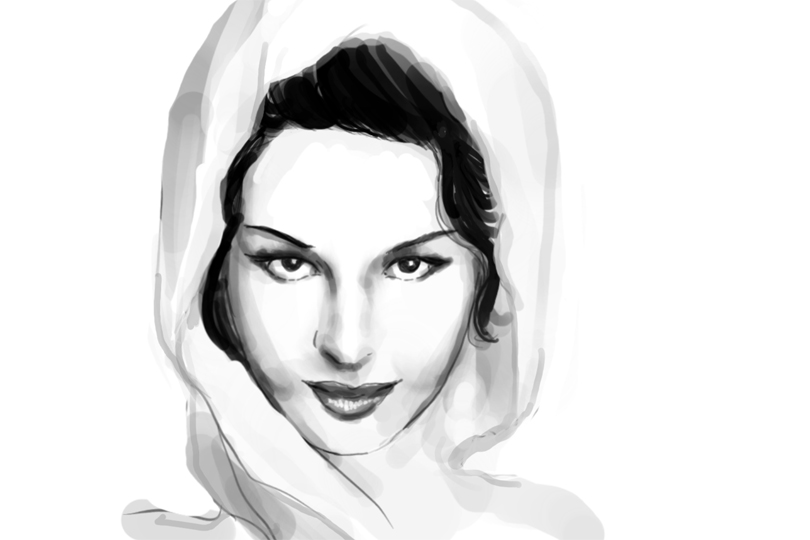
Part of an ongoing series of 29Secrets stories, taking a deep dive into the history of legendary beauty products and iconic fashion moments…
By Christopher Turner
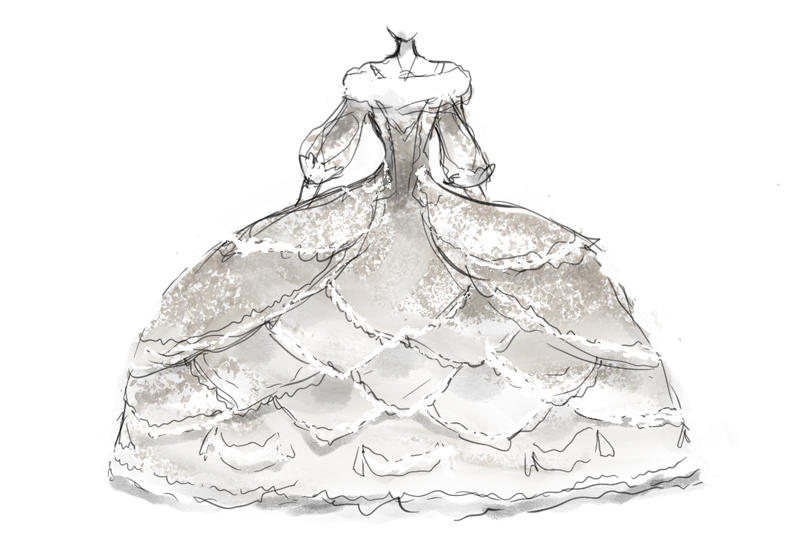
Illustration by Michael Hak
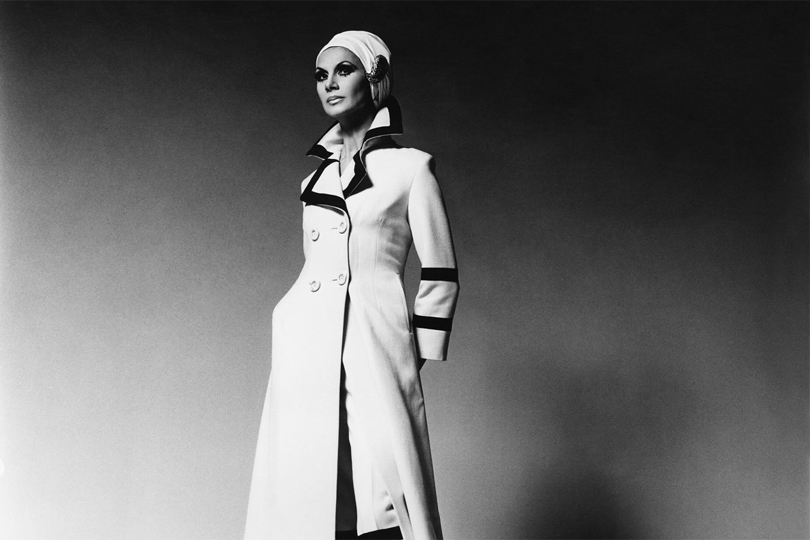
Few women in history have embodied the worlds of fashion, celebrity, and social change quite like April Ashley. Long before conversations around gender identity entered the mainstream, and decades before the fashion industry embraced ideas of visibility and identity as cultural currency, Ashley was quietly becoming one of the most intriguing figures to emerge from London, England’s early-1960s fashion scene. With her impossibly elegant profile, and glamorous wardrobe, the Liverpool-born model moved through the same orbit as famed photographers, aristocrats, and society fixtures during one of fashion’s most transformative decades.
But behind the chic facade was a story that would expose the limits of who fashion was willing to celebrate—and, ultimately, would cement Ashley’s place as one of the most groundbreaking, and complicated, figures in modern style history.
Ashley was one of the first people in the world to undergo pioneering gender reassignment surgery. She underwent surgery in 1960—the second British person to undergo male-to-female gender reassignment surgery—and later embarked on a modelling career in post-war Europe that saw her photographed by the world’s top photographers and landed her on the pages of some of the most fashionable magazines. But it all came to a halt when the Sunday Peoplenewspaper outed her as a transgender woman in 1961.
On December 27, 2021, Ashley passed away at her home in London, England, at the age of 86. In recent years, she had been widely recognized as a trailblazer for transgender visibility long before people who identify as transgender were widely acknowledged. But Ashley’s life hadn’t always been filled with praise and adoration. In fact, her life was defined by a remarkable rise to fame and years of relentless tabloid scrutiny, which eventually led to her advocacy work. Here’s the story of the trailblazing transgender model April Ashley.
Early life
Ashley was born George Jamieson on April 29, 1935, at the Smithdown Road Hospital in Liverpool, to Frederick Jamieson, a cook for the Royal Navy who was often away at sea and often inebriated when at home, and Ada (Brown) Jamieson, who worked in a bomb factory during World War II. The working-class couple had nine children, six of whom survived. As a young boy, Ashley was bullied and beaten, and in later years reflected that she often felt like a stranger in her own body as a child.
“I never grew up as I was supposed to,” she recalled in her book, The First Lady, a 2006 memoir about her childhood. “I was emaciated and very shy. I felt like a total freak. There were no whiskers, my voice didn’t break and I sprouted breasts. I hated myself and there was no one I could look to.”
At the age of 16, Ashley (as George Jamiesoon) joined the merchant navy; however, she was given a dishonourable discharge following a suicide attempt. Years later, in her first memoir, Ashley recounted that she had been raped by a fellow sailor before she tried to take her own life. The following year, a second suicide attempt resulted in Ashley being sent to the Ormskirk District General Hospital psychiatric unit. Ashley, who was 17 when admitted, was treated with electroconvulsive therapy and injected with male hormones.
In 1955, Ashley fled the hospital for London, followed by a move to Paris; by the late 1950s, she was dressing in women’s clothing and began using the name Toni April. In Paris, she worked at the famed Le Carrousel nightclub, which was famous for its drag acts, and befriended performers such as Coccinelle, an internationally recognized trans woman, and Kiki Moustic. When Moustic gave her the phone number for a doctor in Casablanca, Morocco, Ashley began saving money to undergo gender reassignment surgery.
It’s in Paris where she met Elvis Presley, who was reported to have been captivated by her when they met. At the time, Ashley was presenting as a woman, and Presley naturally assumed that she was a biological woman. The pair never slept together, but whenever they met up in the years that followed, Presley always bought her a bottle of champagne.
At the age of 25, having saved £3,000, Ashley travelled to Casablanca and on May 12, 1960, she underwent sex reassignment surgery performed by pioneering doctor Georges Burou. She was only his ninth patient and only the second Briton to undergo male-to-female transition surgery. “Au revoir, monsieur,” Dr. Burou told her before administering an anesthetic. Some seven hours later, Ashley awoke to the words, “Bonjour, mademoiselle.”
According to Ashley’s 2006 memoir, after the surgery, all of her hair fell out and she endured significant pain. But the operation was successful, and she later said that becoming a woman made her the happiest she had ever been. In the early days of her recovery, she had only been given a 50-50 chance of survival, but she told an interviewer years later that she hardly cared: “I would prefer to have died than not to have the operation.”
After undergoing the groundbreaking procedure, Ashley returned to England and officially changed her name to April Ashley, obtaining a passport, a national insurance card, and a driver’s licence, all of which identified her as female. Attempts to persuade the superintendent registrar to change her birth certificate, however, failed.
Modelling career
Upon her return to the UK in 1960, Ashley kicked off a successful modelling career. With help from her agency, she quickly became a favourite of famed fashion and portrait photographers Terence Donovan, Richard Dormer, and David Bailey.
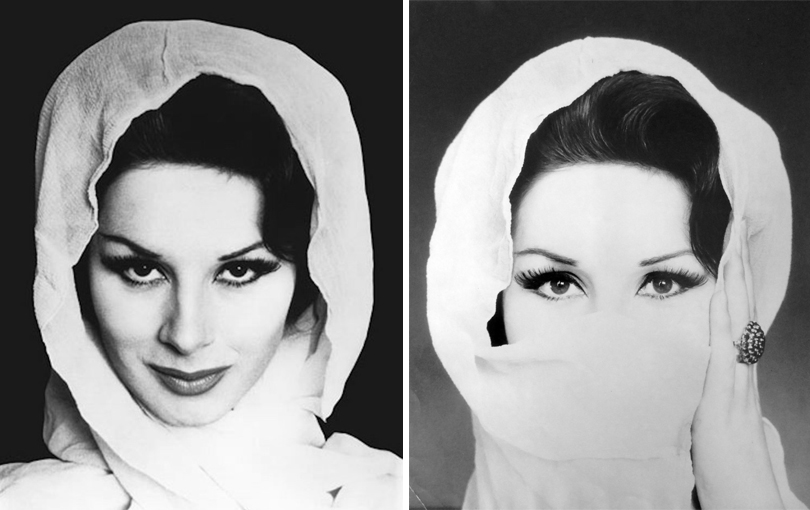
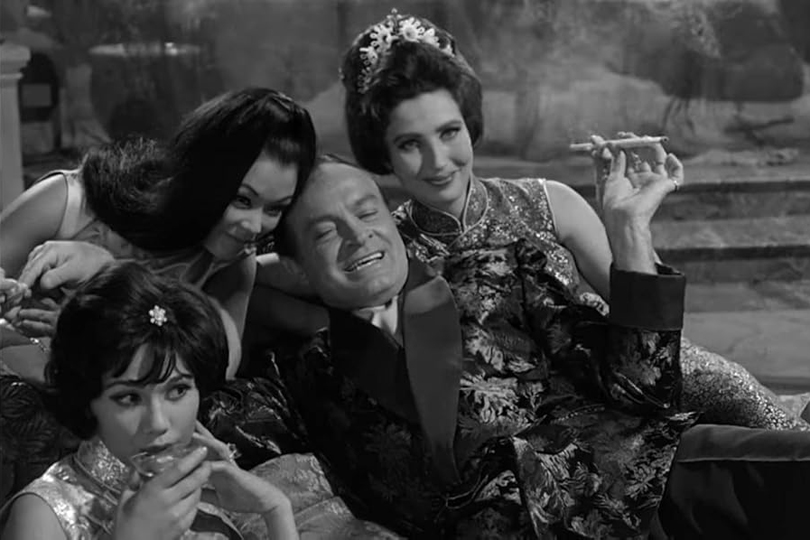
There were appearances in British Vogue (shot by Bailey), among other high-profile magazines; as well, she modelled in advertisements, and even won a small role in Norman Panama’s upcoming film The Road to Hong Kong, which starred Bing Crosby, Bob Hope, and Joan Collins. But before the film hit theatres in the spring of 1962, a scandal broke, derailing Ashley’s budding modelling and acting career.
The scandal
In 1961, a friend (who was paid £5 for the betrayal) sold Ashley’s story to the British tabloid Sunday People, which then outed her as transgender under the headline “‘Her’ secret is out.” Ashley’s career was abruptly cut short as a result: modelling contracts were immediately cancelled, and the producers of The Road to Hong Kong cut her name from the film’s credits.
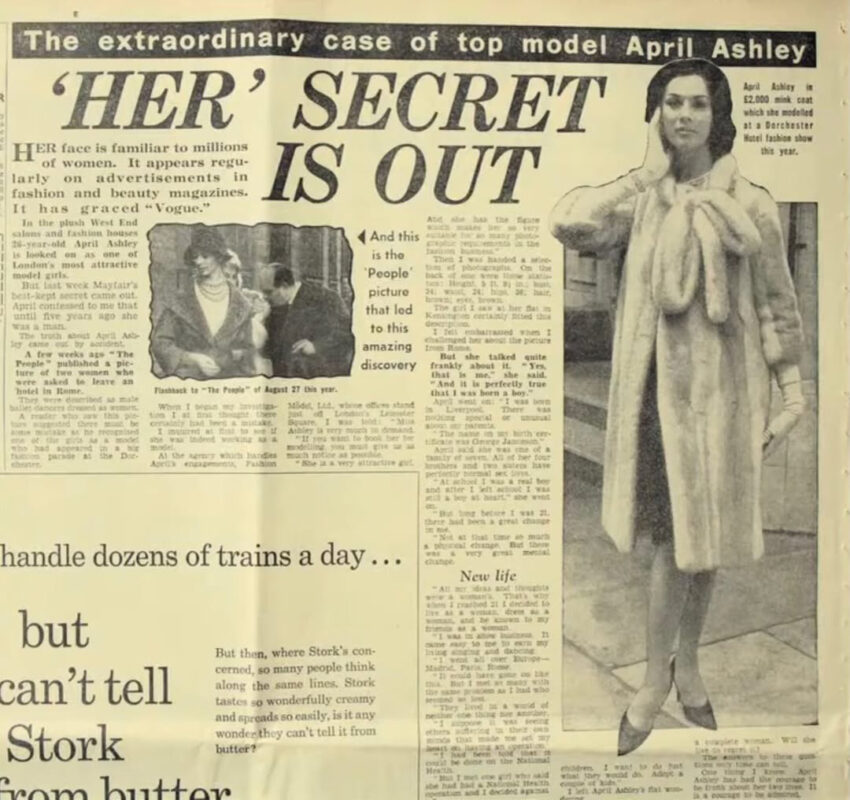
Ashley responded to the scandal on May 6, 1962, by telling her story in The News of the World, in an article called “My Strange Life.” But the damage had already been done.
“My career was destroyed, and apart from jobs where you were paid under the table, I never worked again,” she once told the Liverpool Echo. “With others, when they found out, my shifts would be changed, my hours reduced, and then they would tell me they didn’t need me…but then advertise for someone else. It was heartbreaking because I would have been a movie star.”
The tabloids were relentless, and articles on Ashley’s transition would continue to be published around the world for years to come. Despite the ongoing scandal, she became a fixture in the underground scene throughout London’s swinging ’60s, where she partied with artists including Salvador Dalí and Pablo Picasso. By her account, both Dalí and Picasso wanted her to pose for them; she demurred, deciding they seemed too salacious.
Corbett v Corbett
To escape the scandal surrounding her transition, Ashley moved to Spain, where she found attitudes a little more relaxed, and found work dancing and hosting in the nightclubs along the Costa del Sol. One of the clubs was owned by Arthur Cameron Corbett, the aristocrat son of Thomas Corbett, the second Baron Rowallan. After a two-year courtship—Corbett had to finalize his divorce from his first wife—the two married in 1963 in Gibraltar, on Spain’s south coast…but the marriage didn’t last long. Corbett was fully aware of her identify, but they never consummated the marriage. In 1966, Ashley’s lawyers tried to claim financial support, which prompted Corbett to respond the following year by filing suit to have the marriage legally annulled.
Corbett asked the court to declare that there had been no marriage, saying Ashley was in fact a man, even though he knew she had transitioned in 1960. Ashley disagreed, saying that she was a woman. The judge (Lord Justice Ormrod, who was himself a physician) considered medical evidence from a range of sources, but ultimately ruled that Ashley was a biological man and that it was not possible to legally change a person’s sex, which therefore rendered the marriage invalid.
“It has been established that the respondent is not, and was not, a woman at the date of the ceremony of marriage, but was, at all times, a male,” Ormrod devastatingly concluded in 1969.
For Ashley, the hearing was an utter humiliation.
Corbett v Corbett and their resulting 1970 divorce was a landmark legal case that changed transgender rights in the UK for the worse, creating a legal precedent that allowed the widespread practice of legal discrimination against transgender and intersex people throughout Britain. As a result of Justice Ormrod’s decision, the unofficial correcting of birth certificates for transsexual and intersex people ceased, beginning more than 30 years of legal discrimination.
After the annulment
Despite the humiliation of the court case and resulting annulment, Ashley rallied, took advantage of the publicity and opened a restaurant/nightclub with a friend in the upscale Knightsbridge neighbourhood of London. The venue, called April and Desmond’s (also known as AD8), was flooded with show-business customers including Ava Gardner, Ingrid Bergman, Keith Moon, and Dusty Springfield—but, despite its celebrity clientele, the public backlash and the negative attention Ashley received from the court case became too much. The stress led to a heart attack in 1975 and, left with nothing, she closed the restaurant and retreated to the US west coast to escape the prejudice and discrimination she faced at home.
She tied the knot for a second time with Jeffrey West in the 1980s. They divorced after about a decade but remained friends until her death. Reported romances with high-profile heartthrobs followed, garnering expected media attention. Egyptian actor Omar Sharif and British star Peter O’Toole were both said to have bedded the beauty. Ashley also claimed to have had a brief romance with INXS frontman Michael Hutchence in the early 1980s.
In the late ’90s, Ashley moved to a town outside Nice, France, to be closer to her friends, and finally returned to Britain in 2005, when she was legally recognized as female thanks to the Gender Recognition Act. She became widely recognized for her role in championing transgender causes; in fact, in 2012, she was awarded an OBE (the Most Excellent Order of the British Empire) from Charles, then Prince of Wales, for her work raising awareness about transgender causes.
“I never asked to be born like this,” she stated after receiving the honour. “I would like to have been born normal like everyone else. I wanted to live in the real world and do what everyone else does, but I think I have lived my life with enormous dignity.” That she did.
“I don’t know whether life would have been so different if I had been born later,” she told the Liverpool Echo the following year. “It was incredibly difficult, but one has to keep one’s dignity. And I just had to get by as I have. Was I a pioneer? I just got on with my life. There was no point in being bitter. My father always taught me that the only person bitterness hurts is yourself. He said we are here to enhance life, and if you can’t enhance it, bugger off.”
In 2006, she wrote a memoir with Douglas Thompson called The First Lady. It was optioned for a film, with Catherine Zeta-Jones lined up to play her, but things fell apart when it was revealed that she had plagiarized large sections of the book from a previous autobiography, April Ashley’s Odyssey, which she wrote in 1982 with Duncan Fallowell. When both Fallowell and the publisher of the earlier book objected, unsold copies of The First Lady were pulped, the movie plans scratched.
Still, she remained in the limelight in later years. At the age of 80, she advised actor Eddie Redmayne on how to approach the role of Lili Elbe in Tom Hooper’s 2015 film The Danish Girl, and was thanked in the film’s credits. The film, which was based on the 2000 novel of the same name by David Ebershoff, was loosely inspired by the lives of Danish painters Lili Elbe and Gerda Wegener. Elbe was a Danish painter and transgender woman, and among the early recipients of sex reassignment surgery. The film has been criticized in recent years for its casting of an English cisgender man to play a Danish transgender woman. Although Redmayne earned a Golden Globe nomination, a SAG nomination, a BAFTA nomination, and an Oscar nomination for portraying Elbe, he told The Sunday Times in 2021 that he “wouldn’t take it on now” in retrospect. “I made that film with the best intentions, but I think it was a mistake.”
Regardless, over the years Ashley grew to become a kind of grande dame of Britain’s transgender community, appearing on television to answer questions about her childhood and identity. Besides the OBE, she was named a citizen of honour at a ceremony in Liverpool Town Hall on her 80th birthday in 2015, and received an honorary doctorate from the University of Liverpool the following year. Among many other awards, April also won a Lifetime Achievement Award at the European Diversity Awards in 2014; in 2017, she was given a Lifetime Achievement Award from Gay Times; in 2018, she received The Oldie Woman Award; and in 2019 she was awarded an honorary doctorate in literature from the University of London. There was even a major retrospective exhibition of her life at the Museum of Liverpool, April Ashley; Portrait of A Lady, that attracted one million visitors in 2013.
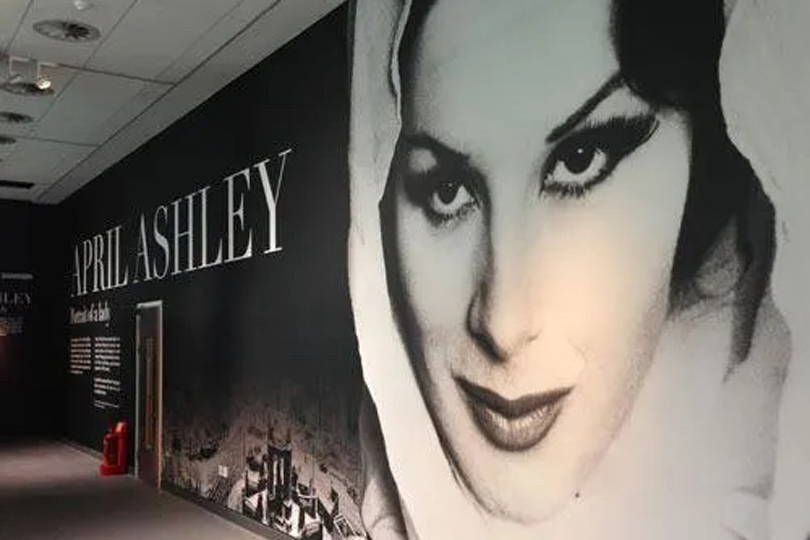
“As one of Britain’s first transsexual women to undergo gender reassignment surgery, April Ashley’s story—which began in this, her home city—has had a tremendous impact on the trans community and people across the globe,” said Janet Dugdale, director of the Museum of Liverpool. “The exhibition is internationally important and we will share April’s story along with experiences of transgender people during the last 70 years.”
Ashley died at her home in southwest London on December 27, 2021, at the age of 86. She was buried at Ford Cemetery, in Litherland (a suburb of Liverpool), with her father and grandparents.
Her legacy as a trailblazer for transgender rights and visibility lives on to this day. At a time when LGBTQ+ people were largely excluded from the spotlight, she became an inspiration thanks to her fight for her place in society. As an informal adviser to thousands of LGBTQ+ people who sent her letters in later years, seeking advice about transitioning or dealing with hostile family members, she said she typically responded by offering blunt encouragement and information. Ashley usually offered three suggestions, which she shared with the Times of London: “Be kind to yourself, and to others. Be beautiful on the inside, and that will show on the outside. But most of all, be brave. Because you’ll need to be.”
Shortly before her death, Ashley reflected on her life in a BBC interview and said: “Once you become an institution you become respectable again. What happens in between is another story.”
Isn’t that the truth.
Want more? You can read other stories from our The Story Of series right here.