
By Mursal Rahman
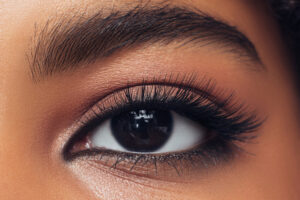
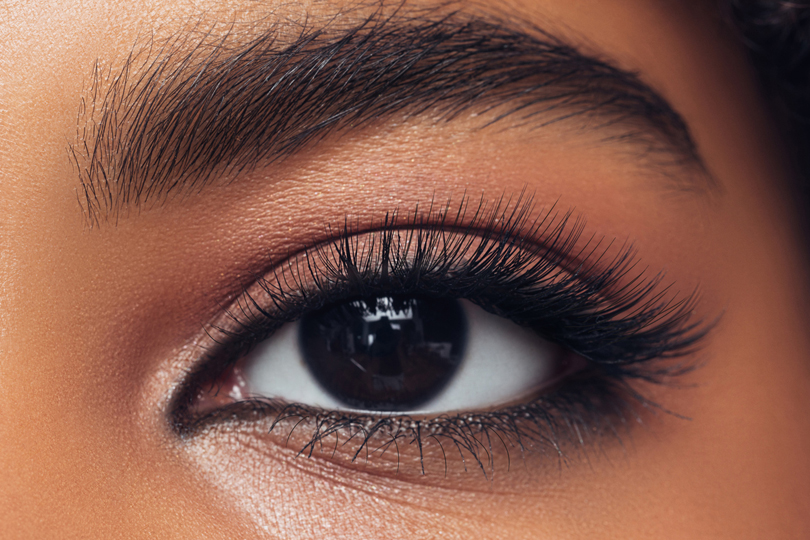
After years of barely-there makeup and the seemingly endless reign of the clean girl aesthetic, colourful eyeshadow is finding its way back into our beauty routines. But rather than simply reaching for whatever shade catches their eye, makeup lovers on TikTok are taking a more strategic approach, choosing colours specifically designed to make their natural eye colour stand out. The trend, dubbed “eye-maxxing,” is bringing renewed attention to one of the oldest tricks in the makeup artist’s playbook: colour theory.
Of course, the concept itself is nothing new. Most of us were introduced to the colour wheel in school, but it has also long been an essential tool for makeup artists, used for everything from colour correcting to understanding which shades complement and contrast with one another. While eye-maxxing can refer to a broader range of techniques intended to enhance the appearance of the eyes, the latest makeup-focused interpretation is all about using colour to make your natural eye shade stand out.
When it comes to eye makeup, the idea is to choose shades that create contrast with your natural eye colour. For blue eyes, that generally means warmer, orange-based tones such as copper, bronze and peach, while green eyes tend to stand out against shades with red or purple undertones, including burgundy, plum and mauve. Brown eyes offer a little more freedom, since almost every colour can work depending on the effect you’re trying to achieve. Blues, greens and purples can create striking contrast, while warmer metallics like bronze, copper and gold help bring out their natural richness.
For former musician and makeup educator Rose Siard, co-founder of Rose and Ben Beauty and known as the “Colour Theory Witch” on TikTok, the colour wheel is less about determining what someone should wear and more about understanding contrast. “Colours opposite one another can bring more attention to each other when placed side by side,” she explains. “Orange sits opposite blue, for example, so a copper shadow or even a brown with an orange undertone can really bring out blue eyes.”
You also don’t have to reach for a bold colour to make the theory work. “You don’t have to wear a bright or obvious colour to use colour theory,” says Siard. “Sometimes the undertone of a much softer shade can do all the work.”
Interested in putting the theory into practice? Below, Siard shares her tips for eye-maxxing, from how to get started to the shades and products she recommends.
How to eye-maxx without being good at eyeshadow
You don’t have to be a pro at blending—or even particularly comfortable with eyeshadow—to give eye-maxxing a try. Instead of reaching for a palette, Siard recommends starting with something a little more familiar: eyeliner.
“I would start with a coloured pencil along the upper lash line,” she says. “Choose one that gives you enough time to gently soften the edge with a small brush. You don’t have to create a perfect line if you’re going to blend it anyway.”
And if you only have five or 10 minutes to get ready, you don’t need multiple shades or a complicated technique to make your eye colour stand out. “One shade can be enough,” she says. “A wash of copper on blue eyes or a soft burgundy around green eyes can create beautiful contrast without a complicated application.”
For an even quicker application, Siard recommends reaching for a blendable cream shadow or pencil. “Keep the colour close to the lashes, soften the edges, add mascara, and you’re done,” she says. “I would rather spend the time blending one shade beautifully than feel like I need several colours to make an impact.”
Watch Rose Siard’s eye-maxxing tutorial over on TikTok:
@roseandben Replying to @bia Eye maxing huh? It always comes back to color theory 🧙🏻🖌️🎨 Copper is a color that will enhance just about any eye color 🎨 Brushes: @Rose and Ben Beauty ok? Liquid shadows: @Makeup By Mario chestnut and @about-face capulets @🇬🇧MADEBYMITCHELL🇬🇧 color case Powder shadow: @Kevyn Aucoin shadow – Carmel and cocoa Copper shadow – @ColourPop Cosmetics Cosmetics jelly much shadow – most wanted Liner: @urban decay – lucky Lashes: @Lilly Lashes self adhesive lashes- Jade Bronzer: @YSL Beauty – 03 Blush: @NARS Cosmetics – forplay Lips: @buxomcosmetics lip liner – bare canvas and @Isamaya Beauty lip balm – shaded rose #colortheory ♬ original sound – Rose Siard
The best eye-maxxing shades and products for every eye colour
Before you start adding an entirely new selection of colourful shadows to your cart, you may want to take another look at what you already own. Siard says eye-maxxing doesn’t require overhauling your makeup collection, and finding formulas that feel comfortable to apply is just as important as choosing the right shades.
“I would focus first on finding formulas that are easy for you to work with, and then have fun choosing the colours,” she says.
For Blue Eyes: Siard recommends copper tones to create contrast against blue. Her picks include ColourPop Jelly Much Shadow in Most Wanted, as well as Urban Decay 24/7 Glide-On Eye Pencil in Lucky for an easy way to add warmth around the eyes.
For Green Eyes: Burgundy and shades with red undertones can help bring out green eyes. Siard recommends Rituel de Fille The Black Orb Enigmatic Kohl Eyeliner in Iron and Kosas Soulgazer Intensifying Waterproof Gel Eyeliner in Bewitch.
Watch Rose Siard’s colour theory tutorial over on TikTok:
@roseandben Since eye maxing is popular right now I thought y’all might like this filter 🧙🏻🖌️🎨 check my eye maxing series for more eyeshadow looks! Brushes: me ok? Eyeshadow base: @🇬🇧MADEBYMITCHELL🇬🇧 color case Eyeliners: @Kosas soul gazer liners – bewitch (my fav), cosmic, and mesmerize Shadow: @Kevyn Aucoin – Carmel Lashes: @Lilly Lashes – Jade Foundation: @Hung Vanngo Beauty shade 10 darkened with @Physicians Formula liquid bronzer Concealer: @Guccibeauty shade: 33C Powder: @Givenchy Beauty pressed powder – 03 Bronzer: @L.A. Girl Cosmetics face powder: warm caramel Lips: @M·A·C Cosmetics lip liner – cork and @Blend Bunny Cosmetics gloss – in the flesh #colortheory ♬ original sound – Rose Siard
For Hazel Eyes: Rather than following one specific colour combination, Siard suggests thinking about which tones within hazel eyes you want to emphasize. Burgundy can bring forward more of the green, while copper can draw attention to warmer golden tones.
For Brown Eyes: Brown eyes are particularly versatile, with blues, purples and greens offering plenty of opportunities to experiment. For blue, Siard recommends Bella Beauté Bar’s On Cloud 9 palette; for purple, Wet n Wild Chameleon Chrome Eyeshadow in Nebula Rush; and for green, the Hung Vanngo Color Story Eyeshadow Palette in Generous Green and Yellow.
“These are all starting points, though,” says Siard. “They’re colours I personally love using, not a list of what anyone has to wear.”
Think of the colour wheel as a starting point
While colour theory can help explain why certain shades make your eyes stand out, Siard is quick to point out that it shouldn’t become another beauty rule dictating what you can and can’t wear.
“The colour wheel helps explain what you’re seeing, but I never want it to become another rule about what someone can or can’t wear,” she says.
So, if you have blue eyes and love wearing blue eyeshadow, there’s no reason to give it up in favour of copper simply because the colour wheel suggests it will create more contrast. Both can look beautiful; they simply produce different effects.
“Someone with blue eyes can absolutely love blue eyeshadow. It’s just going to create a different effect than copper, and understanding why gives you more control over the result.”
Ultimately, eye-maxxing is less about following a strict set of rules and more about understanding how colour works, then deciding what you want to do with it. For Siard, that’s what makes colour theory so exciting in the first place.
“That’s what I love about teaching colour theory,” she says. “The more you understand it, the more freedom you actually have to experiment. Your makeup journey should still belong to you.”
Share
Trending
 The ELIE SAAB X H&M Collection Includes The Most Romantic Bridal Look
 10 Memorable Images Of Supermodel Gia Carangi (1960–1986)
 Mattel Celebrates Céline Dion With A Barbie Inspired By Her Iconic 1998 Oscars Performance
 20 Celebrities Who Posed For Abercrombie & Fitch Before They Were Famous
 20 Actors You Probably Forgot Appeared On ‘Gilmore Girls’