
If you think summertime means you can ease off the deep hydration because your skin is less stressed than it is in colder months, it’s time to change that narrative.
According to Dr. Julia Carroll, a board-certified dermatologist and parter at Toronto’s Compass Dermatology, summer is just as challenging to your skin barrier thanks to increased sun exposure, sweat, sunscreen, chlorine, salt water, shaving, and air conditioning. “We tend to think of winter as the barrier-damaging season because of cold air, wind, and indoor heating,” Dr. Carroll shares. “In the summer, we often see patients who are doing more to their skin but not always giving it enough support.”
Dr. Carroll says the skin barrier has become a buzzy topic because people are using more skincare than ever before. “That is not necessarily a bad thing, but more is not always better,” she cautions. “In clinic, I often see people with ‘sensitized’ skin, meaning their skin has become reactive from overuse of actives, over-cleansing, environmental stress, or too many product changes. That is different from being born with truly sensitive skin.
Read on for more from Dr. Carroll about the importance of taking care of your skin barrier, the signs of stress and compromise, and what steps and products you should be using in your care regime to preserve and protect it.
What is the skin barrier?
“This is the outermost protective layer of the skin (stratum corneum) responsible for locking in moisture and blocking out environmental irritants,” Dr. Caroll explains. “I describe it as a brick wall. The skin cells are the bricks, and the lipids, such as ceramides, cholesterol, and fatty acids, are the mortar holding everything together. When that barrier is healthy, it helps keep water in and irritants, allergens, pollution, and microbes out. An important thing to understand is the skin barrier is not just about dryness. It affects how your skin behaves overall. When the barrier is strong, skin is better able to tolerate weather changes, skincare ingredients, makeup, sunscreen, and life in general. When it is disrupted, products that were previously fine may suddenly sting, the skin may look red or flaky, and people often describe their skin as “sensitive,” even if they have not always had sensitive skin.”
How should you be caring for your skin barrier in the summer months?
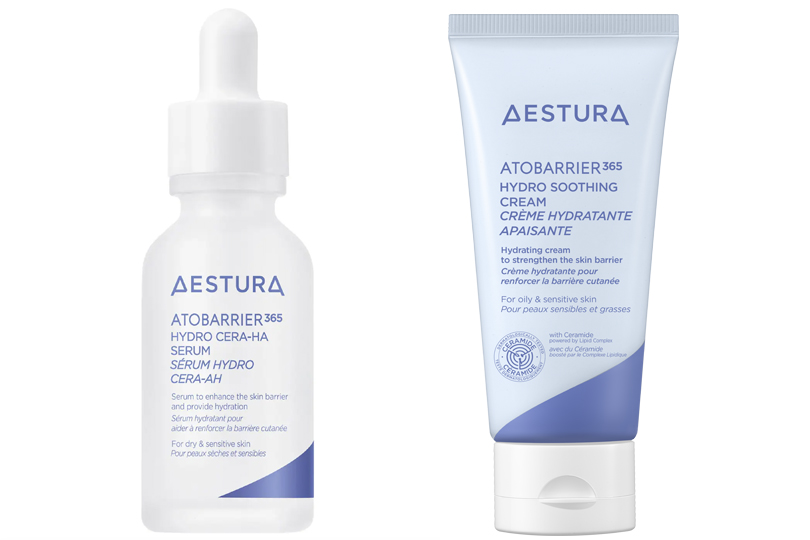
“In summer, the goal is not necessarily to use richer products, but to use smarter, lighter barrier-supporting layers,” Dr. Carroll explains. “I like lightweight hydration, gentle cleansing, and consistent sunscreen. This is where ingredients like hyaluronic acid, ceramides, cholesterol, squalane, and zinc can be helpful because they support hydration and barrier function without feeling heavy. For example, a serum such as AESTURA ATOBARRIER365 Hydro Cera-HA Serum ($46 for 30ml at sephora.com) layered under a lighter moisturizer like AESTURA ATOBARRIER365 Hydro Soothing Cream ($44 for 80ml at sephora.com) can make sense in warmer weather because it gives hydration and barrier support without the feeling of a heavy cream. The body needs attention too. We talk a lot about the face, but the body barrier can also become dry, itchy, or tight in the summer from sun exposure, shaving, chlorine, sweat, and extra showers. A lightweight body lotion with barrier-supporting lipids is a practical way to keep the body skin comfortable without feeling sticky.”
What are the biggest misconceptions about our skin barrier?
“One of the biggest misconceptions is that if your skin is breaking out, oily, or congested, you should dry it out or exfoliate more,” Dr. Carroll says. “That can make things worse. Oily skin can still be dehydrated, and acne-prone skin can still have a compromised barrier. When we strip the skin too aggressively, the barrier becomes more reactive, and the skin may respond with more redness, stinging, flaking, or even more oiliness. Another misunderstanding is that “active” skincare always means stronger or better. Retinoids, acids, and exfoliants can be very useful, but they need to be balanced with barrier support. The K-beauty approach has helped shift the conversation in a good way because it often emphasizes hydration, comfort, and supporting the skin barrier rather than constantly pushing the skin with aggressive actives.”
What are the signs of a comprised skin barrier?
“Signs of a stressed barrier include stinging when applying products, burning, redness, tightness, flaking, rough texture, increased sensitivity, itchiness, and a dull or dehydrated look,” Dr, Carroll says. “Patients will often say, ‘Everything irritates my skin now.’ That is a clue that the barrier may need to be calmed and rebuilt before adding more active ingredients.”
What does being good to your skin barrier look like in terms of an effective skincare regime?
“It’s all about being consistent and keeping the routine simple,” Dr. Carroll shares. “I would rather see someone use a few well-chosen products regularly than constantly rotate through new products. The basic structure is gentle cleansing, hydration, barrier support, and sun protection in the morning. The best barrier routine is not complicated. It is gentle and respectful of what the skin is trying to do naturally.”
With autumn approaching, what are some changes to make to your skincare and when?
“Don’t wait until your skin is already dry, tight, and irritated,” Dr. Carroll advises. “Start adjusting your routine when weather begins to shift, or when you notice you are turning on indoor heating or spending more time in dry indoor air. In Canada, that often means thinking about fall skincare before the skin is in full winter distress mode. The transition does not need to be overly dramatic. You can keep the same basic structure but increase the level of support. This is also a good time to be cautious with exfoliation and strong active ingredients. If the skin barrier is already sensitive, adding more acids or increasing retinoid use too quickly can tip the skin into irritation.”
Trending