
Part of an ongoing series of 29Secrets stories, taking a deep dive into the history of legendary beauty products and iconic fashion moments…
By Christopher Turner
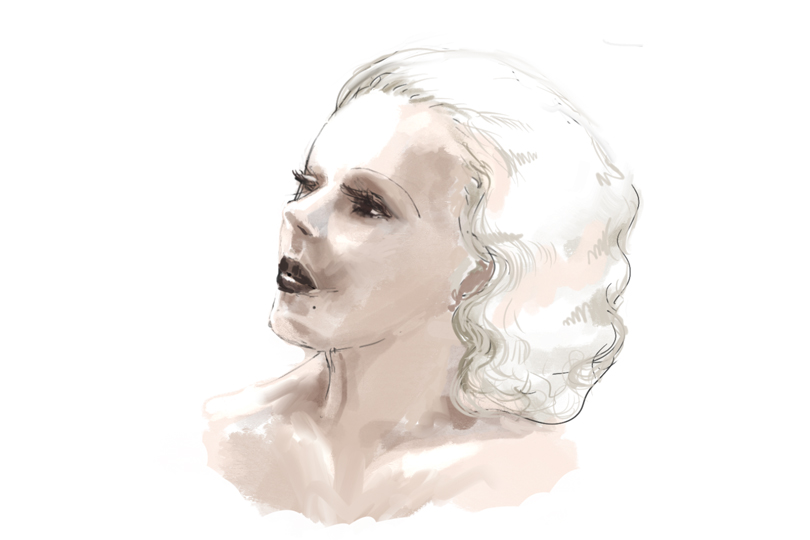
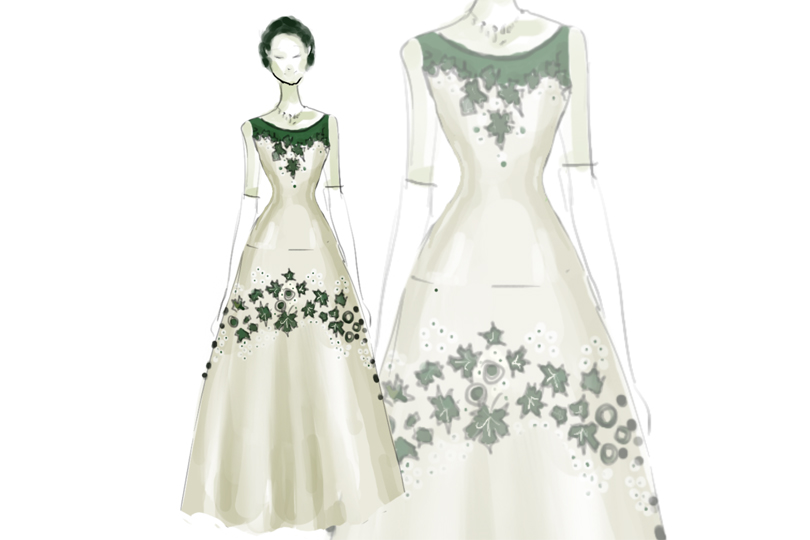
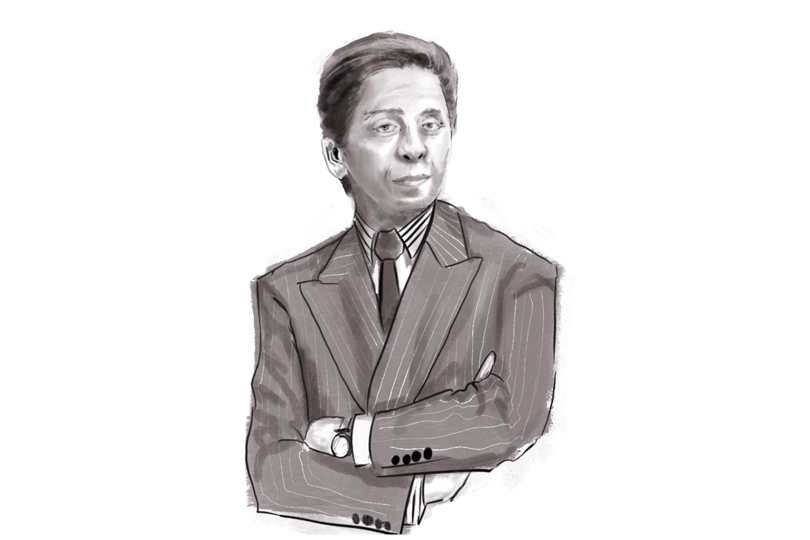
Illustration by Michael Hak
Italian fashion designer Valentino Garavani—famously known solely by his first name—died at home in Rome on Monday, January 19, 2026, at the age of 93. According to a statement posted on Instagram by the Valentino Garavani and Giancarlo Giammetti Foundation: “He passed away peacefully in his Roman home, surrounded by the love of his family.”
The designer was one of the undeniable giants of 20th century fashion, who, alongside Giorgio Armani (who died in September 2024), Karl Lagerfeld (who died in February 2019) and Gianni Versace (who died in July 1997), collectively created and represented what is frequently referred to as the golden era of fashion.
Born in the small town of Voghera in northern Italy in 1932, Valentino Garavani studied fashion in Paris and interned with Jacques Fath and Balenciaga before working for Jean Dessès and Guy Laroche. He eventually co-founded the Valentino fashion house in Rome in 1960, and for more than six decades, the Valentino name was synonymous with elegance, discipline…and a particular shade of red that was so iconic it became a language of its own. In death, his legacy of elegance remains intact alongside a legacy that reshaped the entire fashion industry.
“In Italy, there is the Pope—and there is Valentino,” said Walter Veltroni, the then mayor of Rome, in a 2005 profile of the designer in The New Yorker.
Here is a look back at the illustrious life of fashion’s “last emperor” and the mark he left on the fashion world.
A boy from Voghera with Parisian dreams
Valentino Clemente Ludovico Garavani was born on May 11, 1932, in Voghera, a small town between Turin and Milan in the northern region of Lombardy, Italy. He was the second child of Mauro Garavani and Teresa de Biaggi, and he had a sister, Wanda Garavani, who had been born seven years earlier. His mother named him after Rudolph Valentino (known mononymously as Valentino), the Italian-born matinée idol who had dominated movie theatres in the early 1920s.
Valentino’s father was the director of an electrical supply company, and the family lived in relative affluence, which allowed the young boy to develop an interest in both fashion and art while still in primary school in Voghera. He sketched dresses obsessively, inspired by opera costumes, cinema, and the elegance of women he observed in everyday life. After apprenticing under his aunt Rosa and local designer Ernestina Salvadeo (an aunt of the artist Aldo Giorgini), he left home to study fashion, sketching at Milan’s Santa Maria Institute. Then, at the age of 17, he moved to Paris, the undisputed capital of couture, to pursue his interest in fashion with the support of his parents.
In Paris, Valentino studied at the École des Beaux-Arts and the École de la Chambre Syndicale de la Couture before studying under Jacques Fath, Balenciaga and Christian Dior. At age 19, he secured an apprenticeship at the French couture house of Jean Dessès, where he spent roughly five years. During this time, he assisted Countess Jacqueline de Ribes by sketching her dress ideas. In 1957, Guy Laroche (then an illustrator at Dessès) decided to leave the couture house and set up his own fashion house. Valentino joined his friend’s “tiny” fashion house, where he worked for approximately two years.
Valentino’s formative years in Paris and experience with a range of different fashion brands instilled in him the rigid discipline of haute couture: precision cutting, architectural structure, and how to construct fabric into beautiful garments. Italy would later teach him how to give his designs an effortless grace.
Rome, 1960: The birth of a legendary fashion house
In 1959, at the age of 27, Valentino returned to Rome, a city that was emerging as a ready-to-wear powerhouse, and began working on his own designs. He opened his own salon on the fashionable Via Condotti the following year, with the financial backing of his father and one of his father’s business associates. Valentino presented his first official collection in his own salon shortly after he opened, with models flown in from Paris for his debut show.
On July 31, 1960, shortly after opening the salon, Valentino met the man who would change his life. Giancarlo Giammetti, one of three children, was in his second year of architecture school at a local university in Rome and living with his parents in the prestigious Parioli district of the city. That day, the two met at the Café de Paris on the Via Veneto in Rome; Giammetti gave Valentino a lift home in his Fiat, beginning a friendship that soon developed into a long‑lasting romantic and business partnership. Giammetti left for a holiday in Capri the following day and, by coincidence, Valentino was also travelling there; the pair met again on the island of Capri 10 days after their initial meeting in the coffee shop, and when they returned to Rome, Giammetti made the decision to abandon his university studies to become Valentino’s business partner and life partner.
Unfortunately, the business side of their relationship didn’t have a smooth start. When Giammetti joined the budding Valentino enterprise, the financial situation at the Rome atelier was a mess. Within its first year, Valentino’s excessive spending had led his father’s associate to withdraw from the business, leaving the designer close to bankruptcy and the future of the fashion house questionable. Early collections were elegant but financially precarious. But things started to change when Giammetti took charge of the commercial side of the business.
The house also received a boost from a little celebrity endorsement.
It’s often reported that Valentino got his first burst of international exposure when Elizabeth Taylor wore a white Valentino dress to the premiere of the film Spartacus…but this is only half true. In 1961, while Taylor was in Rome shooting Cleopatra, she spotted Valentino’s work and placed an order for a white column dress from the designer’s spring/summer 1961 collection—which she ultimately wore in October 1961 when she hosted a lavish party in Rome for Kirk Douglas, who was celebrating the first anniversary of the release of Spartacus (not the premiere a year earlier). The party, which was held at the Grand Hotel, brought in guests like Richard Burton and Edward G. Robinson. Taylor and Douglas were photographed dancing together at the event—and the white Valentino evening dress, which Taylor wore with Bulgari emerald-and-diamond earrings and brooch, made headlines. It marked a significant moment in both Hollywood social history and the designer’s early career in Italy.
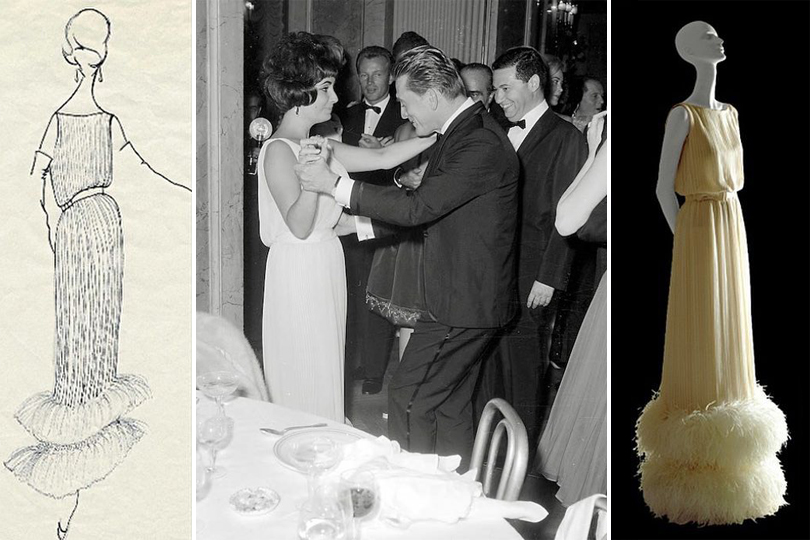
A fashionable endorsement from one of the most famous women in the world ensured that Valentino’s rise was swift. The next breakthrough came the following year, in 1962, when Valentino staged a couture show at the Palazzo Pitti in Florence, then the Italian fashion capital. The collection—dominated by stark white gowns reminiscent of Taylor’s gown—was a revelation. Buyers and editors took notice, especially given the hype when Taylor had worn her white dress months prior. International orders followed, and Valentino was suddenly positioned as Italy’s answer to Parisian couture.
By the late 1960s and 1970s, Valentino had become the designer of choice for the world’s most fashionable, and visible, women. Belgian Queen Paola, Princess Margaret of England, Sophia Loren and Audrey Hepburn were all wearing Valentino.
Of course, they weren’t the only ones…
In September 1964, almost a year after Jacqueline Kennedy had captured the world’s attention wearing her blood-soaked Chanel suit after the assassination of her husband, US President John F. Kennedy, Valentino was in the United States to present a collection of his work at a charity ball at the Waldorf-Astoria in New York. Jacqueline Kennedy wanted to view the collection but couldn’t attend the event, so Valentino decided to send a model, a sales representative and a selection of key pieces from his collection to her apartment on Fifth Avenue. She ordered six of his dresses, all in black and white, and wore them during the remainder of her highly publicized year of mourning. From then on, she became a devoted client and friend of the designer. In fact, Valentino later designed the wedding dress (and her entire trousseau) for her marriage to Greek business mogul Aristotle Onassis in 1968. She famously made a modern choice for her second wedding and opted to wear a two-piece, knee-length Valentino ensemble that featured a high-neck lace bodice with bishop sleeves and a pleated skirt. The unconventional choice for its time marked her transition to “Jackie O,” a distinct fashion icon.
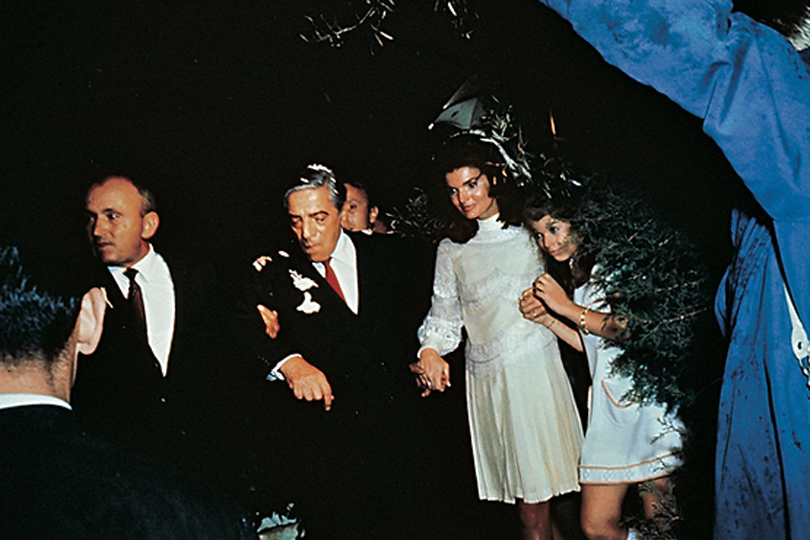
“I owe a big percentage of my fame to her,” Valentino said of the former first lady in W Magazine in 1984.
By now Valentino was dressing the most important women in the world. But he was not only dressing the jet set; he was defining an era. While others embraced provocation, Valentino became synonymous with looks that were timeless and elegant, a standard that would continue for the remainder of his career.
“Valentino red”: inventing a signature colour
Every great designer has a calling card. For Valentino, it was a very specific shade of red.
The story of the colour “Valentino Red” (Rosso Valentino) has become fashion folklore throughout the decades. It was initially inspired by both the costumes at a production of George Bizet’s Carmen that Valentino saw in the 1950s when he was a student in Spain, and by a woman in the audience wearing a striking red gown. Valentino had been captivated by the colour’s emotional force that night, and the experience stayed with him.
“All the costumes on the stage were red.… the women in the boxes were mostly dressed in red, and they leaned forward like geraniums on balconies, and the seats and drapes were red too.… I realized that after black and white, there was no finer colour,” Valentino once said, before recalling one particular woman in a red gown sitting at the show.
“Enthralled, I saw a woman with grey hair in one of the boxes, very beautiful, dressed in red velvet. Among all the colours worn by the other women, she looked unique, isolated in her splendor.… I told myself that if I were ever going to become a designer, I would do lots of red,” the designer told Vogue.
This singular experience led to Valentino making red a core colour in almost all of his collections, famously debuting it in his 1959 “Fiesta” dress, which was a strapless tulle party number in a vivid, orange-tinged shade.
“Valentino has superstitions that became status symbols. He did red once, and now you have red in every collection. Most of our statements came to be because we are romantic; we don’t like to throw away things we like or that bring good luck,” Giammetti told Vogue in 1985.
Valentino had begun developing his own unique, vivid shade of red even before he opened his own fashion house in Rome, and over time he refined the precise shade—neither too orange nor too blue, luminous under any light. “Valentino red” became more than a colour; it became a brand identity. In fact, Valentino’s red hue has the rare distinction of having its own Pantone colour: a mix of 100% magenta, 100% yellow and 10% black.
Though Valentino’s trademark colour was red, it was a 1967 collection comprised entirely of white, ivory and beige clothes—his “no color” collection—that further thrust him into the international fashion spotlight. That collection stood in stark contrast to the bold psychedelic patterns of the time and was a stark contrast to every other Valentino collection, which had always featured the colour red.
Despite the success of the “no colour” collection, red quickly returned and was always at the heart of every Valentino collection—perhaps most memorably when the designer celebrated his 40 years in fashion by showing 40 red dresses at Rome’s Piazza di Spagna in 1999.
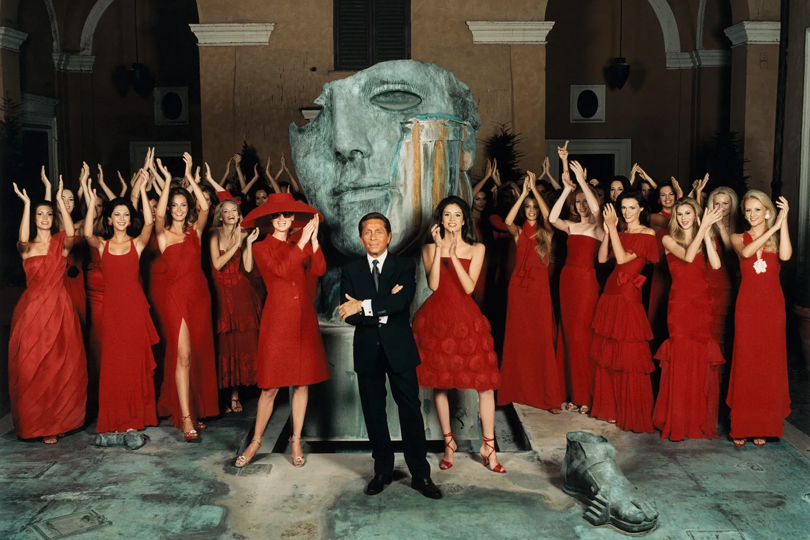
“I think a woman dressed in red is always wonderful, she is the perfect image of a heroine,” Valentino once wrote in Rosso, a striking coffee table book released in 2022 and dedicated to his signature hue.
The final bow: 2008
As the fashion industrialized, Valentino and Giammetti adapted the Valentino brand carefully. Ready-to-wear lines expanded the house’s reach without diluting its image. Accessories—particularly handbags and shoes—became crucial to its commercial success.
In 1998, Valentino and Giammetti sold the company they had built together for $300 million to conglomerate Holding di Partecipazioni Industriali (HdP) as it attempted to build out its fashion division to rival Gucci and LVMH Moet Hennessy Louis Vuitton. Ownership of the Valentino brand changed hands multiple times through the following years, but Valentino’s active presence in the industry and within the brand continued for years to come.
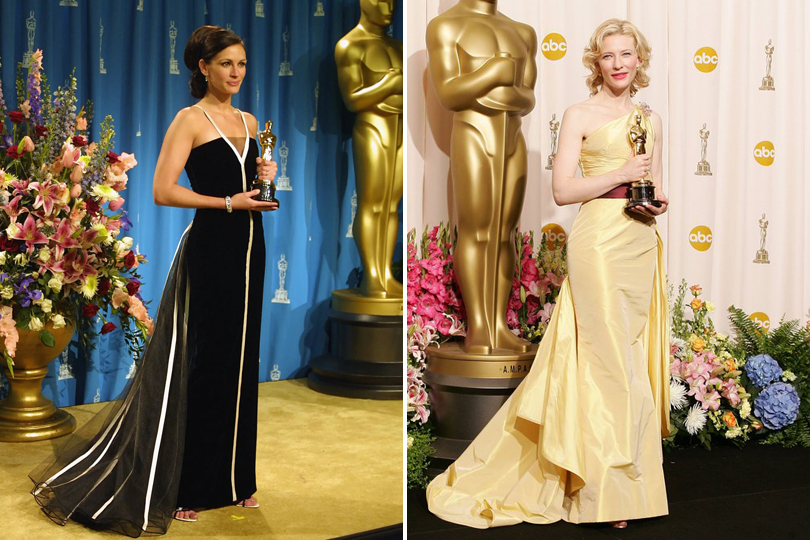
Through all the changing owners, Valentino’s design ethos remained consistent. His designs rarely relied on gimmicks…a fashionable move that slowly turned him into the red carpet king who delivered some of Hollywood’s most iconic fashion moments, including Julia Roberts in vintage black and white Valentino, accepting her Best Actress Oscar in 2001; and Cate Blanchett in a butter-yellow silk, one-shouldered gown, accepting her Best Supporting Actress Oscar in 2005.
From 2005 to 2007, documentary cameras followed Valentino, getting exclusive access to his life and work for Matt Tyrnauer’s documentary Valentino: The Last Emperor, which had its world premiere at the 2008 Venice International Film Festival and its North American premiere at the 2008 Toronto International Film Festival. “I know what women want,” he said in the film. “They want to be beautiful.”
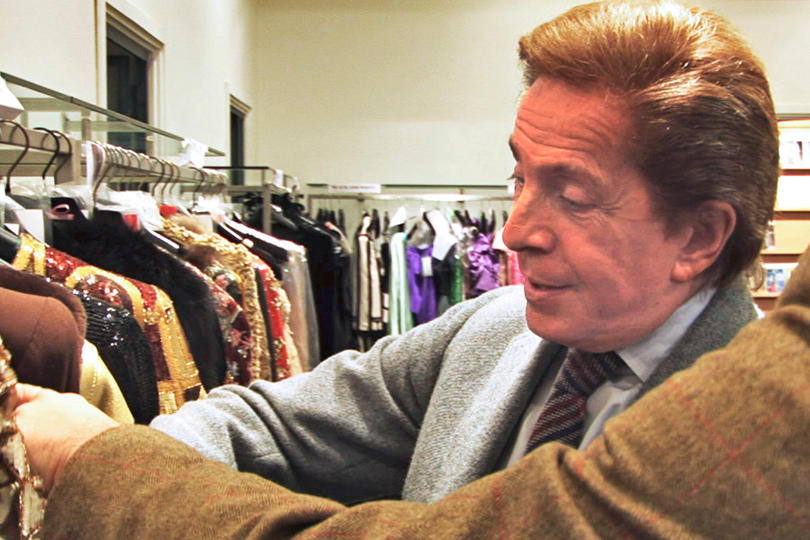
Valentino made the decision to retire shortly after filming was complete. “At this time, I have decided that this is the perfect moment to say adieu to the world of fashion,” he said in a statement, per The New York Times. “As the English say, I would like to leave the party when it is still full. I have been very lucky to be able to do what I have loved all my life. There can be few greater gifts than that.”
So, in January 2008, Valentino staged his final haute couture show in Paris, and, taking inspiration from his 40th anniversary presentation, every model wore red. Not surprisingly, the front row read like a fashion hall of fame. When Valentino walked down the runway and took his last bow, the thunderous standing ovation was not just for the clothes, but for the end of an era.
The end of fashion’s most romantic empire
When Valentino officially retired in 2008, he closed a chapter that few fashion designers ever get to write on their own terms. Of course, even in retirement, his name and aesthetic remained touchstones for designers, stylists and devotees of elegant dressing.
The House of Valentino continued under new creative leadership, evolving for different generations. Alessandra Facchinetti initially took over creative direction of the brand, followed by the duo Maria Grazia Chiuri and Pierpaolo Piccioli, who were appointed creative directors and led the brand together from 2008 until 2016. After Chiuri left for Dior in 2016, Piccioli became the sole creative director, and he remained at the house until March 2024, when Alessandro Michele was appointed as creative director.
The brand continued to thrive after Valentino’s retirement, in part because each creative director understood the brand’s DNA and worked to ensure that the legacy of the fashion house’s founder remained untouchable.
Valentino and Giammetti parted romantically in 1972, but despite ending their romantic relationship, they remained life partners, business partners and close companions for over 65 years. Giammetti was by Valentino’s side until his death.
Valentino’s death marks the end of an era and is a reminder that in a fashion industry defined by reinvention, few designers have managed to create a signature so instantly recognizable—and so enduring—as Valentino Garavani. To understand Valentino is to understand fashion not as novelty, but as refinement. His story is one of meticulous craftsmanship, and a belief—radical in its consistency—that femininity, and timeless, beautiful clothes, never go out of style.
Want more? You can read other stories from our The Story Of series right here.