

By Christopher Turner
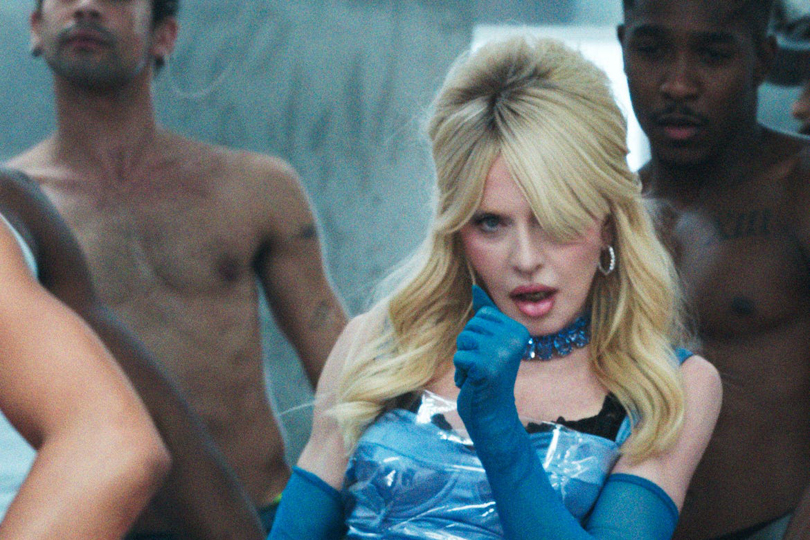
When Madonna debuted a nearly 14-minute visual project in June built around the first six songs from Confessions II—officially released today—one preview immediately grabbed fans’ attention. Packed with celebrity cameos and an endless stream of name-drops, “Danceteria” quickly became one of the album’s most anticipated tracks. Now that fans can finally hear the song in full, social media is being flooded with people asking the same question: Who are all of the fabulous people Madonna references throughout the song?
We will tell all…but first, some background.
Inspired by the legendary New York City nightclub of the same name, “Danceteria” pays tribute to the creative playground Madonna called home before she became one of the biggest stars in the world. The original club operated for less than a decade, from 1980 until 1986, and it moved between several locations during its short but influential run. Madonna was a regular at the venue’s second incarnation on 21st Street, which occupied the first four floors of a former 12-storey industrial building, with something different offered on every floor. More importantly, it was here that DJ Mark Kamins played her demo of “Everybody” to a packed dance floor…and the crowd’s enthusiastic response paved the way to convincing executives at Sire Records to sign the aspiring singer. The rest, as they say, is history.
Danceteria was the ultimate gathering place for downtown New York’s coolest creatives, where musicians, artists, designers, club kids, and fashion icons mingled long before many of them became household names. Madonna’s “Danceteria” serves as both a love letter to that era and a history lesson, celebrating the genre-defying nightclub that brought together punk, new wave, hip-hop, art, and fashion under one roof.
We know, we know… You’re wondering about the many names and references scattered throughout the song. Here’s your guide to every person, place, and cultural reference Madonna mentions in “Danceteria.”
4, 5, 6
Lyric: “Get off the train, four, five, six / Walk to the club, don’t wait for shit”
To reach the second iteration of the legendary 1980s nightclub Danceteria (which was located at 30 West 21st Street, between 5th and 6th Avenues), partygoers could hop on the New York subway and simply use the 4, 5, or 6 subway lines.
Martin Burgoyne
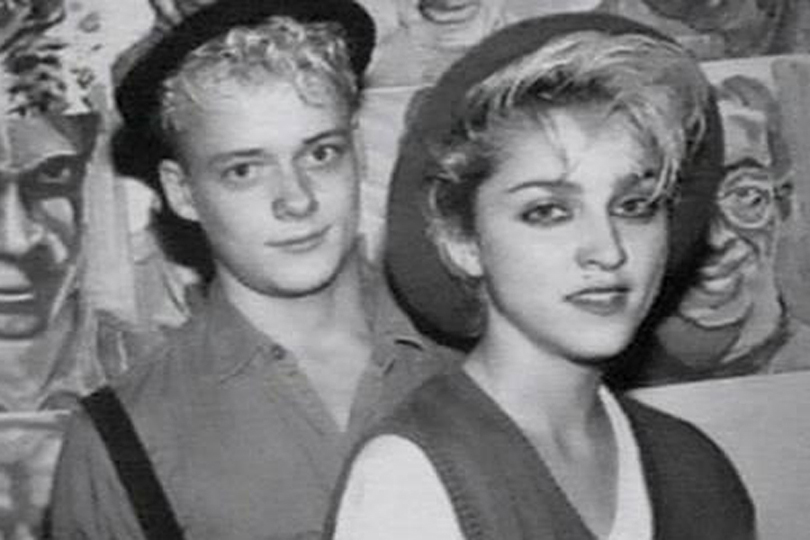
Lyric: “Meet this boy named Martin Burgoyne / He’s my best friend, he’s my boytoy”
Martin Burgoyne (1963–1986) was Madonna’s best friend, roommate, former Studio 54 bartender, and occasional backup dancer during her early years in New York City. Like Madonna, he was a transplant to the city, born in England before spending time in New York State and Florida.
Before Madonna’s rise to fame, Burgoyne shared an apartment with the future pop icon on the Lower East Side at 232 East 4th Street (between Avenue A and Avenue B) in Alphabet City. When her career began to take off, he managed her first club tour, illustrated the cover artwork for the 1983 “Burning Up” EP, and even made a brief appearance in the “Material Girl” music video. Throughout Madonna’s earliest years in New York, the pair were virtually inseparable.
In August 1986, Burgoyne was diagnosed with AIDS-related complex (ARC). Madonna helped care for him during his illness, paid many of his medical expenses at St. Vincent’s Hospital, and leased him an apartment on West 12th Street in Greenwich Village so he could live closer to the hospital. She was by his side, holding his hand, when he died on November 30, 1986, at just 23 years of age.
Madonna would later pay tribute to Burgoyne with the song “In This Life,” released on her 1992 album Erotica. His death profoundly affected her, becoming one of the personal losses that helped shape her outspoken AIDS advocacy and activism.
Boy Toy
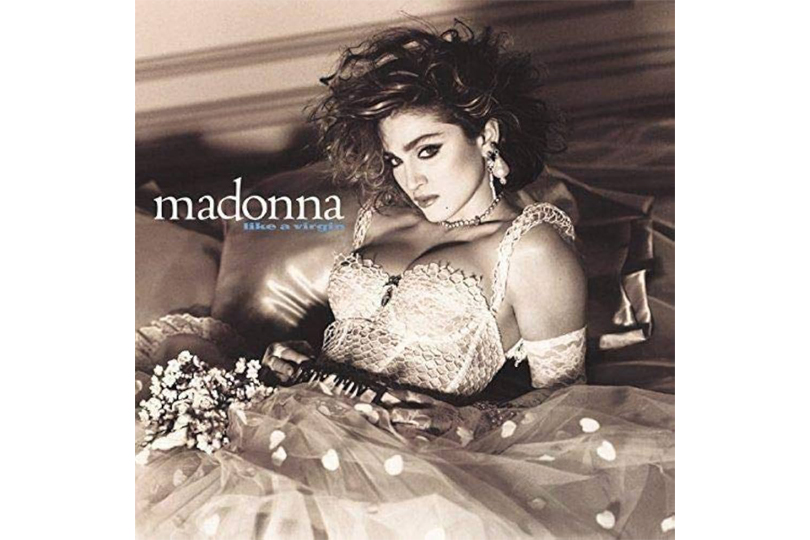
Lyric: “Meet this boy named Martin Burgoyne / He’s my best friend, he’s my boy toy”
Longtime Madonna fans will immediately recognize the reference to “Boy Toy.” During the Like a Virgin era, Madonna frequently wore a silver belt buckle emblazoned with those two words, transforming the phrase into one of the defining symbols of her early career. The accessory appeared throughout her 1984 and 1985 promotional appearances and quickly became inseparable from her image.
Before long, young fans around the world were emulating Madonna’s signature style. Lace bows, crucifix necklaces, stacks of rubber bangles, fingerless gloves, visible bras, and the coveted “Boy Toy” belt became essential pieces of the unofficial Madonna uniform, inspiring an entire generation of so-called “Madonnabes.”
While stylist Maripol had the belt created as part of the image she helped craft for Madonna, the phrase itself predates their fashionable collaboration. Boy Toy was originally Madonna’s street tag while she was frequenting Danceteria. Years ago, she even confessed to having spray-painted the name around NYC back in the day.
Haoui Montaug
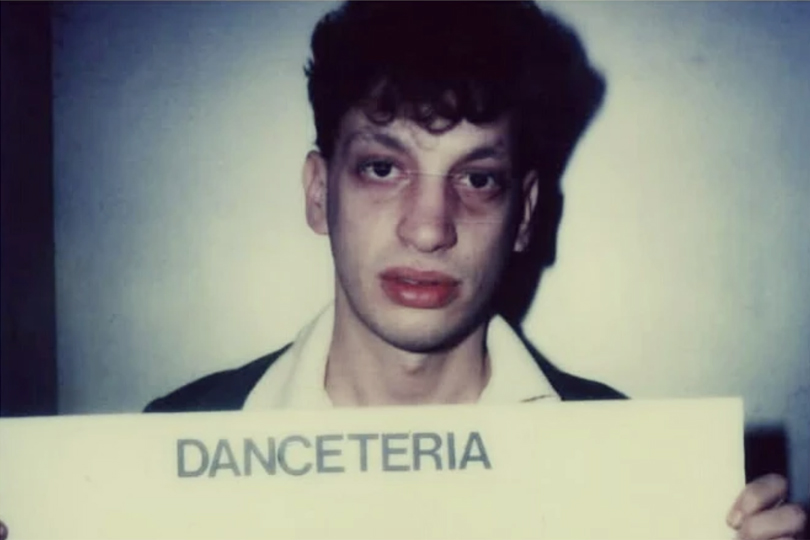
Lyric: “Cut to the front, there’s Haoui Montaug”
Howard ‘Haoui’ Montaug (1952–1991) was one of the defining personalities of New York City’s nightlife during the late 1970s and early 1980s. A legendary doorman and club fixture, he worked the doors at iconic venues including Hurrah, Mudd Club, Studio 54, the Palladium, and, of course, Danceteria. He was also the promoter behind the “No Entiendes!” cabaret at Danceteria, where Madonna performed her debut single, “Everybody.”
After being diagnosed with AIDS, Montaug planned the end of his life on his own terms. In June 1991, he invited about 20 friends to his Bowery loft to witness what he intended to be his final farewell. Madonna, who was in Los Angeles at the time, joined the gathering by telephone.
Montaug initially took five Seconal barbiturate capsules and fell into a deep sleep, but he continued breathing through the night. When he unexpectedly awoke the following morning, he reportedly became frustrated that his attempt had not been successful. He then swallowed 20 more pills and died shortly afterwards, on June 7, 1991.
No Entiendes!
Lyric: “Waves us in, No Entiendes”
“No Entiendes!” was the influential cabaret series created by Haoui Montaug at Danceteria in the early 1980s. Originally called “I Dunno,” the event was later renamed using the Spanish phrase for “I don’t understand.” It quickly became one of New York City’s hottest showcases for emerging musicians, artists, and performers.
On October 13, 1982, Madonna took the stage at “No Entiendes!” to perform what would become her debut single, “Everybody,” for the first time. She was joined by dancers Bags Rilez, Erika Belle, and Martin Burgoyne, and admission that night was a mere $5.
You can watch that performance, with Montaug introducing Madonna for the very first time, below:
Debi Mazar
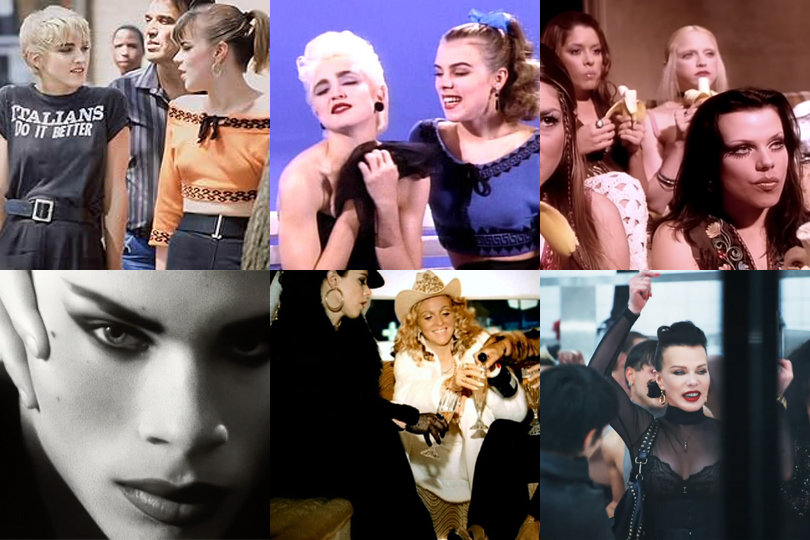
Lyric: “Get on the elevator, I run into Debi Mazar / Take us to the third floor, Walk us to the dance floor”
Actress Debi Mazar is one of Madonna’s oldest and closest friends. The pair first met at Danceteria, where Mazar worked as an elevator operator, after Madonna asked to be taken upstairs to see DJ Mark Kamins so she could drop off a cassette tape containing her music. Debi has told the story of their first encounter countless times throughout the years, most recently sharing it with The Perfect Magazine during Paris Fashion Week:
“The first time I met Madonna was in 1981 or 1982 in the elevator at Danceteria.… We just talked for a second: ‘How you doing?’ ‘I’m good, how you doing?’ … She went up and did her business and then she came back down and I said: ‘So, you’re a singer?’ She goes: ‘Yeah, I’m going to be a star.’ I said: ‘Well, that’s cool. You know, I do really good hair and makeup. I can do your makeup.’ And she goes: ‘Oh my god I love that song [coming from outside the elevator], do you wanna dance?’ I said: ‘Yeah.’ I said to my friend Audrey, who ran the other elevator, I said: “Can you, you know, take over?’ And we went on the dance floor and danced for like 15 minutes and it was great. And then we just became friends and started having sleepovers and hanging out and running around the city. And then she became a star and she started performing there [Danceteria].”
More than four decades later, the friendship is still going strong. Mazar has since built an acclaimed acting career, appearing in films such as Goodfellas and television favourites including Entourage and Younger. Along the way, she has also appeared in several Madonna music videos, including “Papa Don’t Preach,” “True Blue,” “Justify My Love,” “Deeper and Deeper,” and “Music,” before making another appearance in the “Danceteria” segment of the Confessions II visual project.
Mark Kamins
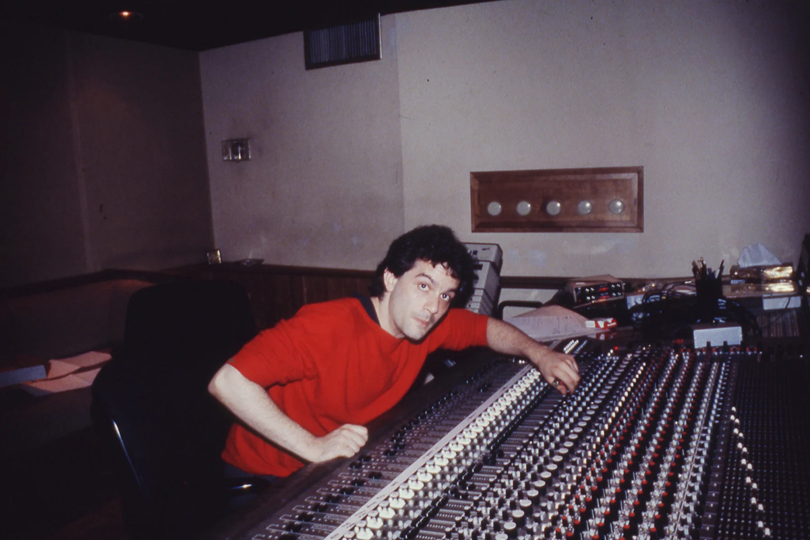
Lyric: “Then I see Mark Kamins is the DJ / He’s the DJ, hide the cocaine / He played my tape, ‘Everybody’”
Mark Kamins (1955–2013) was one of Danceteria’s most influential DJs, and briefly dated Madonna during the early 1980s. More importantly, he was the first person to play her demo of “Everybody” to a packed dance floor—a moment that helped change the course of her career.
The demo for “Everybody” that was handed to Kamins was written solely by Madonna and produced by Stephen Bray. Rather than playing the cassette immediately after she handed it to him, Kamins took it home to listen first. He liked what he heard, and so did the crowd at Danceteria when he played it. After seeing the crowd’s enthusiastic response, Kamins introduced Madonna and her demo to Michael Rosenblatt and Seymour Stein at Sire Records, and that introduction ultimately led to Madonna signing her first recording contract—a deal reportedly worth a $5,000 advance, plus $1,000 for each song she wrote, with a commitment from Sire to release two 12-inch singles. The first was “Everybody,” followed by “Burning Up.”
Kamins remained a fixture of New York City’s club scene for years to come, performing at some of the city’s most prominent venues. When he died of a heart attack in 2013, Madonna issued a statement that read: “I’m very sorry to hear about Mark’s death. I haven’t seen him for years but if it weren’t for him, I might not have had a singing career. He was the first DJ to play my demos before I had a record deal. He believed in me before anyone else did. I owe him a lot. May he Rest in Peace.”
Fab 5 Freddy
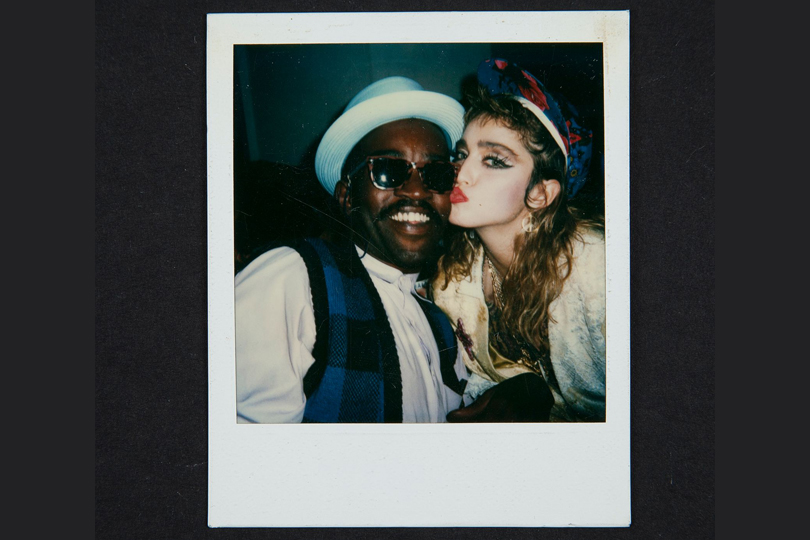
Lyric: “This is how we start the party / There’s Fab 5 Freddy and Basquiat”
Fab 5 Freddy (born Fred Brathwaite) is a legendary New York City visual artist and filmmaker, and one of the pioneers of hip-hop culture. During the late 1970s and early 1980s, he helped bridge the city’s uptown hip-hop movement with the downtown art and No Wave scenes, becoming one of the era’s most influential cultural connectors.
He was also part of Madonna’s early New York circle and, perhaps most significantly to her story, introduced her to stylist, creative collaborator, and friend Maripol—the woman who would help shape Madonna’s instantly recognizable early image. (More on Maripol in a moment.)
Fab 5 Freddy’s influence reached mainstream pop culture in 1981 when Debbie Harry rapped the lyric “Fab 5 Freddy told me everybody’s fly” on the 1981 Blondie hit song “Rapture.”
Basquiat
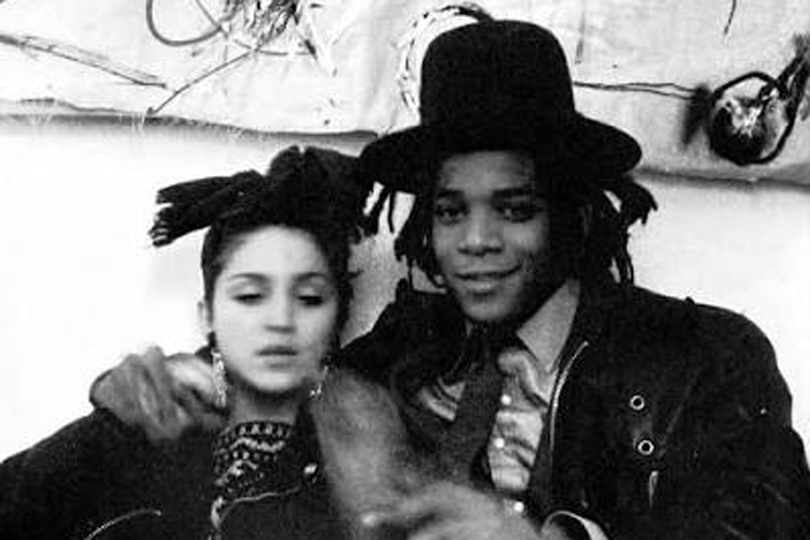
Lyric: “This is how we start the party / There’s Fab 5 Freddy and Basquiat”
Jean-Michel Basquiat (1960–1988) first gained attention in the late 1970s as the graffiti artist SAMO before emerging as one of the defining figures of New York City’s downtown art scene (Basquiat created and used the SAMO moniker in New York City from 1978 to 1980 alongside his friend and fellow artist Al Diaz.) By the early 1980s, his expressive, Neo-expressionist paintings were being exhibited in major galleries and museums around the world. Over the years he has become a major cultural icon, with one of his paintings, “Untitled 1982,” being sold for over $110 million.
Basquiat and Madonna met just as both were on the cusp of superstardom. Madonna had recently released her debut album, while Basquiat’s paintings were rapidly making him one of the art world’s brightest new stars. The pair dated from 1982 to 1983, although their relationship was complicated by Basquiat’s struggles with heroin addiction.
Speaking on The Howard Stern Show in 2015, Madonna reflected on their intense romantic relationship, saying, “He wouldn’t stop doing heroin. He was an amazing man and deeply talented. I loved him.”
The breakup proved just as dramatic. During the same interview, Madonna revealed that after she ended the relationship, Basquiat took back all of the paintings he had made for her (except one) and painted over them.
Basquiat died from a heroin overdose at his Great Jones Street studio in Manhattan on August 12, 1988. He was 27 years old.
Keith Haring
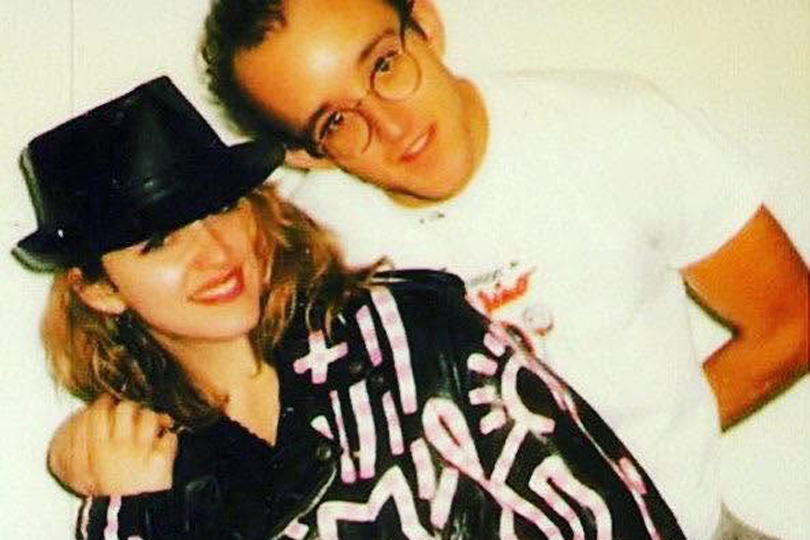
Lyric: “Keith Haring and Kenny Scharf”
Keith Haring (1958–1990) was the groundbreaking artist whose bold, graffiti-inspired imagery helped redefine pop art during the 1980s. He and Madonna moved in the same downtown creative circles, and the pair quickly became friends, hanging out at The Roxy, Mudd Club, and Danceteria. Madonna even slept on Haring’s couch for a while before finding success.
As Madonna’s career took off, she championed Haring’s work through several high-profile collaborations: he designed the striking backdrop for her 1985 Virgin Tour and created the custom-painted jacket she wore to his legendary Party of Life fundraiser in 1984.
Haring was diagnosed with HIV in 1987 and with AIDS in the fall of 1988. During the final years of his life, he increasingly used his art to raise awareness about the AIDS crisis and to advocate for compassion at a time when misinformation and stigma were widespread. He died from AIDS-related complications at his LaGuardia Place apartment in Greenwich Village on February 16, 1990, at the age of 31.
In recognition of World AIDS Day on December 1, 2018, Madonna reflected on their friendship in an Instagram post, writing: “With My Good Friend Keith Haring. He was a big AIDS activist when everyone was calling it GAY cancer. I was with him the day he died of AIDS. He said what hurt him the most was how people did not want to touch doorknobs after he touched them. The discrimination then was next level.”
Kenny Scharf
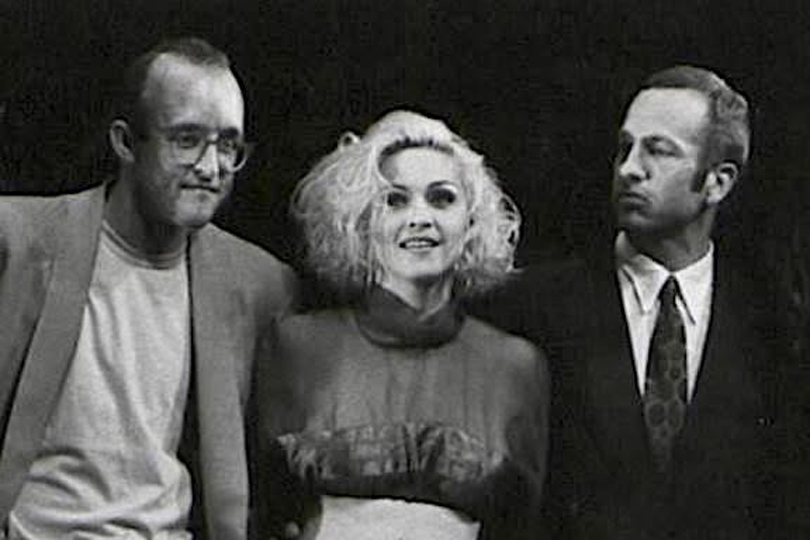
Lyric: “Keith Haring and Kenny Scharf”
Kenny Scharf is a pop surrealist painter celebrated for his colourful, cartoon-inspired works and psychedelic imagery. One of the leading figures of New York City’s East Village art movement, Scharf helped define the creative explosion that transformed downtown Manhattan during the late 1970s and early 1980s.
He was roommates and close friends with Keith Haring and belonged to the same influential tight-knit creative circle as Jean-Michel Basquiat, Andy Warhol, and Madonna.
After their Danceteria days, Madonna and Scharf were frequently seen together at events and parties in the East Village, collaborating on or supporting benefits such as the 1989 Don’t Bungle The Jungle Amazon Rainforest event in Brooklyn. Today, Scharf continues to actively create and exhibit his signature pop-surrealist and cartoon-inspired art worldwide.
Shafrazi
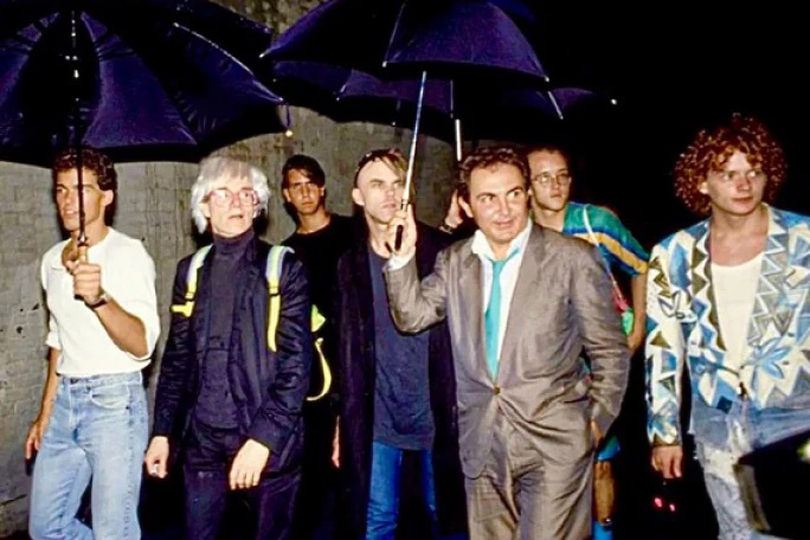
Lyric: “Everyone came from Shafrazi / Sha-fra-zi to the beat”
The Tony Shafrazi Gallery, located at 163 Mercer Street in the SoHo neighbourhood, was one of the epicentres of New York City’s downtown art scene during the 1980s. Founded in 1979 by influential art dealer Tony Shafrazi, the gallery became a gathering place for many of the artists, musicians, and creatives who also frequented Danceteria.
Together, Danceteria and the Tony Shafrazi Gallery helped define the city’s cultural renaissance, blurring the lines between music, fashion, nightlife, and contemporary art. The renowned gallery—which regularly exhibited the work of several of Madonna’s friends and contemporaries, including Kenny Scharf, Futura 2000, Jean-Michel Basquiat, Andy Warhol, and Keith Haring—closed its physical location in 2014.
Maripol
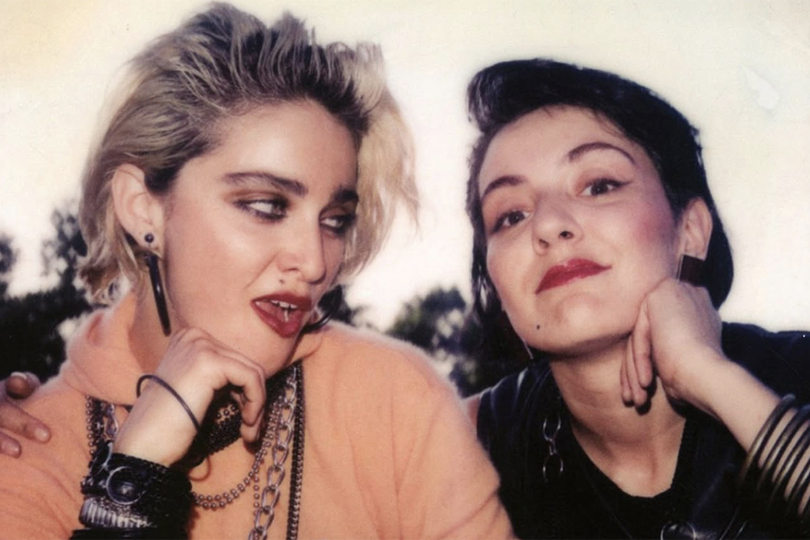
Lyric: “There’s Maripol and a guy named Fred”
Maripol is the French-born artist, stylist, photographer, and creative director widely credited with helping shape Madonna’s instantly recognizable early-1980s image. The pair met in 1982 during a night out at the New York nightclub The Roxy. That evening, Fab 5 Freddy was performing, and he asked Maripol to find a few stylish women to dance onstage behind him. Having previously seen Madonna perform at Haoui Montaug’s “No Entiendes!” night at Danceteria, Maripol invited the aspiring singer to join the performance.
The encounter marked the beginning of one of the most influential creative partnerships in pop culture. Shortly afterwards, Martin Burgoyne contacted Maripol after Madonna began looking for an art director for her self-titled 1983 debut album. Madonna and Maripol quickly became close friends, with Maripol helping refine Madonna’s evolving visual identity.
Maripol is widely credited with creating the look that defined Madonna’s breakthrough years, especially the “Like a Virgin” era. From layered lace and mesh hair ties to crucifix jewellery, stacks of rubber bangles, and vintage-inspired streetwear, her styling helped transform Madonna into one of the most recognizable pop stars of the decade. Many of those signature accessories came directly from Maripol’s own boutique, Maripolitan, on Bleecker Street, where downtown fashion insiders shopped long before the rest of the world caught on.
The fashionable collaboration ended in 1986 when Madonna reinvented her image with short bleach-blonde hair, but there was never acrimony between the two women. They remain friendly to this day.
Rock Steady Crew and Crazy Legs
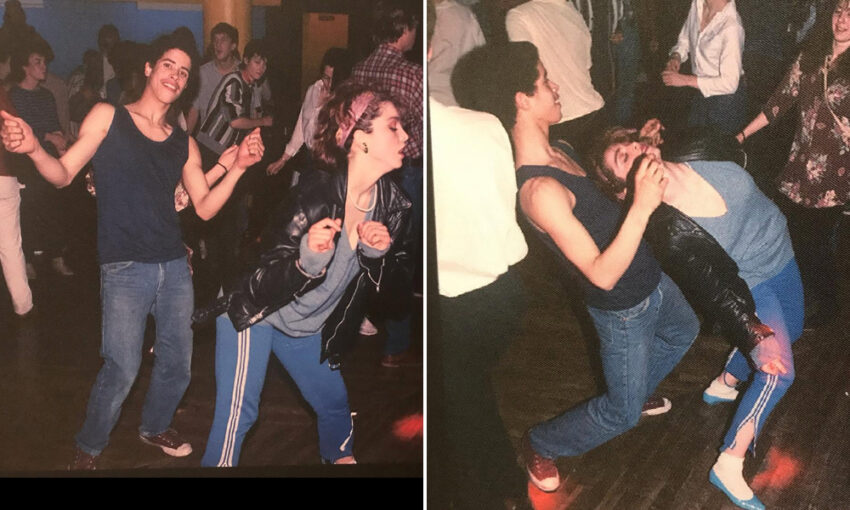
Lyric: “See these guys spinning on their heads / There’s Rock Steady Crew and Crazy Legs”
When Madonna was a regular at Danceteria in the early 1980s, she frequently spent time with—and even breakdanced alongside—Richard “Crazy Legs” Colón, one of the world’s most influential B-boys and the longtime president of the Rock Steady Crew.
Crazy Legs was among the earliest members of the legendary breaking crew following its formation in 1979. As hip-hop culture exploded across New York City, both he and the Rock Steady Crew became regular fixtures at Danceteria, helping transform the nightclub into one of the few places where hip-hop, punk, new wave, art, and fashion naturally intersected.
Madonna’s close proximity to dancers like Crazy Legs during her formative years immersed her in New York’s emerging street dance culture—an influence that would later surface in everything from her choreography and fashion to her lifelong embrace of underground dance communities.
Nile Rodgers
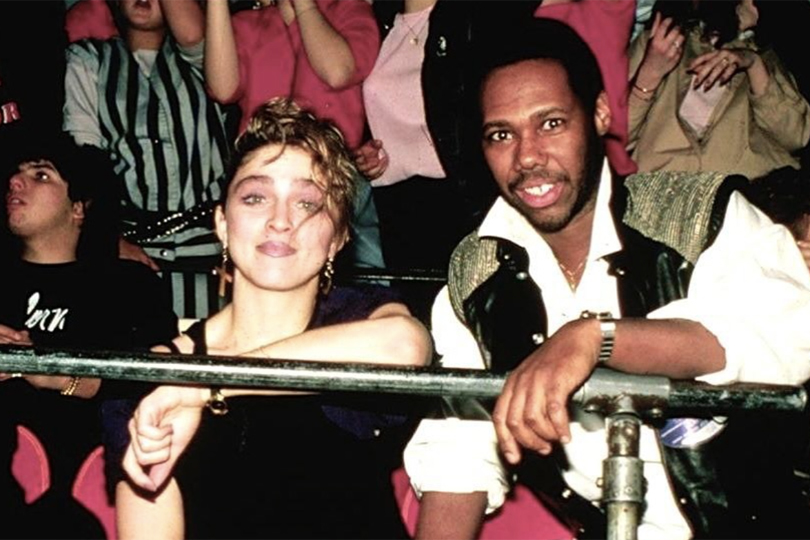
Lyric: “Nile Rodgers and David Byrne / B52s had to money to burn”
Nile Rodgers first rose to fame as the co-founder of the band Chic, helping define the late-1970s disco era with classics like “Le Freak” and “Good Times.” He would later become one of the most influential producers in modern music, shaping the sound of pop, rock, funk, and hip-hop across multiple decades.
Rodgers played a monumental role in shaping Madonna’s early superstardom. Although he entered her story slightly later than many of the people mentioned in “Danceteria,” his impact on her career was immeasurable. Following the success of her self-titled debut album, Madonna enlisted Rodgers to produce her landmark second album, Like a Virgin (1984). The album transformed her from a rising pop star into a global superstar, spawning hits including the title track, “Material Girl,” and “Dress You Up.”
Their creative partnership has endured for decades, with Rodgers continuing to collaborate with and publicly champion Madonna throughout her career.
David Byrne
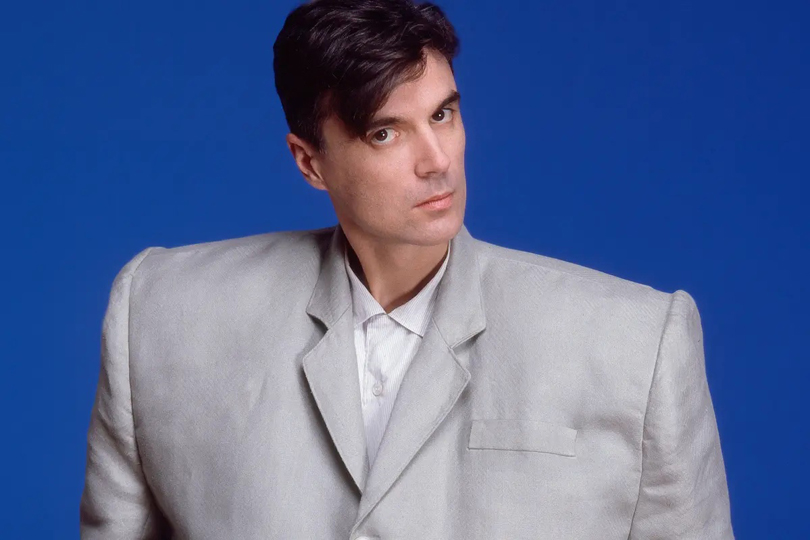
Lyric: “Nile Rodgers and David Byrne / B52s had to money to burn”
David Byrne is best known as the co-founder, lead singer, and principal songwriter of the influential new wave band Talking Heads. He met his future bandmates Chris Frantz and Tina Weymouth while briefly attending the Rhode Island School of Design. After relocating to New York City in 1975, the trio formed Talking Heads and quickly became central figures in the city’s punk, new wave, and downtown art scenes following their debut at the East Village club CBGB.
Byrne and Talking Heads were regulars at the original Danceteria on West 37th Street, helping establish the nightclub as a gathering place for artists, musicians, and creatives from across New York’s underground scene. When Danceteria later relocated to West 21st Street—the location most closely associated with Madonna—Byrne remained part of the club’s creative community.
The B-52s
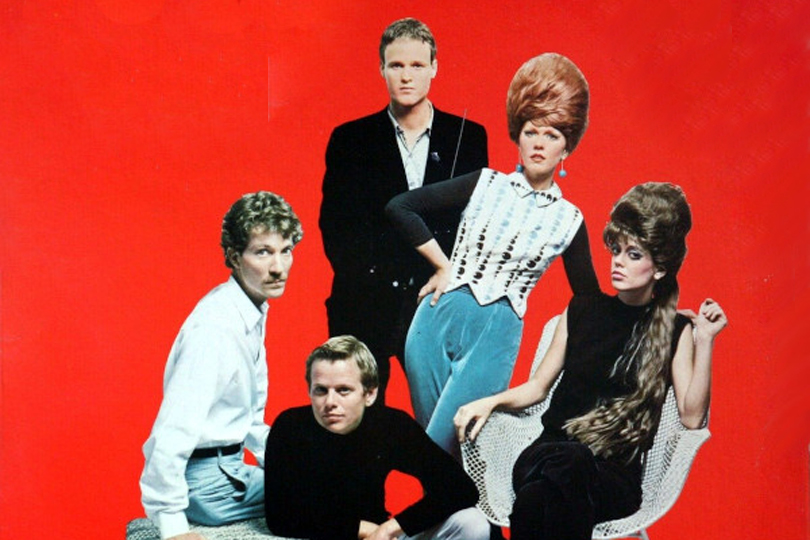
Lyric: “Nile Rodgers and David Byrne / B52s had to money to burn”
The B-52s formed in 1976 when friends Fred Schneider, Kate Pierson, Keith Strickland, and siblings Cindy and Ricky Wilson came together in Athens, Georgia. While they’re best known for enduring hits like “Rock Lobster” and “Love Shack,” the band’s quirky blend of new wave, punk, surf rock, and dance music made them one of the defining acts of the late 1970s and early 1980s. The lyric “money to burn” is a nod to The B-52s’ 1983 hit “Legal Tender” from the album Whammy!
Like Madonna, The B-52s were regulars at Danceteria and helped establish the club as one of New York City’s premier destinations for adventurous new music. Years later, Madonna frequently cited The B-52s as an important influence during her earliest years in the city’s downtown club scene.
Lounge Lizards
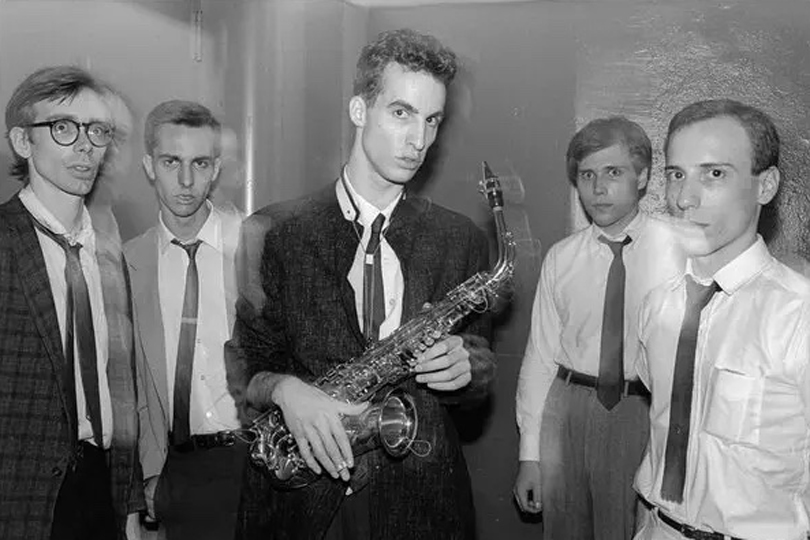
Lyric: “Lounge Lizards had so much style”
The Lounge Lizards were an avant-garde band founded in 1978 by saxophonist, actor, and composer John Lurie. Often described as “fake jazz” or part of New York’s “No Wave” movement, the group became fixtures of the city’s downtown arts scene in the early 1980s, blending jazz, punk, and experimental music into a sound that perfectly reflected the era’s creative energy.
The Lounge Lizards regularly performed at Danceteria, making them a familiar presence during the years Madonna and her circle called the nightclub their second home.
A fun bit of trivia: the 1985 cult classic Desperately Seeking Susan, starring Rosanna Arquette and Madonna, filmed its famous nightclub sequence at Danceteria. Set to Madonna’s hit “Into the Groove,” the scene also features cameo appearances by several musicians associated with the Lounge Lizards, serving as a time capsule of New York’s downtown creative scene.
“Doo, doo-doo, doo-doo-doo, doo-doo-doo”
Lyric: “Lower East Side, take a walk on the wild side / Doo, doo-doo, doo-doo-doo, doo-doo-doo”
Madonna closes “Danceteria” with one final tribute to the city that shaped her. As the song fades out, she briefly interpolates the instantly recognizable “doo, doo-doo, doo-doo-doo, doo-doo-doo” vocal refrain from “Walk on the Wild Side,” the signature 1972 hit by Lou Reed.
“Walk on the Wild Side” chronicled the colourful artists, outsiders, and dreamers who defined downtown Manhattan in an earlier generation, while Madonna’s “Danceteria” celebrates many of the creative figures who inherited that same world a decade later. By quoting Reed’s classic, Madonna neatly links her own New York story to the city’s broader artistic legacy.
And, because of the interpolation, Reed receives a songwriting credit on “Danceteria” alongside Madonna, Andrew Watt, and Stuart Price.
RELATED:
- THE STORY OF: Madonna and MAC’s legendary ‘Russian Red’ lipstick
- THE STORY OF: Madonna’s iconic Jean Paul Gaultier cone bra
- THE STORY OF: The pink dress worn by both Marilyn Monroe and Madonna
- THE STORY OF: Madonna’s Marie Antoinette dress from her “Vogue” performance at the 1990 MTV Video Music Awards
- How Madonna’s May 1989 Vogue cover signalled a dramatic change for fashion magazines
Trending







![Everything You Need To Know About Netflix’s ‘Monster: The Lizzie Borden Story’ [UPDATED]](https://29secrets.com/wp-content/uploads/2026/08/Everything-You-Need-To-Know-About-Netflix-Monster-The-Lizzie-Borden-Story-HEADER.jpg)




4 Responses
Wonderful time capsule, and a great reminder of the reasons for Madonna’s dedication to AIDS education and awareness , especially back in the days during the crisis when few celebrities were reluctant to mention it, Madonna was always there and willing to talk about it.
What a magical time!
Best article I’ve read all year. Such a beautiful way for people of any generation to appreciate Madonna’s lyrics – and involvement – in Dancetaria.
Amazing article