
Part of an ongoing series of 29Secrets stories, taking a deep dive into the history of legendary beauty products and iconic fashion moments…
By Christopher Turner
Illustration by Michael Hak
For centuries, the simple act of reddening one’s cheeks has whispered (and sometimes screamed) seduction, status and self-expression. Blush, also known as rouge, is famous for its use in colouring the cheeks in a variety of shades when applied as a powder, cream or liquid. Like most cosmetics, it has a rich history dating back to ancient civilizations, where crushed berries were once smeared across cheekbones. Blush has helped elevate countless looks throughout the years and it remains relevant today as a cultural artifact, a social signal and a time capsule of beauty ideals.
Bobbi Brown, the beloved professional makeup artist and the founder of Bobbi Brown Cosmetics, agrees. After all, she once famously said, “A touch of colour will make your skin look alive and pretty.”
From ancient Egypt and Greece, to the Tang Dynasty, to handed, face-sculpting applications in the 1980s, to today’s “cold girl” aesthetic on TikTok, the story of blush is anything but pink and passive. It’s bold, and it’s still evolving.
Ancient beginnings
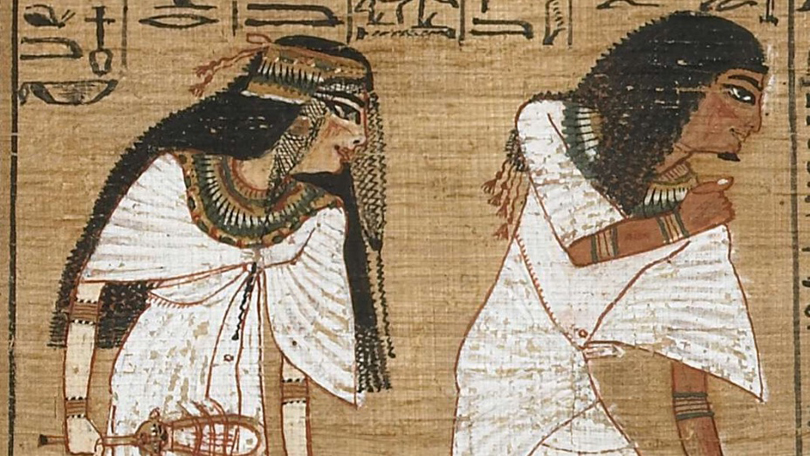
Long before Fenty and Rare Beauty, blush was rooted in the rituals of the earliest civilizations, with evidence found in ancient tombs and artwork. The ancient Egyptians were known for their creation of cosmetics, including sunscreen, eyeliner, eyeshadow and, yes, blush. Both men and women dusted their cheeks with a rouge that was made by blending fat with crushed red ochre, a naturally occurring clay pigment. This vibrant red concoction was often applied to both the cheeks and lips. But the practice was not just for beauty: it also held spiritual significance, being associated with vitality and power, and symbolizing regeneration and the life-giving energy of the sun.
Cleopatra, the last active ruler of the Ptolemaic Kingdom of Egypt from 51 to 30 BCE, famously wore blush to enhance her beauty and give her a rosy healthy glow, which at the time was considered quite enviable. She is believed to have used crushed carmine beetles mixed with fat for her signature rouge – a visceral blend of beauty and death. Her subjects, of course, followed suit, crushing up beetles and ants to get their Cleopatra-inspired glow and to hide pale appearances when they were ill.
Across the Mediterranean, the Greeks and Romans developed their own approach to rouging the cheeks, using vegetable and mineral reds. In 300 BCE, Greek men and women used crushed mulberries, red beet juice, crushed strawberries, wine dregs, red amaranth and red iron oxide to stain their cheeks in the pursuit of youthful vitality. Greeks who wore makeup were viewed as wealthy, and it symbolized status because cosmetics were incredibly costly at the time. For the Greeks and the Romans, blush was symbolic: a ruddy flush meant good health, fertility and femininity. Specifically, in Roman society, pale skin was associated with nobility – so women would lighten their faces with chalk and then accentuate the cheeks with red pigments, crafting a studied contrast between status and sensuality.
Blush wasn’t just decorative in ancient times. In Chinese culture, the colour red has long symbolized good luck and happiness for those who wear the colour. In ancient China, rouge was used as early as the Shang Dynasty (1600–1046 BCE), the second dynasty in traditional Chinese historiography, following the Xia Dynasty and preceding the Zhou Dynasty. During this time, blush was primarily made from the extracted juice of leaves from red and blue flowers, although some people added bovine pulp and pig pancreas to make the product denser, and women would wear the heavy rouge on both their cheeks and lips.
Years later, during the Tang Dynasty (618–907 CE), blush was still incredibly popular in Chinese culture. Women created blush from safflower petals and cinnabar, a toxic mercury compound. The look was deliberate: a soft, circular flush applied high on the cheeks that signified elegance and grace.
Blush was also essential for the ongoing tradition of the geisha in Japan, becoming part of a broader kabuki-inspired aesthetic that relied on the theatrical play of white faces and vivid cheeks.
The medieval backlash: sin, shame and subtlety
Makeup in general has had a colourful history of going back and forth between being seen as popular and decorative to improper and demoralizing. Blush is no stranger to this back and forth.
By the Middle Ages (which generally spans from the fifth to the 15th centuries), beauty rituals across Europe were recontextualized through the lens of the Christian church, and wearing makeup – especially red – became morally fraught. Red, after all, was the colour of temptation, of Eve’s apple and the devil’s flame. According to the church, applying blush was seen as vain, sinful, even deceitful. Women were expected to appear naturally beautiful, and yet rosy cheeks still signified health and virtue. The solution? Subtlety.
Rather than pigments, women turned to bloodletting to make their skin pale, then pinched or briskly rubbed their cheeks to simulate a natural flush. The message was clear: beauty could not appear artificial. A naturally flushed cheek was acceptable…encouraged, even. But any trace of makeup became taboo.
This dichotomy would haunt the history of blush for centuries to come.
Rococo excess: the birth of the blush obsession
If the Middle Ages were defined by restraint, the 18th century was its Technicolor backlash. In the court of Louis XV, who was the King of France from September 1715 until his death in 1774, makeup was no longer subtle – it was spectacle. During his reign, both men and women wore extravagant wigs, powdered faces, beauty patches and, above all, rouge.
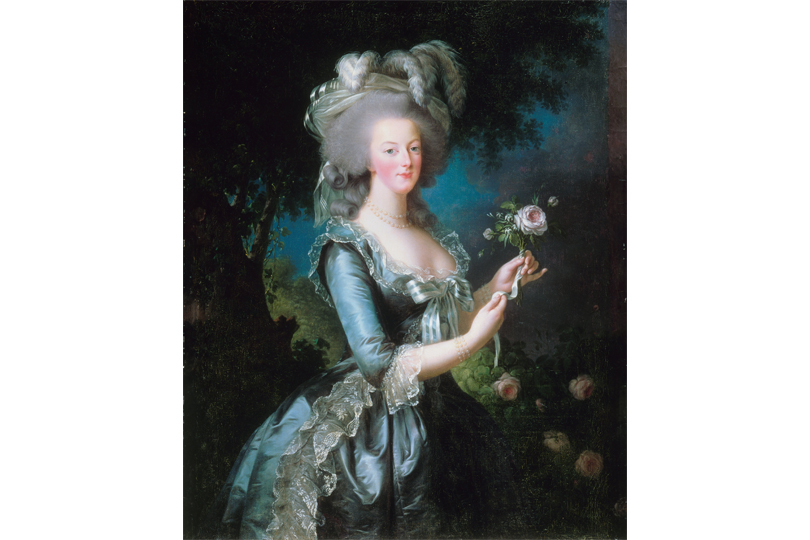
During this period, blush became a weapon of seduction in the arsenals of courtesans and aristocrats alike. French women applied vivid red pigment in exaggerated circles on the apples of their cheeks – a style that mirrored the era’s love of ornamentation. At this time, rouge was often made from carmine (crushed insects), mixed with grease or wax and applied thickly. Marie Antoinette, the last Queen of France before the French Revolution and the establishment of the French First Republic, was known for her delicate, doll-like flush, which came to symbolize the opulence – and eventual downfall – of the monarchy.
Meanwhile, in England, where Puritanism still lingered, the use of rouge remained scandalous. But for actresses and prostitutes, blush was part of the uniform. It separated the morally suspect from the “respectable” woman – until Queen Victoria, who reigned over the United Kingdom of Great Britain and Ireland from June 1837 until her death in 1901, declared all makeup improper, branding it a vulgar habit. And just like that, blush was banished once again.
The 20th century: rise of modern rouge
Everything changed with the rise of the beauty industry. As women began to assert new forms of independence in the early 1900s, cosmetic companies saw opportunity. Initially, blush came as a powder, paste or cream in an orange-red colour, then a raspberry-red for most of the 1920s, and a rose-red by the late ’20s. Helena Rubinstein and Elizabeth Arden in particular led the cosmetics charge in the 1910s and ’20s, selling rouge in sleek compacts and elegant pots. Blush became portable, personal, and – perhaps most importantly – aspirational.
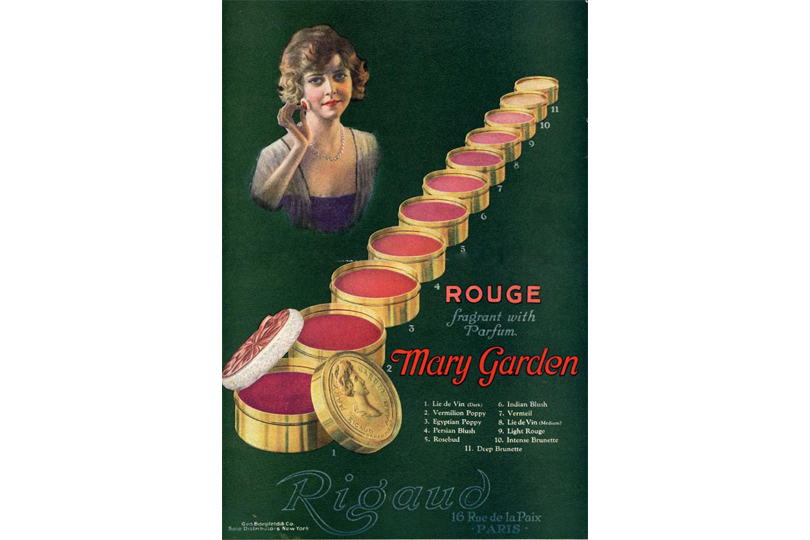
The Flapper era, most commonly associated with the 1920s, marked a beauty revolution. Short skirts, bobbed hair and bright rouge defined the rebellious spirit of the Jazz Age that followed World War I. This wasn’t the blush of passivity – it was defiance. Women were declaring their autonomy, and blush became the face of liberation. It was applied with fingers or puffed onto cheeks, and its colour range expanded beyond crimson to include coral, rose and pink.
By the 1950s, Hollywood glamour reigned supreme. Stars like Marilyn Monroe and Elizabeth Taylor embraced blush as part of the full beauty look, paired with arched brows, red lips and curled lashes. Powder blush compacts were common in every handbag, often paired with a mirror for touch-ups on the go. Rouge was now respectable.
In the 1970s, blush took a disco-fuelled detour. Think Studio 54 cheekbones and heavy bronzer blends. The decade saw the rise of the blush stripe: a diagonal sweep from cheek to temple, made iconic by Cher and Diana Ross. Makeup was power. Blush wasn’t shy; it shimmered in the spotlight.
The 1980s only amplified this drama. Fuchsia, coral, tangerine – no shade of blush was too bold for this decade. In fact, one could argue that blush was applied like war paint: angular, neon, sculpted. Brands like Estée Lauder and Revlon offered multi-pan blush palettes, and makeup tutorials in magazines like Seventeen taught teenage girls how to contour using their blush palettes before the word became a verb.
Then came the ’90s, with its minimalist grunge and earth tones. Blush gave way to bronzer, and the flush of colour became muted. Mauves, dusty roses and matte finishes dominated, often worn so subtly that they disappeared entirely. For a while, blush lost its popularity and visibility.
2000s to now: The era of glow and filtered flush
Blush found its footing again in the 2000s with the rise of digital culture and endless YouTube beauty influencers. Suddenly, makeup tutorials showcased dozens of techniques using blush: draping, sunburn blush, cold-girl flush, e-girl hearts on the cheeks. Blush became less about realism and more about fantasy.
The Instagram era of the 2010s brought the full-face glow. Highlighter exploded onto the scene, and blush evolved to complement it. Enter liquid and cream blush formulas in doe-foot applicators, sticks and drops – meant to melt into skin and create a lit-from-within aesthetic. Brands like MAC, Rare Beauty, Fenty Beauty, Merit, Saie and e.l.f. Cosmetics helped make blush cool and fun again.
The global COVID-19 pandemic in early 2020s only solidified the renaissance. With lips hidden behind masks, cheeks became the new canvas. Cosmetic companies raved that blush – especially cream formulas – soared in sales. TikTok exploded during the pandemic with tutorials on the “W” technique (sweeping blush across the cheeks and nose) or using blush high on the temples for a lifted effect. Suddenly, your flush could say something about you: soft girl, cold girl, coquette, clean girl, latte girl.
And in a cultural full circle, gender lines have once again blurred, and makeup is no longer tied to modesty or morality. Blush is whatever you want it to be: ethereal or erotic, ironic or sincere, natural or theatrical. Non-binary makeup artists and drag performers have redefined the blush narrative, while on social media there is no shortage of male beauty influencers sharing tips for guys on how to achieve a natural healthy glow using blush.
The new blush age
So where are we now? We’re in the era of “blush as personality.” The blush you choose – whether it’s a dusty rose, an electric coral or a berry wine – signals more than just skin tone. It signals mood. It communicates intention. Are you going for soft and romantic? Blunt and edgy? Tanned and sculpted?
What once signalled health in ancient Egypt has evolved into a language of identity. Blush, in 2025, is freedom in a compact. It’s not about covering up; it’s about showing up – with warmth, with colour, with intention. Whether you’re tapping it on with fingers, brushing it up toward your temples or wearing it like a crown across your nose and cheeks, the message is clear: we’re no longer hiding the flush.
Want more? You can read other stories from our The Story Of series right here.
Trending
 10 Memorable Images Of Supermodel Gia Carangi (1960–1986)
  20 Celebrities Who Posed For Abercrombie & Fitch Before They Were Famous
  20 Actors You Probably Forgot Appeared On ‘Gilmore Girls’
  Fragrance Of The Month: The 7 Virtues Blackberry Lily
  THE STORY OF: Madonna’s Iconic Jean Paul Gaultier Cone Bra