
Part of an ongoing series of 29Secrets stories, taking a deep dive into the history of legendary beauty products and iconic fashion moments…
By Christopher Turner
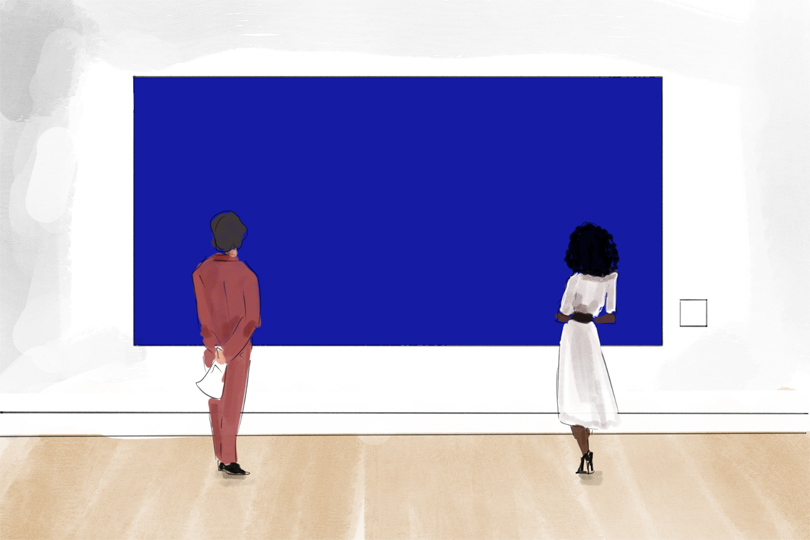
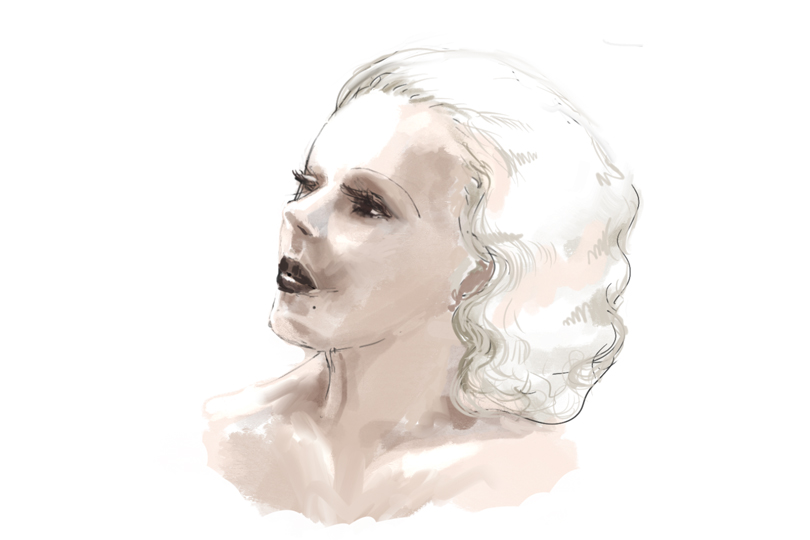
Illustration by Michael Hak
There are certain Hollywood beauty signatures so famous that they eventually become inseparable from the women who wore them: Audrey Hepburn’s bold eyebrows, Elizabeth Taylor’s violet eyes, Marilyn Monroe’s red lips and platinum blonde hair.
But before Monroe became Hollywood’s definitive blonde, there was Jean Harlow, one of Monroe’s idols and one of MGM’s biggest stars of Hollywood’s golden age.
In the early 1930s, Harlow’s startlingly pale hair was unlike almost anything audiences had seen on a major movie star. It wasn’t golden, honey, or even particularly natural-looking. It was icy, silvery and so aggressively light that under the intense illumination of black and white cinematography it could appear almost white. Hollywood would soon find the perfect word for it: platinum.
Harlow’s colour was achieved by stylists who used—every week—a dangerous concoction of ammonia, Clorox bleach, hydrogen peroxide and Lux soap flakes. MGM’s publicity department turned Harlow’s hair into headline material (omitting, of course, any mention of the toxic chemicals being used) for the promotion of the film that would turn her into a star, 1930’s Hell’s Angels. By the time she starred in a 1931 movie called Platinum Blonde, the transformation of a hair colour into a cultural phenomenon was essentially complete. The colour would become so closely associated with Harlow, and so popular, that it helped create an entirely new beauty category. Women rushed to salons hoping to reproduce the colour, and hairdressers experimented with increasingly powerful bleaching techniques, many incredibly dangerous.
Of course, the cultural and beauty phenomenon isn’t as straightforward as one would think. Behind one of the most famous heads of hair in history is a complicated story involving chemistry, Hollywood myth-making, changing ideas about female sexuality, the extraordinary lengths women were encouraged to go to in order to resemble the stars they saw on screen, and even death. Here is the history of how Jean Harlow transformed an almost impossibly pale shade of blonde into one of cinema’s most recognizable trademarks—and how, nearly a century later, her platinum hair remains one of the most influential beauty statements ever captured on film.
Before “Jean Harlow”
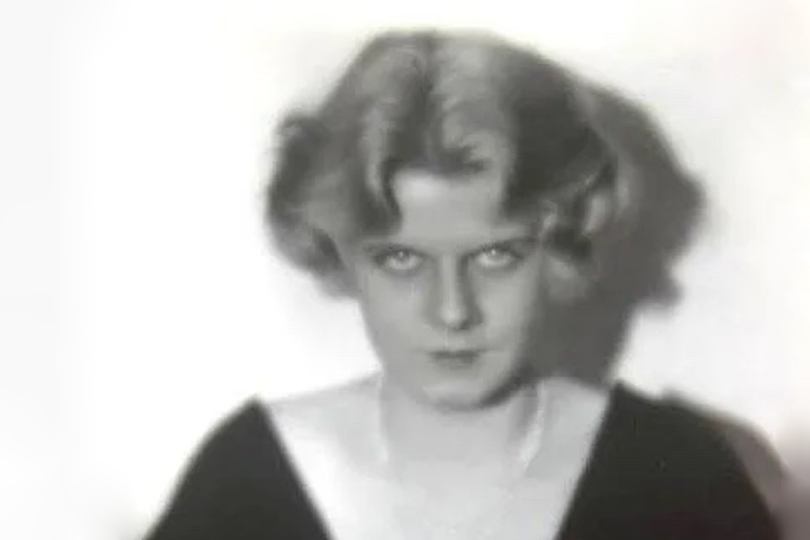
Jean Harlow was born Harlean Harlow Carpenter in Kansas City, Missouri, on March 3, 1911. The only child of Mont Clair Carpenter, a dentist, and Jean Poe Carpenter, she grew up in fairly comfortable circumstances, though her parents’ marriage was an unhappy one. Her mother, who had once dreamed of becoming an actress herself, was a particularly powerful presence in Harlean’s life and after her parents divorced in 1922, the mother and daughter picked up and moved to Hollywood the following year, where the elder Jean attempted to pursue her own big-screen ambitions. Those ambitions never materialized, but the move to Hollywood introduced young Harlean to the world that would eventually make her famous.
Harlean’s path to stardom, however, was anything but carefully planned. After spending time at boarding school and moving between California and the Midwest, she eloped in 1928 (at just 16 years of age) with 19-year-old Charles “Chuck” Fremont McGrew III, a wealthy young heir. The newlyweds eventually settled in Beverly Hills, where Harlean found herself circulating among people connected to the film industry.
According to Hollywood lore, her entrance into movies began almost casually: while waiting for her friend, a young aspiring actress named Rosalie Roy, at the Fox studios, she attracted the attention of studio executives who encouraged her to audition. Initially reluctant, she eventually began accepting work as an extra through Central Casting in Los Angeles, adopting her mother’s maiden name—Jean Harlow—as her professional identity. After several calls from casting directors and several job offers that Harlean rejected, Mother Jean finally persuaded her daughter to accept work from a variety of studios including Fox, Paramount Pictures and, ultimately, Metro-Goldwyn-Mayer (MGM).
What began as a diversion would quickly become a career, and within only a few years the shy Kansas City girl named Harlean Carpenter would be transformed into Jean Harlow, one of the most recognizable women in the world.
Creating the shocking blonde colour
Hair colouring was hardly new in this era. Women had been altering their hair colour for centuries, and commercial hair dyes were becoming increasingly sophisticated during the early decades of the 20th century.
Harlow’s natural hair colour was already blonde—generally described as an ash or dark ash blonde—but the extraordinary colour that would make her famous was something else entirely. After she found fame, Harlow often claimed in public interviews that her look was entirely natural…but that certainly wasn’t true. It was the product of deliberate transformation and took a lot of work.
The story of how she ended up with her striking, ultra-light hair is often repeated much more definitively than the historical record allows. What we do know for certain is that aviator and famed film director Howard Hughes cast her in Hell’s Angels in late 1929—she signed her contract with Hughes on October 24, 1929—and her appearance became an important part of the film’s publicity machine.
Hughes and his publicity team wanted something dramatic to distinguish the new starlet from other Hollywood actresses, and her already-blonde hair offered them an opportunity. There was just one problem: Harlow was indeed blonde, but not uniquely blonde. So the studio hairdressers went to work. The Hollywood Museum identifies the historic Max Factor Building as the location where Harlow underwent her famous platinum-blonde transformation, courtesy of Max Factor himself, though he was not the only hairdresser involved in the process. (Interestingly, the famed hairdresser would later replicate the white-hot shade on Marilyn Monroe’s hair.)
Factor and MGM studio hairstylists lightened Harlow’s naturally ash-blonde hair, but it wasn’t light enough. So, rather than attempting to imitate the warm gold of naturally blonde hair, the hairdressers continued to experiment until they had removed essentially all of the natural pigment, leaving a distinctive silvery-white, almost metallic-looking colour. Against Harlow’s pencil-thin eyebrows, pale complexion and dark cupid’s-bow lips, it created a face that looked almost designed for black and white film.
After the colour was achieved, celebrity hairstylist Alfred Pagano is the hairdresser most frequently associated with maintaining it, and according to him, Harlow’s colour required frequent maintenance. Her roots had to be continually lightened so that the illusion of naturally silver-white hair remained intact. Decades later, Pagano revealed that Harlow went through painful weekly colour appointments to achieve the icy shade: “We used peroxide, ammonia, Clorox, and Lux flakes! Can you believe that?”
The “Platinum Blonde” name actually came afterwards
Harlow was not Hughes’ first choice for the role in Hell’s Angels. He had originally cast Norwegian actress Greta Nissen to play Helen, a woman caught between two brothers, but he decided that Nissen’s voice was unsuitable for the sound version of the film. That opened the door for Harlow, who at the time was essentially unknown to the public, though she had played small, mostly uncredited roles in a few shorts and in a feature film, The Saturday Night Kid, earlier in 1929. Hell’s Angels would be Harlow’s breakthrough role, and her name began to appear in the press. “Unknown Girl to Portray Lead in Epic Production” read a small news item in December 1929.
The exact date when Harlean Carpenter became the platinum-haired Jean Harlow has become blurred by nearly a century of Hollywood mythology. What is clear is that Harlow was already a natural ash blonde when Hughes signed her in late 1929, and by the time Hell’s Angels premiered in May 1930, the transformation was complete: the young actress who appeared onscreen had shimmering, silvery-white hair unlike virtually anything audiences had seen before.
After her hair transformation was complete, to help drum up publicity for Hell’s Angels, Hughes let it be known that he wanted to create a moniker for Harlow. After all, Mary Pickford had been “America’s Sweetheart” (even though she was actually Canadian) and Clara Bow had been “The ‘It’ Girl.” Hughes’ publicity machine soon began promoting Harlow’s extraordinary colouring, and before long “platinum blonde” had become inseparable from her name.
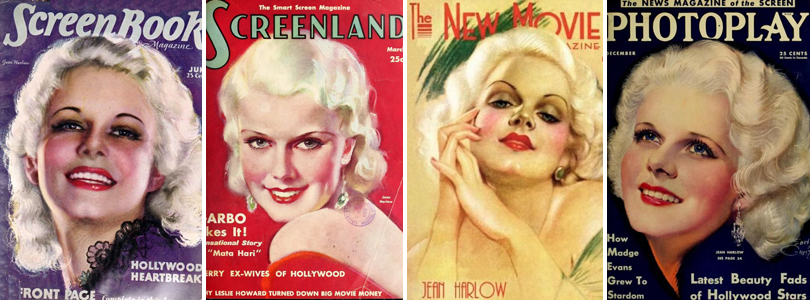
Exactly when the phrase was first applied to Harlow remains difficult to pin down, but by late 1930 the association was clearly taking hold in the fan press. In fact, one of the earliest references was in November 1930, when Screenland ran an article called “Meet the New Blonde!” followed by Screen Book, which in January 1931 was explicitly calling her the “Platinum Princess” and crediting her with starting a craze for silvery hair.
After Hell’s Angels premiered at Grauman’s Chinese Theatre on May 27, 1930, Hughes’ publicity machine continued to make Harlow’s extraordinary hair part of the story, even offering a $10,000 prize to any hairdresser in North America who could successfully duplicate her unmistakably artificial-looking shade of blonde.
As publicity, it was ingenious. Women were encouraged to imitate Harlow while simultaneously being told that nobody could quite duplicate her. Ultimately, the prize went unclaimed—which was probably a good thing, considering the punishing process required to maintain Harlow’s own hair. Her weekly treatments reportedly left her hair dry, fragile and prone to breakage. Then there were the potentially dangerous chemicals involved…but more on that later.
A startling new view of sexuality, and a new beauty ideal
Harlow was only 18 when much of her work on Hell’s Angels was completed and 19 when the film was released, but the screen persona that audiences encountered in the aviation drama seemed considerably more worldly. One scene in particular helped instantly define her.
Wearing an evening gown cut daringly low across her chest, Harlow looks at her date and delivers a line that would become one of the most famous of the early sound era: “Would you be shocked if I put on something more comfortable?”
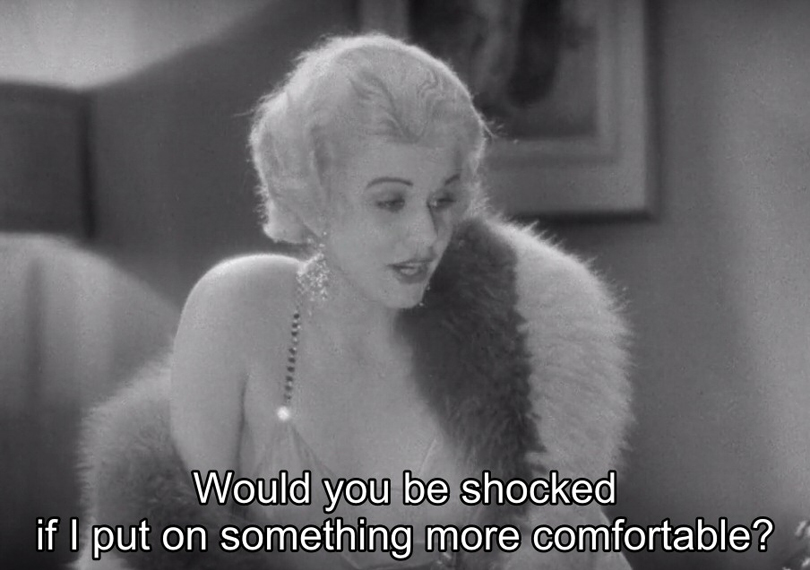
Harlow didn’t resemble the delicate heroines that audiences were accustomed to seeing on the big screen. Her sexuality wasn’t coy or hidden beneath layers of romantic convention; she appeared fully aware of her effect on men. Her icy platinum hair only intensified the impression.
It also made her instantly recognizable. Under the studio lights and in publicity photographs, Harlow’s silvery-white hair became a visual shorthand for the star herself. Hughes, already gifted at spectacle and publicity, had something invaluable on his hands: a physical characteristic that could be transformed into a story, a selling point and, eventually, a beauty craze.
Accounts from the period and later biographies, including David Stenn’s Bombshell: The Life and Death of Jean Harlow (edited by Jacqueline Kennedy Onassis), have credited the Harlow craze with driving increased sales of peroxide as women attempted to achieve the look themselves. Hollywood hadn’t just created a new star; it had created a new beauty ideal.
The publicity reached its logical conclusion in 1931, when Harlow was loaned to Columbia Pictures to star opposite Robert Williams and Loretta Young in a Frank Capra comedy originally known as Gallagher. After Harlow was cast, the film was retitled Platinum Blonde. Her manufactured hair colour had graduated from a physical characteristic and publicity hook to the title of a Hollywood movie.
The film itself wasn’t actually about hair. Harlow played wealthy socialite Anne Schuyler, who marries a newspaper reporter played by Williams. But the new title capitalized on something audiences already understood: Jean Harlow was the platinum blonde.
And, when the film hit theatres across North America, Hollywood beauty would never be quite the same.
Colour conspiracy theories
In subsequent films, including Red-Headed Woman (1932), Red Dust (1932), Hold Your Man (1933), Dinner at Eight(1933), Bombshell (1933), The Girl from Missouri (1934) and Libeled Lady (1936), Harlow developed into a gifted comic actress with remarkably modern timing.
Sadly, her career lasted just seven years before her untimely death in 1937 at the age of 26. In that remarkably short time, she became one of Hollywood’s biggest stars, helping define the glamorous, fast-talking screen siren of the early sound era. While audiences adored her wit, comic timing and magnetic screen presence, it is her brilliantly pale hair that she is most remembered for.
Near the end of her short life, she transitioned away from the harsh platinum towards a softer honey-blonde shade, as years of aggressive bleaching reportedly left her hair increasingly damaged and dry as straw. She actually began wearing wigs in an attempt to hide the damage. But many believe that the true damage was already done at this point.
Towards the end of May 1937, Harlow suddenly became ill during the filming of Saratoga and eventually she had to be hospitalized. On what would be her deathbed, doctors were forced to shave her head, which is only one factor in a horrifically sad scene. According to The Atlantic:
“When she was bedridden, Clark Gable went to visit her and noticed when he bent over to greet her, ‘It was like kissing a dead person, a rotting person.’ This was because she was no longer able to urinate and was now exerting waste through her breath. By then water weight had caused her body to literally double in size.”
On June 6, 1937, Harlow lapsed into a coma; she died the next day at 11:37 am, at just 26 years of age. In the doctor’s press releases, the cause of death was given as cerebral edema, a complication of kidney failure.
Harlow’s death shocked Hollywood and almost immediately generated rumours, some of which have persisted for decades. The extreme nature of her hair routine has often been folded into those theories.
The kidney failure could possibly have been the result of a number of illnesses from which the actress had suffered throughout her life. She had contracted scarlet fever when she was just 15 years old, reportedly contracted polio as a child, and had multiple bouts of influenza throughout her life. In later years she was an alcoholic, suffered severe septicemia (sepsis), and required a prolonged recovery after the removal of her wisdom teeth in early 1937. But there is also a theory that her frequent hair treatments—that toxic mix of peroxide, ammonia, household bleach and Lux soap flakes—may have contributed to her untimely demise.
By modern standards, the formula sounds horrifying. And it should. We now know that household chlorine bleach and ammonia should never be mixed because the combination can produce toxic chloramine gases, which can cause serious irritation and damage to the eyes and respiratory system, and in some cases can put a burden on the kidneys. Harlow was reportedly exposed to this harsh chemical mixture week after week in pursuit of her famous platinum shade, though there is no medical evidence establishing that the treatments contributed to the kidney failure that ultimately killed her.
Yet the rumours still persist. What can reasonably be said is that the methods used to maintain her platinum blonde hair were extraordinarily harsh and potentially dangerous. The greater significance lies elsewhere: Harlow’s beauty routine demonstrated how quickly Hollywood’s manufactured ideals could become physical demands placed upon the women expected to embody them.
Whether the dangerous mix of chemicals used to turn Harlow’s hair platinum contributed to her health problems we will never know, but we do know that mixing ammonia with bleach is a bad idea. Both of these can be found separately in cleaning agents and should never be combined, let alone put on your hair. Hydrogen peroxide remains a fundamental part of professional hair lightening, and ammonia or similar alkalizing agents are commonly used to help colour penetrate the hair. But household chlorine bleach is not a cosmetic hair-lightening product and should never be used as one.
The price of platinum
There is no doubt that Harlow’s striking hair colour turned her into a star. She even attributed her success to her platinum hair, once saying that without it, “Hollywood wouldn’t know I’m alive.” Unknowingly, Harlow ensured the success of countless others who followed her. Later platinum icons—from Jayne Mansfield, Mamie Van Doren and Marilyn Monroe to Debbie Harry, Madonna, Gwen Stefani and Lady Gaga—would grab the world’s attention with their own platinum blonde locks (using safer bleaching techniques, of course).
Today, platinum blonde is simply part of our beauty vocabulary. Ask a colourist for platinum and there is little ambiguity about what you mean: an extremely light blonde stripped of most yellow or golden tones. But the term simply didn’t exist before Harlow, because the name was created specifically for her. The term became inseparable from her image just as her career was taking off, and Hollywood made certain audiences knew it.
Perhaps the most remarkable thing about Harlow’s platinum hair is how ordinary the phrase sounds today. “Platinum blonde” appears on salon menus, beauty websites and boxes of hair colour. Celebrities routinely move between brunette and platinum in a matter of months. Social media feeds are filled with icy blondes whose hair colour would have seemed technologically extraordinary to women in the 1930s. The terminology survives largely detached from the woman who helped make it famous.
Jean Harlow died almost 90 years ago, yet the colour created around her remains one of beauty’s most enduring acts of reinvention. It’s a remarkable legacy for something as seemingly simple as a hair colour.
Want more? You can read other stories from our The Story Of series right here.
Trending
 10 Memorable Images Of Supermodel Gia Carangi (1960–1986)
  The ELIE SAAB X H&M Collection Includes The Most Romantic Bridal Look
  THE STORY OF: Madonna’s Iconic Jean Paul Gaultier Cone Bra
  20 Actors You Probably Forgot Appeared On ‘Gilmore Girls’
  20 Celebrities Who Posed For Abercrombie & Fitch Before They Were Famous