

Part of an ongoing series of 29Secrets stories, taking a deep dive into the history of legendary beauty products and iconic fashion moments…
By Christopher Turner
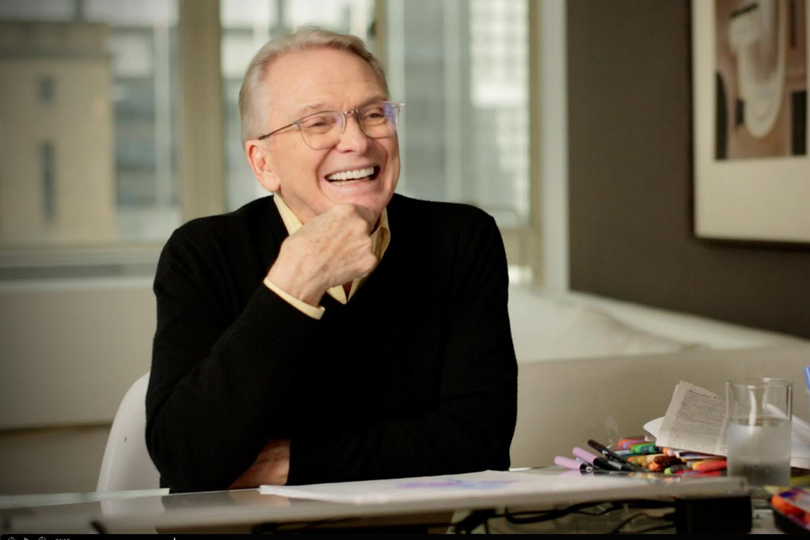
Giorgio Armani, the iconic Italian fashion designer whose eponymous fashion empire includes the couture line Armani Privé, ready-to-wear line Emporio Armani and street line Armani Exchange, died on Thursday, September 4, 2025. He was 91 years old.
“With infinite sorrow, the Armani Group announces the passing of its creator, founder and tireless driving force: Giorgio Armani,” the fashion house said in a statement. The statement added that the designer “worked until his final days, dedicating himself to the company, the collections, and the many ongoing and future projects.”
The designer’s death comes after he had missed some key events for the fashion house. In June, he did not attend the menswear show during Milan Fashion Week for the first time in 50 years. However, per AP, the designer was watching the show’s live stream while he recovered from an “undisclosed condition.”
At the time of his death, Armani was reportedly planning a major event for Milan Fashion Week in September to celebrate 50 years of his signature Giorgio Armani fashion house. The unexpected news of his death led to an outpouring of grief and tributes from across the fashion industry and reminiscences about the man who throughout his impressive career became one of the most recognizable names and faces in the global fashion industry.
Even under the spotlight of runway strobe lights, Armani remained ever poised: understated, measured, precise. There was a timeless “non-effort” to his presence, as if he had never needed to shout. And why would he? Since he quietly redefined modern elegance in 1974, Armani’s sartorial wisdom has spoken volumes and echoed across decades, continents and wardrobes.
Here is a look back at the designer’s illustrious life and the mark he left on the fashion world.
Origins: Modesty in the Lombardy Hills
Giorgio Armani was born on July 11, 1934, in the small town of Piacenza, nestled in the fertile plains of Lombardy, a region in northern Italy. He was born to Ugo Armani and Maria Raimondi, and raised alongside his older sister, Rosanna, and his older brother, Sergio. Life during Mussolini’s Fascist regime and the devastation of World War II left indelible marks on the young Armani, shaping both his introspective personality and his appreciation for resilience, structure and discretion.
After attending secondary school at the Liceo Scientifico Leonardo da Vinci in Milan, Armani initially pursued medicine at the University of Milan, fascinated by the body’s inner architecture and reportedly inspired after reading A.J. Cronin’s 1937 novel The Citadel. But in 1953, three years into his studies, he was drafted into the Italian army. There, while assisting at a military hospital in Verona, he began to re-evaluate his ambitions. After completing his compulsory military service, he dropped out of medical school and, through a chance connection, landed a job as a window dresser at Milan’s department store La Rinascente. It was a humble start that would change the trajectory of his life.
Armani soon moved up the ranks to work in the store’s buying office, where he gained exposure to international fashion brands and retail operations. The experience sharpened his instincts for what consumers wanted before they even knew it themselves – a trait that would serve him well in the decades ahead.
The apprenticeship: From Nino Cerruti to New York dreams
Armani spent the 1960s immersed in the Milanese design world. He first gained recognition in the fashion industry at the menswear brand Hitman, owned by legendary designer Nino Cerruti, where he worked from 1961 to 1970. There, he learned the craft of tailoring: not simply the cut of a jacket, but how a garment could define a man’s bearing. Armani was soon entrusted with designing entire collections, often without credit, honing his fluency in minimalism and masculine elegance – traits that would become his lifelong signature.
By the early 1970s, with encouragement from his life and business partner Sergio Galeotti, Armani began freelance design for brands like Montedoro and Allegri. The pair travelled to Paris and New York, taking mental notes of the rising hunger for luxury that wasn’t garish – but sleek, sensual and wearable. Armani, always attuned to the emotional undertones of clothing, saw the opportunity for a different kind of fashion statement: one that whispered instead of screamed.
Galeotti played an instrumental role in Armani’s career, not only championing his talent but helping him navigate the business side of fashion. Together, they began building the foundations of what would become one of the most powerful independent empires in fashion history.
Launching a revolution: Giorgio Armani’s 1975 debut
In October 1975, at age 41, Armani and Galeotti officially launched the Giorgio Armani brand and presented the label’s first-ever menswear and womenswear collections in Milan. Armani’s vision for his premiere collection was defined by what would later become his hallmark: tailoring with a powerful presence. The spring/summer 1976 collection showcased sharp suits; exaggerated collars; soft-shouldered, unlined jackets; and fluid trousers that offered radical freedom of movement. The look was considered a revelation at the time; his garments embodied effortlessness, a stark contrast to the rigid silhouettes of previous decades.
Armani’s muted color palette – sand, taupe, navy, dove grey – became signature. He was redefining the idea of power dressing: it was no longer about flashy status, but about quiet authority. By 1976, Vogue was calling him “a pioneer of a new fashion sensibility.”
Critics took notice of his deft balance between minimalism and luxury, with The New York Times praising him as “the most important fashion designer to come out of Italy since Valentino.”
The American Gigolo effect
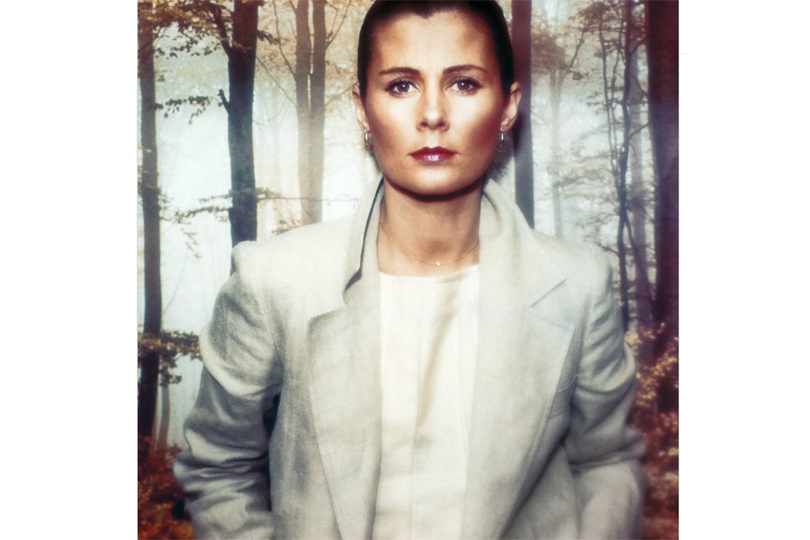
Armani quickly earned the respect of the fashion world, but his real breakout moment came via Hollywood. In 1980, Richard Gere starred in Paul Schrader’s crime drama film American Gigolo, and was outfitted almost exclusively in Giorgio Armani. The synergy was electric: Gere’s performance and the sleek, supple suits created a new male archetype: polished, sensual, confident.
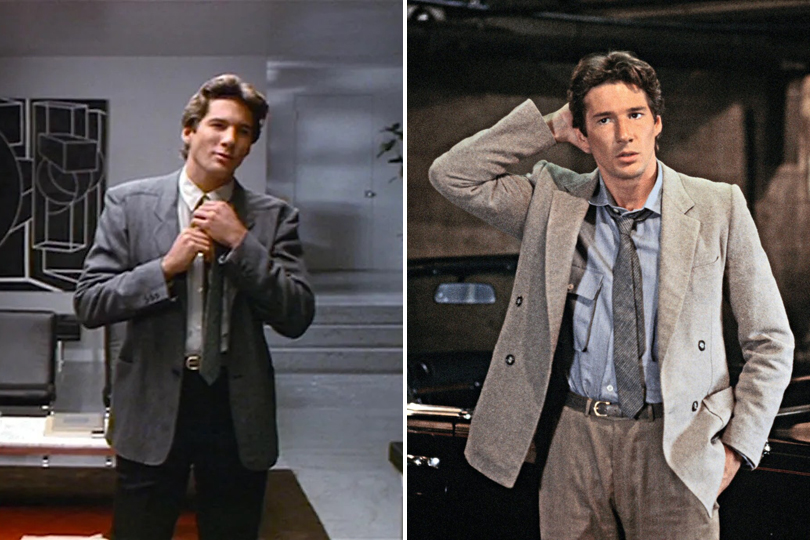
Suddenly, Armani was no longer just an Italian designer with refined taste. He was the name in modern menswear. Armani soon became the designer for the film world, costuming everything from Miami Vice to The Untouchables. Actors, musicians and executives clamoured for his pieces. His designs became red carpet staples for both men and women.
Throughout the 1980s, Armani dressed stars such as Al Pacino, Robert De Niro, Jodie Foster and Michelle Pfeiffer. The red carpet became his second runway. As Vogue’s Anna Wintour (who served as editor-in-chief from 1988 to 2025) once said, “Armani gave Hollywood a new way to look powerful without trying too hard.”
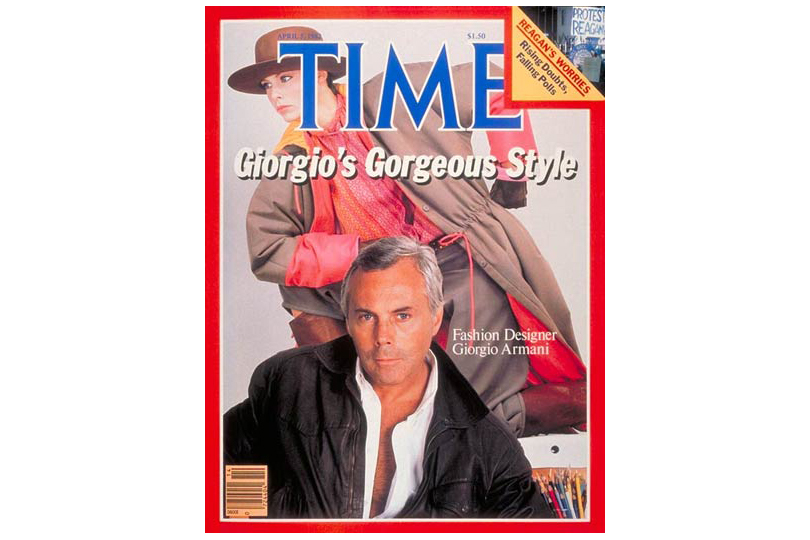
By the mid-1980s, the Armani empire had exploded: new lines like Emporio Armani and Armani Jeans catered to younger audiences, while high-end labels like Giorgio Armani Le Collezioni served the luxury market. Fragrance launches (such as 1982’s “Armani”) and accessories only deepened his brand universe.
Armani and the rise of women in power
While Armani transformed menswear throughout his early career, his influence on women’s fashion was arguably even more profound. At a time when women were breaking barriers in boardrooms and politics, Armani offered them a new uniform: structured but fluid, feminine yet authoritative.
“My aim,” he once said, “was to give women a sense of confidence that didn’t compromise their femininity.”
His suits were soft but serious: designed to move with the body rather than dominate it. Stars like Diane Keaton, Michelle Pfeiffer and Sophia Loren championed his silhouettes, and working women everywhere adopted Armani blazers as cultural shorthand for self-made success.
He also provided clothing for powerful women off-screen: US politician Nancy Pelosi, Queen Rania of Jordan and Christine Lagarde (president of the European Central Bank) were all seen wearing Armani on official visits and at global summits.
Critics sometimes called his work “safe” or “too serious,” but Armani was never chasing headlines. He was constructing a language that could endure – a kind of modern classicism rooted in precision and poise.
“Elegance,” he famously said, “is not about being noticed. It’s about being remembered.”
Grief and resilience: The loss of Galeotti
In 1985, Armani suffered a personal and professional blow. Sergio Galeotti, his partner in both business and life, died from complications related to AIDS at just 40 years old. The loss was devastating for Armani.
Reflecting in 2015 to GQ, he said of Galeotti, “When I travel, I bring his photograph. There is something that remains. His spirit lingers. For sure. He lives on. I see Sergio everywhere, and I am sure he sees me. And I have hope that whatever I have done, he knows about it.”
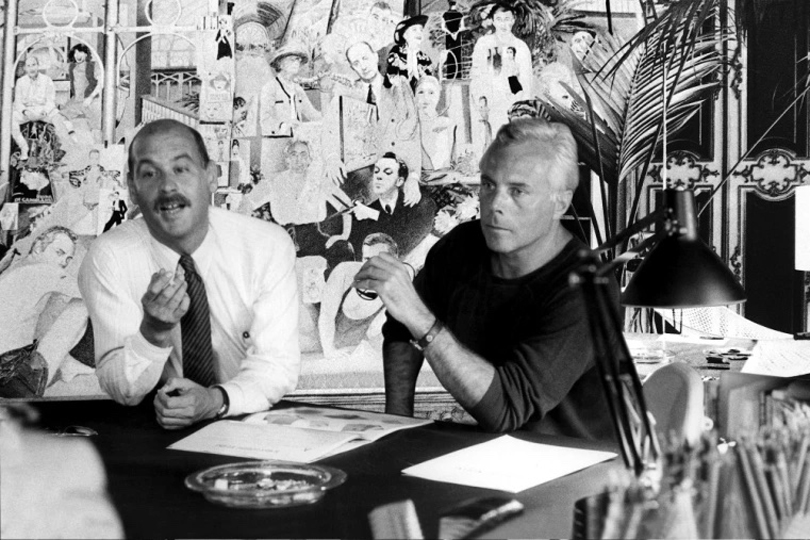
After Galeotti’s death, Armani, ever stoic, threw himself into work despite his grief. He expanded operations, assuming full creative and business control. Many doubted the brand would survive. Instead, Armani not only held it together but elevated it, opening offices in Tokyo and New York, launching Armani Casa (home interiors), and creating a hospitality arm that would culminate in the Armani Hotels in Dubai and Milan. He also ruled the designer fragrance category with one of the best-selling men’s fragrances of all time: Acqua di Giò. Often regarded as one of the world’s greatest fragrances, Acqua Di Giò was created under Armani’s direction in 1996 by Alberto Morillas and Annick Menardo, and became quickly known for its fresh, aquatic and marine scent that captures the essence of the Mediterranean Sea.
Armani rarely spoke about Galeotti publicly, but in interviews, he credited their partnership as foundational to his success. “He gave me courage,” Armani once said. “Without him, there would be no Armani.”
Armani in the 21st century: Legacy and evolution
There’s no denying that Armani dominated the fashion industry throughout the 1980s and ’90s, but his impact is still being felt today; the designer’s influence on fashion throughout the 21st century cannot be ignored or overstated. While trends came and went, his values – consistency, discretion, elegance – have remained pillars in a world driven by spectacle.
Though he built his legacy in ready-to-wear, Armani launched Giorgio Armani Privé in 2005, his entry into haute couture. The collections, often shown in Paris, carried the same principles as his earlier work: subtle opulence, exquisite tailoring and a refusal to pander to trends. Through the early 2000s, he became a red carpet staple, reportedly dressing more Academy Award attendees than any other designer in history, reinforcing the house’s enduring prestige.
Armani was an early advocate for healthier standards in the fashion industry and in 2007, he became the first designer to ban models under the age of 18 from his shows, a significant step in protecting young people from exploitation.
In more recent years, the designer continued to lead by embracing sustainability, slow fashion and gender inclusivity. His 2020 open letter during the COVID-19 pandemic called out the industry’s obsession with overproduction and waste. “Luxury cannot and must not be fast,” he wrote. “It needs time to be achieved and appreciated.”
Armani was also one of the first designers to cancel in-person runway shows during the pandemic, showing a firm commitment to public health and innovation.
In 2021, at age 87, he received the Council of Fashion Designers of America’s International Award, and continued to helm his brand with undiminished vision: a vision that eventually included more than 500 stores in 46 countries around the world.
And, surprisingly, unlike many contemporaries, the Armani brand has remained independent, resisting acquisition by luxury conglomerates like LVMH or Kering. His empire remains privately owned.
Behind the scenes: The man beneath the jacket
Despite his global fame, Giorgio Armani remained famously private throughout his life. He lived a spartan lifestyle in Milan, favoured monochrome outfits, and was often described by employees as “a perfectionist, but a kind one.”
He was deeply involved in every facet of his brand, from approving window displays to overseeing ad campaigns. Even until his final day, he insisted on reviewing sketches, testing fabrics and controlling presentation details.
“I don’t design clothes,” he once said. “I design dreams.”
He also painted and was an avid photographer in his free time, and was an active patron of Italian arts and architecture, contributing to cultural preservation across Milan.
His death will no doubt have a rippling effect across the fashion industry for years to come. His influence will also undoubtedly live on. After all, in the pantheon of fashion’s great architects, Armani was a paradox. He was never a provocateur, never one for viral moments or shock tactics; instead, he spent his career building something quieter, more enduring – a legacy sewn in silence, cut in clarity, finished with compassion.
As newer generations return to minimalism, sustainable fashion and gender-inclusive dressing, they will find that Armani was always there first. His is a fashion of permanence. And in that silence, there is revolution.
Want more? You can read other stories from our The Story Of series right here.
Trending
 10 Memorable Images Of Supermodel Gia Carangi (1960–1986)
  20 Celebrities Who Posed For Abercrombie & Fitch Before They Were Famous
  THE STORY OF: Madonna’s Iconic Jean Paul Gaultier Cone Bra
  The ELIE SAAB X H&M Collection Includes The Most Romantic Bridal Look
  Product Of The Week: Pilgrim Amaris Recycled Sculptural Barrette