
Part of an ongoing series of 29Secrets stories, taking a deep dive into the history of legendary beauty products and iconic fashion moments…
By Christopher Turner
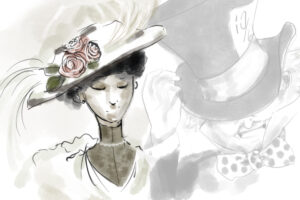
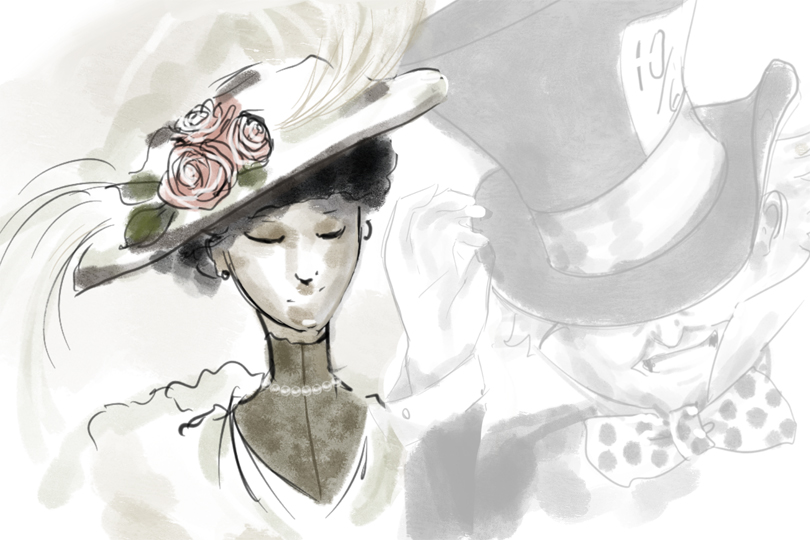
Illustration by Michael Hak
There was a time when no fashionable woman would dare leave the house without a hat. More than a practical accessory or the finishing touch to an outfit, a hat was a declaration of wealth, social standing and personal taste. By the late 19th and early 20th centuries, fashionable headwear had reached extraordinary proportions. Elaborate creations decorated with towering ostrich plumes, silk flowers, velvet ribbons, lace and even entire taxidermied birds transformed women’s heads into spectacular displays of extravagance. Some extended well beyond the wearer’s shoulders, while others featured arrangements of feathers that appeared to defy gravity. For the women who wore them, these creations represented the height of sophistication.
Behind these extraordinary creations was the world of millinery, a highly skilled and competitive industry responsible for producing some of fashion’s most imaginative accessories. In Paris, London and New York, milliners catered to an increasingly demanding clientele, creating hats that reflected the latest trends and the social ambitions of the women who purchased them. Yet beneath the extraordinary craftsmanship was a considerably darker story, one involving dangerous chemicals, occupational illness and an insatiable demand for exotic materials that threatened entire populations of birds.
The hatmaking industry also became associated with one of the English language’s most enduring expressions: “mad as a hatter.” Long before Lewis Carroll introduced his eccentric, top-hatted tea-party guest in his 1865 novel Alice’s Adventures in Wonderland, the phrase was already being used to describe someone behaving irrationally or unpredictably. Its precise origins remain disputed, but one familiar explanation connects the expression to a disturbing occupational hazard of the hatmaking trade: mercury poisoning. For generations, workers producing felt hats were exposed to a toxic substance capable of causing uncontrollable tremors, memory loss, emotional instability and profound changes in personality.
Here’s the dark history of millinery, from the extravagant feathered creations of Victorian high society to the mercury-poisoned workers associated with the expression “mad as a hatter,” and the enduring mystery surrounding one of literature’s most recognizable characters.
When hats were everything
Although hats have been worn for thousands of years, millinery became particularly important in European fashion during the 18th and 19th centuries. The word milliner originally referred to merchants dealing in fashionable accessories and luxury goods, its name deriving from Milan, the Italian city celebrated for its fine textiles and stylish merchandise. Over time, millinery became increasingly associated with the creation and decoration of women’s hats and bonnets, offering almost limitless opportunities for ornamentation and experimentation.
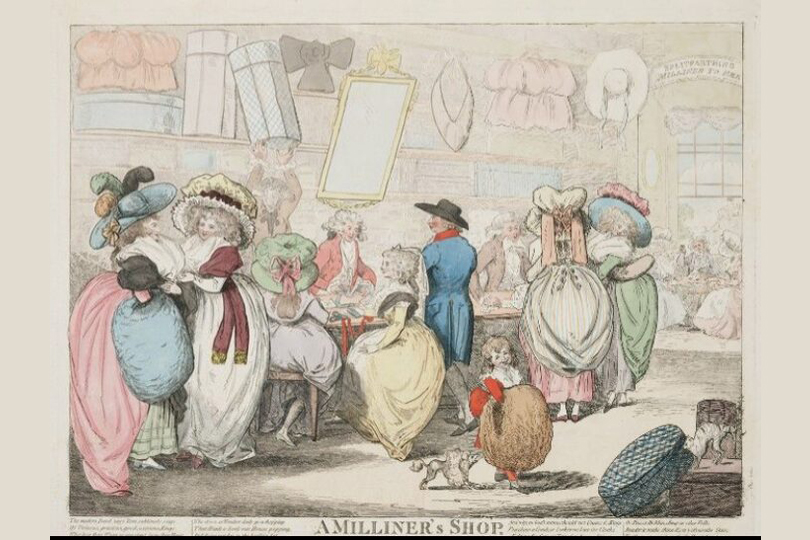
During the Victorian era, hats and bonnets were essential components of respectable dress, their shapes evolving alongside women’s hairstyles and silhouettes. By the first decade of the 20th century, extravagant headwear had reached remarkable proportions, with wide-brimmed hats decorated with enormous feathers becoming synonymous with the elegant women of the Belle Époque (1871–1914), a period of European cultural and artistic flourishing. Milliners worked closely with dressmakers and fashion houses to create designs that complemented the latest fashions, while department stores and smaller workshops offered more affordable versions, allowing women of different social backgrounds to participate in the trend.
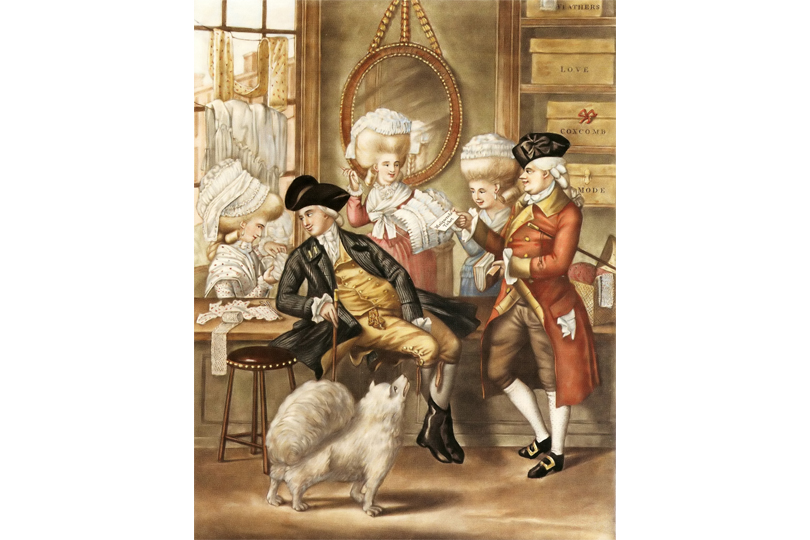
The industry also provided opportunities for women at a time when relatively few professions were open to them. Millinery shops employed female designers, trimmers, seamstresses and apprentices, while some ambitious women established their own businesses. One of fashion’s most influential figures, Gabrielle “Coco” Chanel, began her career as a milliner, opening a hat shop in Paris in 1910 before expanding into clothing and eventually building one of the world’s most recognizable fashion houses.
Yet the glamorous world of women’s millinery represented only one part of the larger hatmaking industry. Behind the decorated bonnets and feathered masterpieces was an extensive network of manufacturers producing the materials from which hats were constructed. Among the most important was felt, a durable textile made from animal fibres and widely used in both men’s and women’s headwear. Producing high-quality felt was demanding, but manufacturers discovered that a particular chemical treatment could make the process considerably easier. Unfortunately, that discovery would have devastating consequences.
The poisonous secret behind the perfect hat
The use of mercury compounds in felt-hat manufacturing became established in Europe long before the Victorian era. Felt was commonly produced from the fur of rabbits, hares, beavers and other animals, but some fibres were more difficult to process than others. Manufacturers discovered that treating animal fur with mercuric nitrate made the fibres easier to mat together into the dense, durable material used to produce fashionable hats. Known as carroting because of the orange or reddish colour the treated fur could acquire, the technique revolutionized felt production, but at a devastating human cost.
Workers handling mercury-treated fur were repeatedly exposed to the toxic substance, often in poorly ventilated workshops. Over time, mercury poisoning could cause uncontrollable tremors, memory loss, anxiety, irritability, difficulty coordinating movements and profound changes in personality. The neurological and psychological effects were associated with erethism, a condition that could dramatically alter a person’s behaviour. In Danbury, Connecticut, one of America’s leading hatmaking centres, the shaking experienced by affected workers became so recognizable that it earned the nickname the “Danbury shakes,” while the city became known as America’s “Hat City,” building a thriving economy around an industry that exposed generations of workers to dangerous chemicals.
Perhaps most troubling was how these symptoms were interpreted. Workers suffering from mercury poisoning were not always recognized as victims of industrial illness. Instead, their tremors and unpredictable behaviour could be mistaken for drunkenness or mental instability, reinforcing stereotypes about eccentric hatmakers. By the mid-19th century, medical professionals were beginning to document the problem; in 1860, New Jersey physician J. Addison Freeman published an account of mercury poisoning among hatmakers. Yet dangerous manufacturing practices continued for decades.
The association between hatmaking and unusual behaviour eventually became part of the popular imagination, although the precise origins of the expression “mad as a hatter” remain disputed. By the time Lewis Carroll introduced his eccentric Hatter in Alice’s Adventures in Wonderland in 1865, the phrase was already familiar to English-speaking readers. Carroll, however, would give it an entirely new cultural life.
Lewis Carroll and the real story of the “Mad Hatter”
When Lewis Carroll published Alice’s Adventures in Wonderland in November 1865, he could hardly have imagined that one of his supporting characters would become one of the most recognizable figures in literary history. Born Charles Lutwidge Dodgson on January 27, 1832, Carroll was a mathematician, photographer and writer whose fascination with language, logic and absurdity helped produce a classic of children’s literature. Among the novel’s peculiar characters is the Hatter, who joins the March Hare and the Dormouse at a tea party where riddles go unanswered, conversation makes little sense and time itself seems to have stopped.
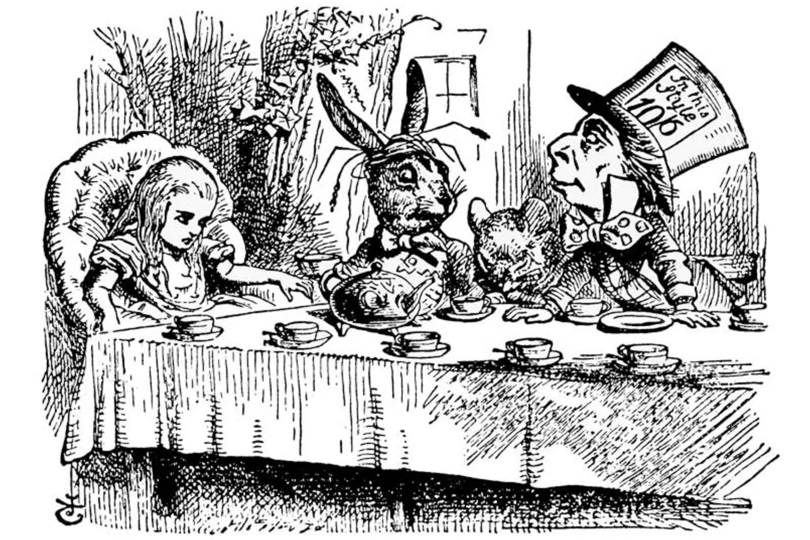
Despite his enduring nickname, he is never actually called the “Mad Hatter” in the novel. He is simply the Hatter, although the Cheshire Cat describes both him and the March Hare as mad. The familiar name emerged from an expression that was already circulating decades before the book appeared. One of the first documented uses of “mad as a hatter” appeared in the Belfast Commercial Chronicle in June 1827, followed by another in Blackwood’s Edinburgh Magazine in 1829. The expression also appeared in the writings of Nova Scotia-born author Thomas Chandler Haliburton, whose popular Sam Slick stories reached readers during the 1830s. Although its precise origins remain disputed, these early appearances establish that Carroll did not invent the phrase.
The Hatter’s distinctive appearance owes much to illustrator Sir John Tenniel, whose artwork accompanied the original novel. Tenniel depicted him as a thin, angular gentleman wearing an enormous top hat, a high collar and an oversized bow tie. Tucked into the hatband is a small label bearing the numbers “10/6,” indicating a price of 10 shillings and sixpence and suggesting that the hat might actually be merchandise rather than a personal fashion statement. Carroll provided relatively little description of the character’s clothing, leaving Tenniel to establish a visual identity that would endure for generations. From Disney’s colourful 1951 animated adaptation of Alice in Wonderland to Johnny Depp’s flamboyant portrayal in Tim Burton’s 2010 film, the Hatter has been repeatedly reimagined through increasingly fantastical costumes.
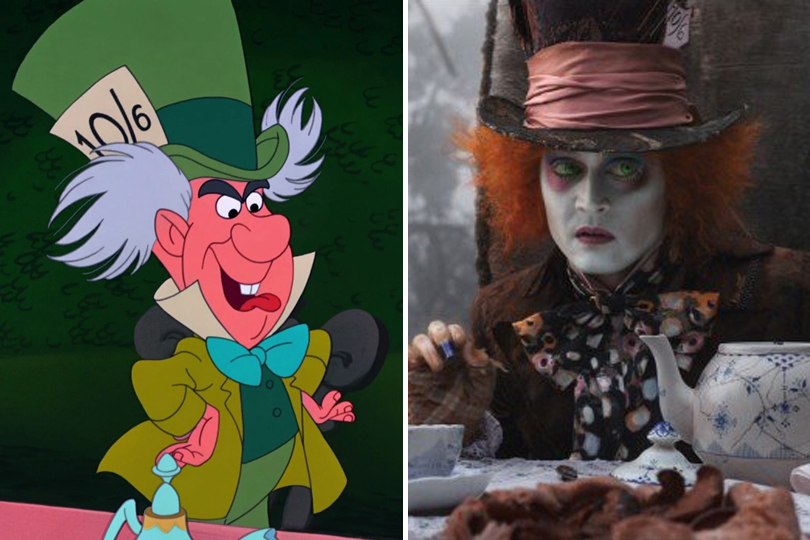
But was Carroll’s character actually inspired by mercury-poisoned hatmakers? The answer is more complicated than the popular story suggests. Although the neurological effects of mercury exposure were well documented, no surviving evidence conclusively demonstrates that Carroll intended his fictional Hatter to represent someone suffering from occupational poisoning. Another frequently repeated theory identifies Theophilus Carter (1824–1904), an eccentric British furniture dealer and inventor known for wearing a top hat, as a possible inspiration. Carter was reportedly associated with unusual inventions, including a device designed to wake sleepers by tipping them out of bed. However, the connection between Carter and Carroll’s creation remains speculative.
What makes the story especially intriguing is the contrast between Carroll’s whimsical fictional world and the harsh realities of the hatmaking industry. The Hatter’s unpredictable behaviour entertained generations of readers, while the real neurological symptoms associated with mercury exposure could be profoundly debilitating. Of course, the danger continued long after Alice’s Adventures in Wonderland became a literary classic. In the United States, mercury remained part of felt-hat manufacturing well into the 20th century, with the industry moving away from its use only around 1941, amid growing concerns about occupational poisoning and wartime demand for mercury. The expression “mad as a hatter” survived, but the suffering of the workers whose trade became associated with it gradually faded from public memory.
Fashion’s other deadly obsession
While felt-hat manufacturers were exposing workers to toxic chemicals, the decorative side of millinery was fuelling an international trade in exotic feathers that threatened bird populations around the world. By the late 19th century, ostrich plumes, the delicate breeding feathers of egrets known as aigrettes, and the colourful plumage of birds of paradise, hummingbirds and herons had become highly desirable fashion accessories. Some hats featured enormous arrangements of feathers, while others incorporated entire wings, preserved heads or complete taxidermied birds. The consequences were devastating, particularly for egrets, whose ornamental feathers developed during nesting season. Hunters frequently targeted breeding colonies, killing adult birds and leaving their chicks to die.
In 1886, American ornithologist Frank Chapman conducted an informal survey of women’s hats while walking through New York City. Examining approximately 700 hats, he identified the remains or feathers of 40 species of native birds, including warblers and woodpeckers. His observations offered a disturbing glimpse into an industry that was transforming wildlife into decorative accessories on an enormous scale.
As awareness of the feather trade’s environmental consequences grew, women in Britain and the United States began organizing campaigns against the use of wild bird plumage in fashion. In Britain, Emily Williamson founded the Society for the Protection of Birds in 1889, encouraging women to reject accessories made from wild birds. Other campaigners, including Etta Lemon and Eliza Phillips, helped expand the movement, challenging the idea that fashionable elegance justified the destruction of wildlife.
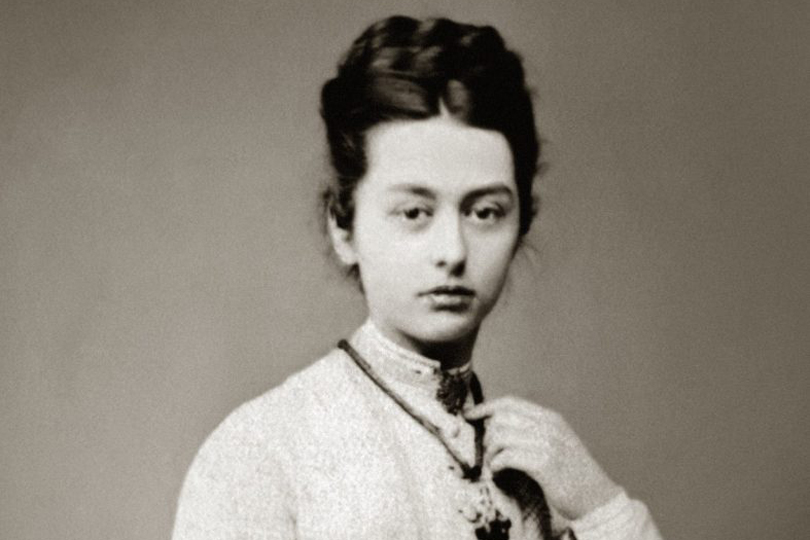
In 1904, the organization received a Royal Charter, becoming the Royal Society for the Protection of Birds (RSPB). Its campaign for stronger protections helped pave the way for Britain’s Importation of Plumage (Prohibition) Act of 1921, which came into force the following year. Similar conservation efforts in the United States helped restrict the commercial exploitation of wild birds. Although extravagant feathered hats did not disappear overnight, accessories once celebrated as symbols of sophistication increasingly became associated with cruelty and environmental destruction.
The reinvention of millinery
By the early decades of the 20th century, the extraordinary hats of the previous few decades were giving way to new styles that reflected broader changes in women’s lives. The First World War accelerated a shift toward more practical clothing, while the close-fitting cloche of the 1920s complemented the fashionable bobbed hairstyles and streamlined dresses of the modern woman. Hats continued to evolve throughout the following decades, from the decorative veils of the 1930s to the sculptural creations of mid-century couture—but by the 1960s, hat-wearing went into a steep decline, the result of changing hairstyles, casual clothing and a rejection of traditional dress codes.
The decline of everyday millinery did not mean the disappearance of the craft. Instead, hats became objects of artistic expression rather than social necessity, thanks in part to designers such as British milliner Stephen Jones and Irish-born Philip Treacy. Their creations, ranging from elegantly restrained headpieces to extraordinary sculptural designs, helped reaffirm the hat’s place in high fashion. Treacy’s fantastical, butterfly-inspired creations might seem perfectly at home in the world of Alice’s Adventures in Wonderland. His close friendship and creative partnership with legendary fashion editor Isabella Blow, who became one of his earliest and most influential supporters, helped introduce his imaginative designs to a wider audience, extending their influence beyond the fashion world and into popular culture. Meanwhile, Jones’s collaborations with some of fashion’s most influential designers have demonstrated that the spirit of extravagant millinery has never entirely disappeared.
More than 160 years after Lewis Carroll introduced his eccentric Hatter to the world, the character remains a symbol of imagination, absurdity and extraordinary style. Yet the real history of the trade associated with his name is considerably less whimsical. Today, many of the elaborate hats that once captivated fashionable society survive in museum collections, admired for their craftsmanship and creativity. Far less visible are the workers who made them possible, the illnesses they endured and the natural resources consumed in the process.
The “Mad Hatter” may have become one of literature’s most beloved eccentrics, but the darker history of millinery reminds us that, sometimes, the madness was never in the hat. It was in what people were willing to sacrifice to make it.
Want more? You can read other stories from our The Story Of series right here.
Trending