
By now, most of us can recite the language of wellness fluently. We talk about “clean ingredients,” debate seed oils, swear off sugar, track protein, and photograph our spirulina smoothies in flattering morning light. In an era where food has become both identity and ideology, eating well is no longer just about nourishment—it’s about virtue.
But when does healthy eating stop being healthy?
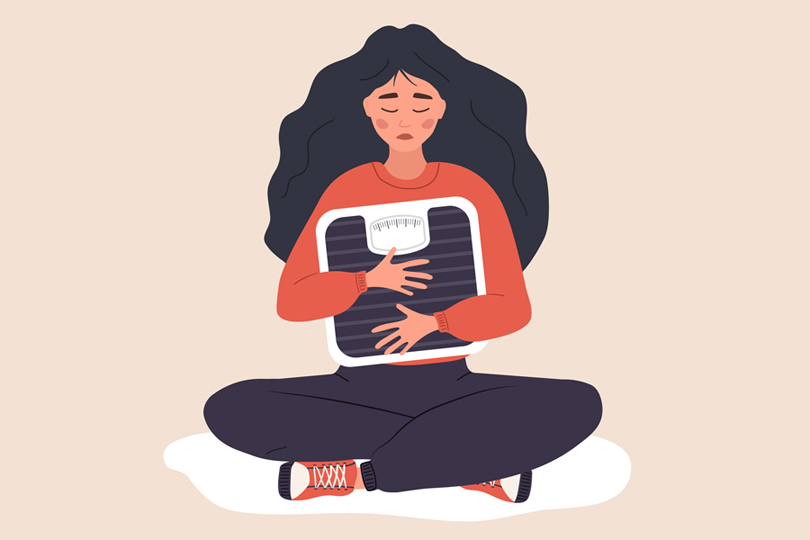
Enter orthorexia: a term that has quietly circulated through psychology journals and wellness circles for decades, yet feels especially urgent in the age of TikTok nutritionists and algorithm-approved diets. Unlike anorexia or bulimia, orthorexia isn’t officially recognized as a distinct diagnosis in the Diagnostic and Statistical Manual of Mental Disorders (DSM-5). Still, clinicians increasingly acknowledge it as a serious and growing concern—one that blurs the line between self-care and self-punishment.
The origins of the term
The word orthorexia comes from the Greek orthos (meaning “right” or “correct”) and orexis (meaning “appetite”). It was first coined in 1997 by American physician Steven Bratman, who observed patients whose quest for dietary purity had tipped into obsession.
Bratman himself had once followed an extremely restrictive diet in pursuit of optimal health. Over time, he realized that the mental toll of constant food vigilance was undermining the very well-being he sought. His insight was radical at the time: that an obsession with “healthy” food could become unhealthy.
Orthorexia differs from other eating disorders in one key way. While anorexia nervosa often centers on weight and body image, orthorexia is typically driven by a desire for purity, control, and moral correctness. The focus isn’t necessarily on being thin—it’s on eating “right.”
What does orthorexia look like?
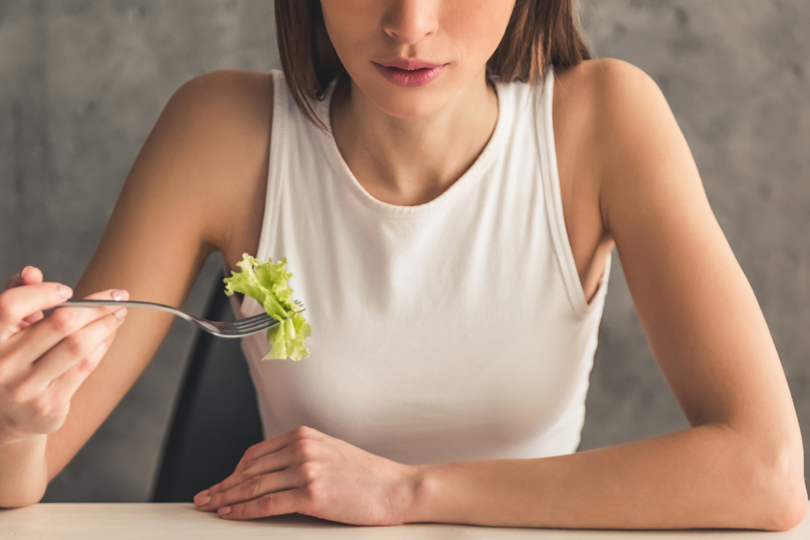
At first glance, orthorexia can look like admirable discipline. Someone cuts out processed foods. Then gluten. Then dairy. Then anything not organic, non-GMO, ethically sourced, sustainably packaged, and blessed by the algorithm. The problem isn’t nutritional awareness—it’s rigidity.
Common signs may include:
- Extreme anxiety about food quality and sourcing
- Spending excessive time researching, planning, and preparing meals
- Avoiding social situations involving “unsafe” food
- Experiencing guilt or shame after eating something perceived as unhealthy
- Gradually eliminating entire food groups without medical necessity
Over time, this narrowing of “acceptable” foods can lead to malnutrition, social isolation, and emotional distress. Ironically, a diet pursued in the name of health can result in physical and psychological harm.
The wellness industry’s role
Orthorexia doesn’t develop in a vacuum. It flourishes in a culture obsessed with optimization.
The global wellness industry is worth trillions of dollars, promising longer lives, flatter stomachs, clearer skin, and sharper minds—all through the right combination of powders, plans, and prohibitions. Social media intensifies this pressure. Platforms like TikTok and Instagram deliver an endless scroll of “What I Eat in a Day” videos, detox challenges, and fear-based nutrition claims.
Food is no longer just sustenance; it’s branding.
In this climate, moral language creeps into our diets. Foods aren’t just calorie-dense—they’re “toxic.” Desserts aren’t indulgent—they’re “cheat meals.” Green juice isn’t a beverage—it’s virtue in a mason jar.
For someone vulnerable to perfectionism or anxiety, this rhetoric can act as a trigger. The pursuit of health becomes a pursuit of moral superiority. And the stakes feel impossibly high.
The psychology behind it
At its core, orthorexia often intersects with traits like perfectionism, obsessive-compulsive tendencies, and a need for control. Food becomes a tangible arena where chaos can be managed and uncertainty minimized.
In times of stress—global pandemics, economic instability, personal upheaval—controlling what goes on your plate can feel empowering. But when that control becomes compulsive, it narrows life instead of enriching it.
Researchers suggest that orthorexia may overlap with both eating disorders and obsessive-compulsive disorder (OCD). The difference lies in motivation. The orthorexic mindset isn’t necessarily about appearance; it’s about purity, safety, and often, fear. Fear of illness. Fear of contamination. Fear of doing it “wrong.”
Why it’s hard to spot
One reason orthorexia is so insidious is that it’s socially rewarded. In many circles, eliminating sugar, dairy, gluten, alcohol, caffeine, and anything packaged is applauded. Compliments pour in: You’re so disciplined. I wish I had your willpower.
Unlike other eating disorders, which may raise red flags when weight drops dramatically, orthorexia can hide behind glowing skin and curated meal prep photos. The sufferer may look “well.” They may even feel superior.
But inside, anxiety runs the show.
The slippery slope of “clean”
The phrase “clean eating” is particularly loaded. It implies that some foods—and by extension, some people—are dirty. This binary thinking can foster shame and rigidity.
Nutrition science, meanwhile, tells a far more nuanced story. Health exists on a spectrum. Occasional indulgences do not negate balanced eating. And a diverse diet, including culturally meaningful foods, is often more sustainable than strict elimination.
Orthorexia thrives on absolutes. Wellness, in reality, rarely does.
Treatment and recovery
Because orthorexia is not formally recognized in the DSM-5, diagnosis can be complicated. Still, treatment often mirrors approaches used for other eating disorders.
Cognitive behavioural therapy (CBT) can help individuals challenge distorted beliefs about food and morality. Working with registered dietitians can rebuild trust in a balanced, flexible approach to eating. In some cases, addressing underlying anxiety or perfectionism is key.
Recovery isn’t about abandoning healthy habits. It’s about loosening their grip.
A cultural reckoning
Perhaps the larger question isn’t just What is orthorexia? but What does its rise say about us?
We live in a time of information overload. Nutrition advice shifts weekly. Butter is villain, then hero. Carbs are evil, then essential. In the chaos, certainty feels comforting. Orthorexia offers certainty. It promises that if you just eat “correctly,” you can outsmart disease, aging, even death.
But food is not a moral test. It’s a human experience—messy, communal, cultural, pleasurable.
The irony is this: true health includes flexibility. It includes birthday cake. It includes grandma’s lasagna. It includes ordering takeout on a Tuesday because you’re tired.
Orthorexia strips that humanity away.
The takeaway
Healthy eating is a worthy goal. Caring about ingredients, sourcing, and nutrition is not inherently problematic. The line is crossed when the pursuit of health begins to harm your mental, physical, or social well-being.
If food choices are dictated by fear rather than nourishment—if anxiety replaces enjoyment—it may be time to step back.
In a culture that glorifies extremes, moderation can feel rebellious. But sometimes, the most radical act of wellness is allowing yourself to eat—without guilt, without rules, and without turning every bite into a referendum on your worth.
Share
Trending
 Here’s Every Song From ‘Love Story: John F. Kennedy Jr. & Carolyn Bessette’ [UPDATED]
  THE STORY OF: Elvis Presley’s Jet-Black Hair
  A Look Back At Gia Carangi’s 5 Cosmopolitan Covers
  10 Memorable Images Of Supermodel Gia Carangi (1960–1986)
  THE STORY OF: Carolyn Bessette-Kennedy’s Narciso Rodriguez Wedding Gown