

The Louvre Museum in Paris has reopened while police continue to investigate a brazen heist, which took place on Sunday, October 19, 2025, targeting France’s priceless crown jewels. Thieves in balaclavas wielding power tools broke into the world’s most visited museum in broad daylight and stole nine precious jewels from the museum’s Galerie d’Apollon (Gallery of Apollo), before escaping on scooters with eight extremely valuable pieces of Napoleonic jewellery. One of those pieces stolen from the collection of precious jewels was Empress Eugenie’s crown, which was later found damaged lying on the ground just outside of the museum.
“The theft committed at the Louvre is an attack on a heritage that we cherish because it is our History,” President Emmanuel Macron said on X (formerly Twitter). “We will recover the works, and the perpetrators will be brought to justice. Everything is being done, everywhere, to achieve this, under the leadership of the Paris prosecutor’s office.”
The thieves struck at about 9:30 am local time, when the museum had already opened its doors to the public, and entered the Galerie d’Apollon wing, Paris prosecutor Laure Beccuau said on French TV. The robbery, which took under ten minutes, was carried out by four people who were unarmed but who threatened the guards and public inside the gallery with angle grinders, she said. No one was injured in the incident.
The thieves were disguised as museum workers and rode a truck-mounted basket lift up the famed museum’s exterior and forcibly entered through a window, just 30 minutes after the Louvre had opened on Sunday. After smashing display cases in the Galerie d’Apollon, the masked robbers fled the scene. French police say the thieves were inside for four minutes and made their escape on two scooters waiting outside at 09:38 am. Eight “objects of inestimable heritage value” were stolen, per France’s Ministry of Culture, and one item, an ornate gold crown, was recovered near the scene apparently having been dropped during the escape.
The gang had tried to set fire to their vehicle outside but were prevented by the intervention of a museum staff-member, the culture ministry added.
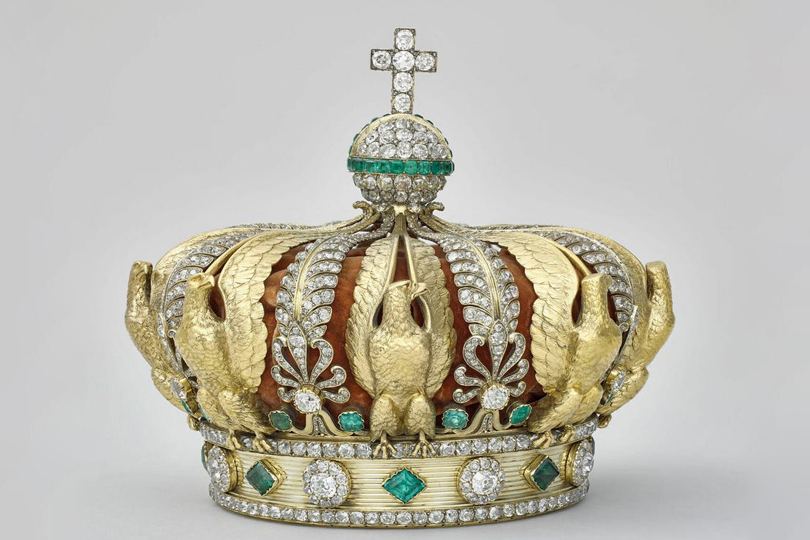
“Thanks to the professionalism and swift action of the Louvre’s agents, the criminals were put to flight, leaving behind their equipment and one of the stolen objects, namely the crown of Empress Eugénie, the condition of which is currently under review,” read a statement from the Ministry of Culture.
While the crown of Napoleon III’s wife, Empress Eugénie, which is made of gold and features more than 1,300 diamonds, was recovered near the Louvre, eight pieces from the collection of precious jewels remain missing. Here is a look at all of the priceless jewels that were stolen in the heist that shocked Paris, and the rest of the world.
A Diamond and Pearl Tiara That Belonged To Empress Eugénie
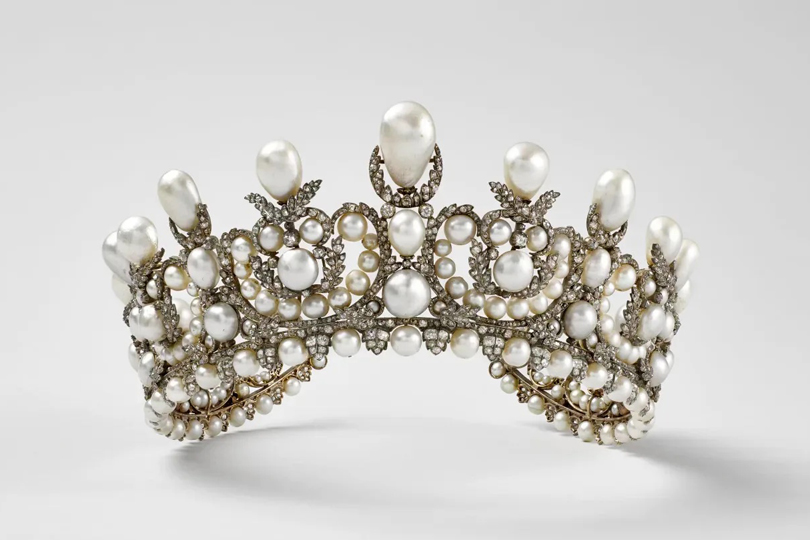
Consisting of diamonds, oriental pearls and silver, Empress Eugénie’s tiara is considered one of the Louvre’s most prized pieces. The tiara, made by jeweller Alexandre-Gabriel Lemonnier in 1882, per the Louvre, is composed of 212 pearls and 1,999 diamonds and 992 rose-cut stones.
A Large Diamond Bodice Knot (Brooch) That Belonged To Empress Eugénie
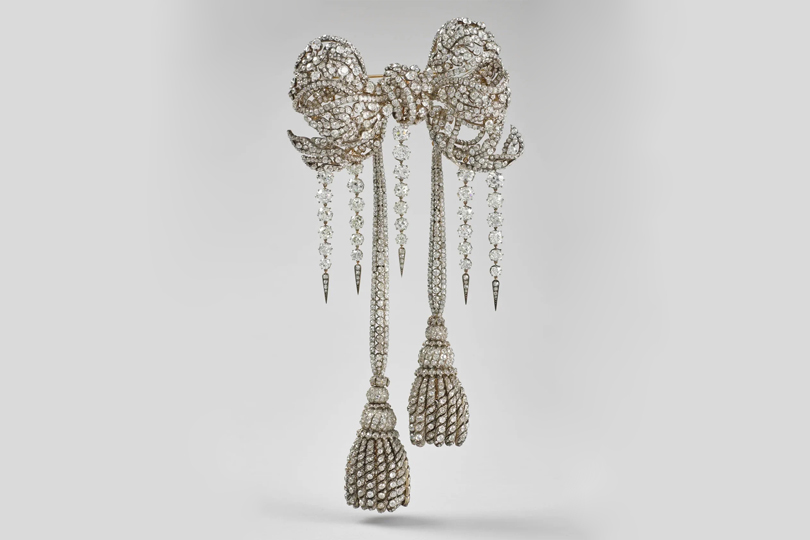
Empress Eugénie’s large bodice bow was also stolen in the heist. The item, which is made of diamonds, silver and gold, features tassels and articulated fringes. It was designed by jeweller François Kramer.
Composed of 2,438 diamonds and 196 rose-cut stones, the brooch also originally formed the buckle of a diamond belt of more than 4,000 stones, which was exhibited at the Universal Exhibition of 1855 before being worn by Empress Eugénie, according to the Louvre.
Eugénie, per CNN, reportedly wore the belt during a visit by Queen Victoria to the Palace of Versailles in 1855, and once more for the baptism of the Prince Imperial in 1856, before eventually transforming the item into a brooch.
A Sapphire And Diamond Set Worn By Queen Hortense, Queen Marie-Amélie And Isabelle Of Orléans
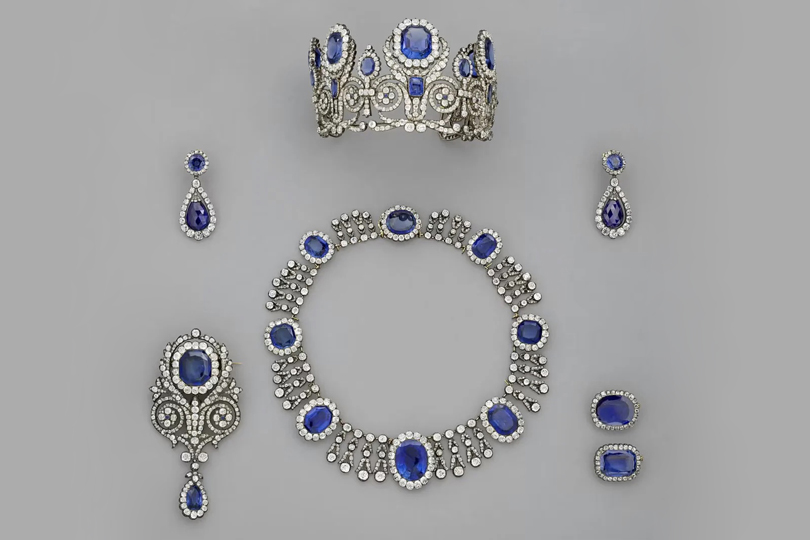
A sapphire and diamond set, consisting of a tiara, necklace and single earring, was worn successively by Queen Hortense, Queen Marie-Amélie and Isabelle of Orléans. According to the Louvre, the articulated necklace is adorned with eight sapphires of varying sizes and 631 diamonds. The tiara and single earring are composed of Ceylon sapphires in their natural state.
While its origins and designer remain unknown, the Louvre considers the set “a precious testament to Parisian jewellery.”
Marie-Louise Of Austria’s Emerald Set
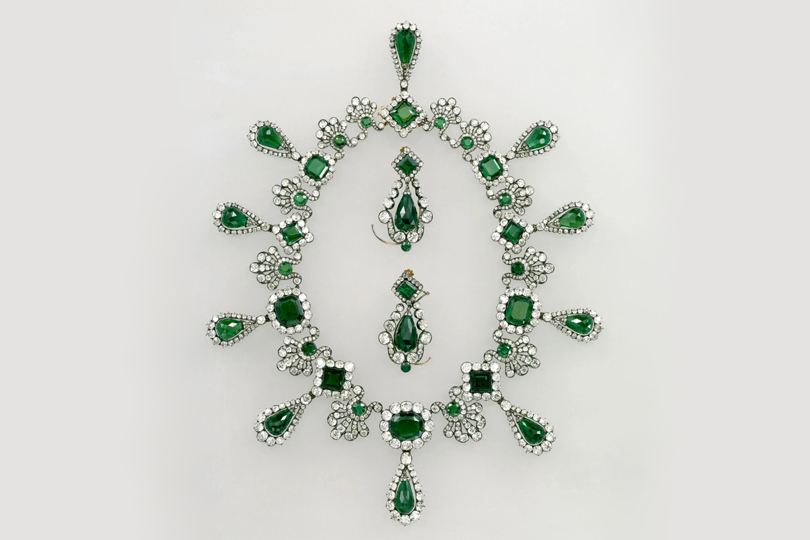
An emerald necklace and a pair of emerald earrings from the Marie-Louise set were also stolen during the shocking heist.
Napoleon delivered this striking set to Marie-Louise of Austria, his second wife, in 1810, with the intention of adding it to her personal jewellery case, according to the Louvre. Crafted by jeweller François-Régnault Nitot, the necklace is composed of 32 emeralds and 1,138 diamonds. The necklace and the pair of earrings, which were preserved in their original state, joined the Louvre’s collection in 2004.
The ‘Reliquary’ Brooch
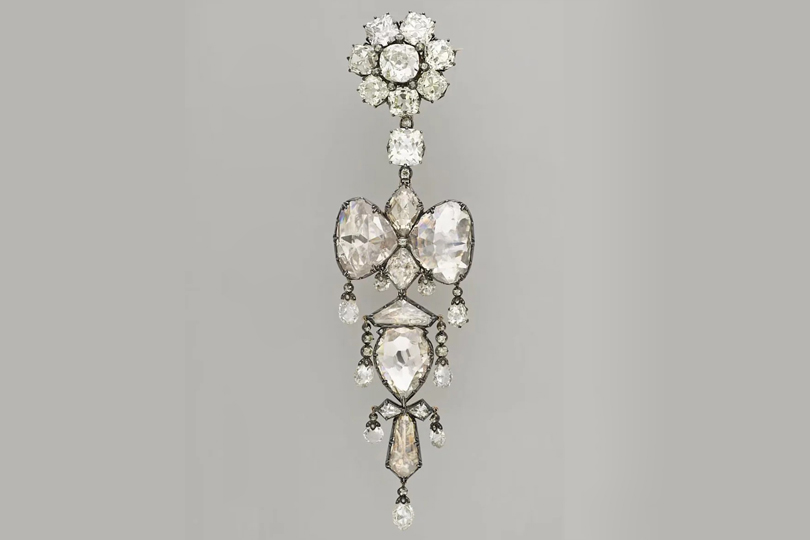
Created in 1855 by jeweller Paul-Alfred Bapst for Empress Eugénie, the diamond and gold brooch, known as the “Reliquary Brooch,” consists of seven diamonds surrounding a rosette, followed by two large diamonds that lie opposite each other, and additional diamonds that suspend from them. According to the museum, a total of 94 diamonds were used to craft this piece. On the back of the brooch are engravings of leaves and foliage.
What’s happens next?
The search is now on for four suspects and investigators are studying CCTV footage from the escape route. According to the museum, around 60 investigators are working on the case and prosecutors said their theory is that the robbers were under orders for a criminal organization.
“There is a race going on right now,” Chris Marinello, the chief executive of Art Recovery International, said.
Crowns and diadems can easily be broken apart and sold in small parts.
The thieves “are not going to keep them intact, they are going to break them up, melt down the valuable metal, recut the valuable stones and hide evidence of their crime,” Marinello said.
It would be difficult to sell these jewels intact, he said.
RELATED: