
By Michele Yeo
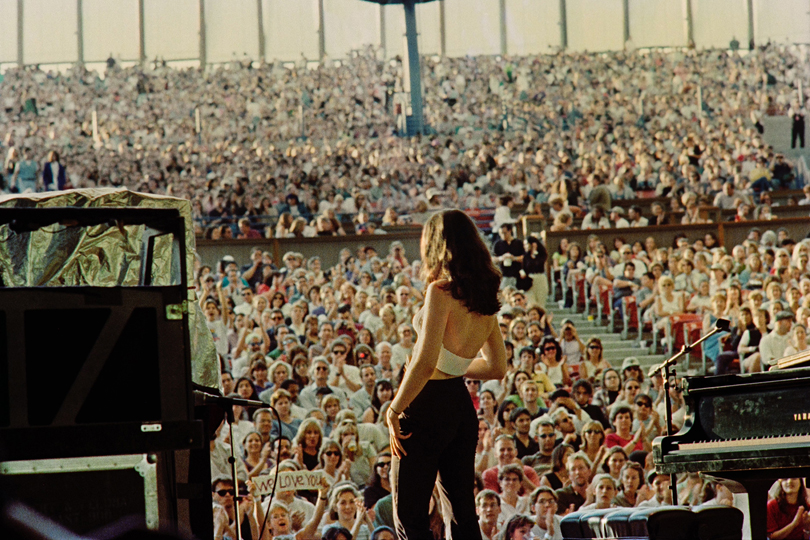
With artists like Taylor Swift, Beyonce, Lady Gaga, Sabrina Carpenter, Charlie XCX, Ariana Grande and more dominating the charts, selling out venues and ruling the airwaves, it’s hard to imagine a time when it was a struggle to get two female artists on the radio or on the same festival lineup. But that time did exist, it was the ‘90s and it inspired Canadian singer songwriter Sarah McLachlan to do something about it. That something was Lilith Fair, a traveling festival that played for tens of thousands of people in dozens of cities over the course of three summers and featured some of the biggest artists of the time all of whom happened to be women.
Lilith Fair: Building a Mystery, a new documentary that premiered earlier this month at the Toronto International Film Festival, takes us backstage of the history-making musical phenomenon. Told through archival footage and soundbites as well as present day interviews with headliners like McLachlan, Sheryl Crow, Paula Cole, Suzanne Vega, Lisa Loeb, Jewel, The Indigo Girls, and more, the film explores the genesis of the festival, its cultural impact, and its legacy.
Sarah McLachlan was coming off the release of her album Fumbling Towards Ecstasy when she was bumping up against some resistance from the music industry. “I remember every time I’d go to a radio station, they’d play a song and they’re like yeah, yeah, it’s a really great song but we added Tracy Chapman this week, or we added Jewel this week, and I was like…and? What’s that got to do with me?” she tells the doc. “They said women were not to be played back to back on the radio. Oh, it’s too much, people will change the channel and that just never made any sense to me.” When it came to booking spots on festivals like Lollapalooza, the logic made even less sense to her. “You can’t put two women on the same bill, people won’t come. Which was complete bullshit,” McLachlan recalls. “And certainly that put a huge fire under my butt to prove them wrong.”
And prove them wrong she did although McLachlan initially started small. First asking fellow singer songwriter Paula Cole to go on tour with her in an effort to prove that yes, audiences will, in fact, show up for two women on one bill. “Sarah showed up at a gig of mine and she asked me to go on tour with her, that was the beginning,” Cole recalls in the doc. The women’s tour stops sold out regularly. “I think we all realized there was something there,” Cole says. “So that then, expanded.” McLachlan then set her sights on something bigger: a festival. “Look at all these summer festivals, they’re all completely male dominated yet there are all these women out there making amazing music – why don’t we ask some of them if they want to come do something and it was as simple as that.” she explains. “She was doing it deliberately to show the promoters that you could have an all female lineup and it would do well,” recalls early lineup addition Suzane Vega. “And I thought oh yeah, great sign me up, I’ll do it.” Not everyone was as eager, Lisa Loeb recalls being hesitant to sign on. “My immediate reaction was I don’t know if it’s such a good idea, I don’t know if I want to be grouped with a bunch of women musicians, I didn’t wanna be seen as just a girl who plays guitar,” she explains. “But then I heard about who was on the bill, it was Sarah, Paula Cole, Aimee Mann, Patti Smith so I said yes, for sure, I would love to do it.”
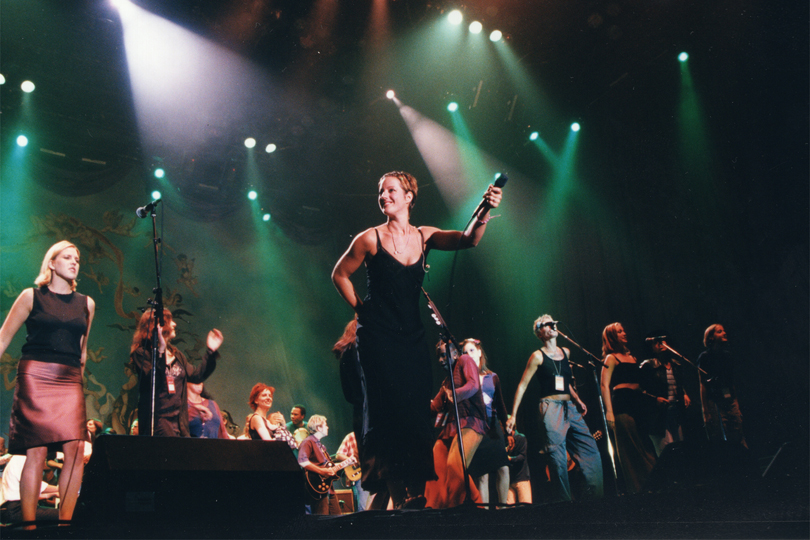
The women played four dates in the summer of 1996 as part of what McLachlan calls a “test run.” The following summer multiple artists like Sheryl Crow, Tracy Chapman, Joan Osborne, Jewel and more were added to the lineup. Lilith Fair played 40 dates in 1997. The following summer the tour would play 57 dates for tens of thousands of devoted fans in each city. The music industry could no longer deny that women artists could, in fact, sell tickets and the tour was featured on the covers and in the pages of Rolling Stone, Time, and Entertainment Weekly magazines. Lilith Fair wasn’t without its criticisms, though. A lack of diversity among the artists had some calling the festival “Lily White Festival” a note McLachlan took to heart. Artists like Missy Elliott, Queen Latifah, and Erykah Badu were added to the lineup. In the doc, Badu credits Lilith Fair with “expanding my audience greatly,” adding, “my welcome into the industry was by Sarah McLachlan and Bonnie Raitt.” The third and final year of Lilith wrapped up in 1999 after playing hundreds of dates and raising millions for local charities along the way. McLachlan says she wanted to “leave on a high note” after what she called “an all encompassing three years.”
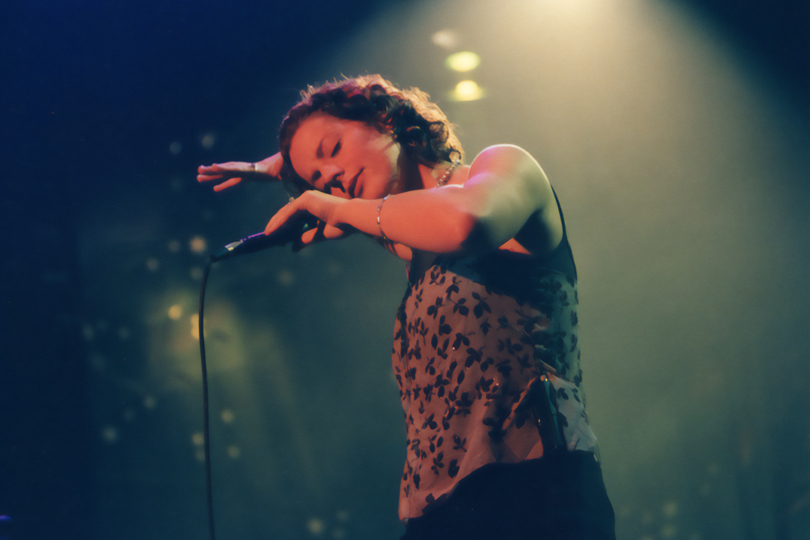
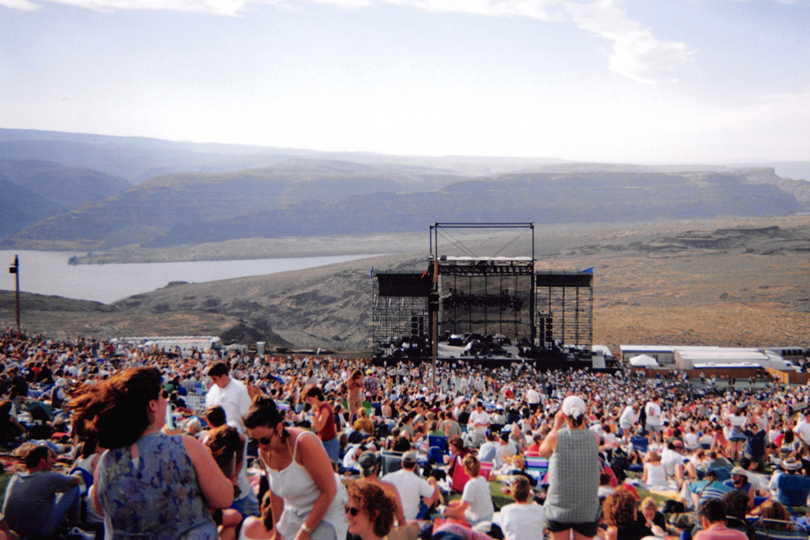
Lilith Fair: Building a Mystery is as much a time capsule as it is a tribute to the groundbreaking tour itself. It’s impossible not to feel nostalgic for a bygone era that seemed simpler and almost utopic – at least on festival grounds and backstage, anyway. Many of the artists tell the documentary about the overwhelming sense of unity and togetherness that was evident from day one. Paula Cole recalls the tour’s official kickoff at The Gorge in 1997 and feeling that Lilith “is something so much bigger than us or what we thought it could be. There was magic in the air.” Sheryl Crowe shares “one of the things I thought was so unique about the Liith tour was everybody was always around everybody,” she says. “That feminine energy, I think, usurped the ego. There was no separation between the artists. Nobody was more important than anybody else.” Emily Saliers of The Indigo Girls recalls “so many crystallized moments of sheer joy.” Lilith Fair, and therefore, the documentary, was and is a testament to the feminine divine. “One of the beautiful things about Lilith was that we could all be ourselves and there was so much power in that,” McLachlan says. The serene energy of Lilith Fair is felt even more when juxtaposed with footage from Woodstock ‘99 – a barbaric rage fuelled ode to toxic masculinity that went down in literal flames. Sheryl Crow and Jewel played both festivals and say the vibes could not have been more opposite. “It was just gasoline on the worst of the ‘90s male culture” Jewel says of Woodstock. “It was so shocking to me,” Crow says in archival interview footage after her return to Lilith. Archival footage shows the Woodstock crowd demanding Sheryl to “show us your tits!”
Even after Lilith Fair was a bonafide success and many of the participating artists topped the charts, it still didn’t inoculate them against certain bullshit from the music industry. After the festival’s first year, Sarah McLachlan, Sheryl Crow, Jewel, Paula Cole, Shawn Colvin, and Meredith Brooks were all nominated for Grammy awards at the following year’s ceremony. Cole, McLachlan, and Colvin were all nominated in the Record of the Year category along with R. Kelly and brotherly trio Hanson. All nominees were invited to perform at the ceremony except the three women were invited to perform together in a medley of their nominated songs while Hanson and Kelly were given their own individual performances. “At first we were like this is bullshit,” McLachlan tells the doc. “Why lump us all together?” The women considered boycotting the ceremony altogether in protest but ultimately complied – something they regret to this day. “It’s always haunted me, was that the right thing to do? Just take what we were offered?” Shawn Colvin asks in the doc. “Looking back on it, just saying no, we’re not going to perform would have been radical,” adds Paula Cole.
McLachlan had the opportunity to flex her boycott muscles most recently when she cancelled a planned performance at the premiere of the Lilith Fair documentary on September 21st to stand in support of Jimmy Kimmel who had been suspended by ABC/Disney for his comments in the wake of the murder of Charlie Kirk (ABC News Studios, which is owned by Disney, is the Lilith Fair documentary’s U.S. distributor) The singer/songwriter issued a statement saying, “I know you’re expecting a performance tonight, and I’m so grateful to all of you for coming, and I apologize if this is disappointing, but we have collectively decided not to perform but instead to stand in solidarity in support of free speech…thank you for your understanding.”
As for whether a Lilith Fair could happen today even though we could use some of that serene feminine energy now more than ever in this growing toxic red pill manosophere, one perpetuated by the late Charlie Kirk? Well, McLachlan isn’t so sure. She tried to revive the festival in 2010 but it was met with lagging ticket sales and canceled dates. “It was a massive success and it changed people’s lives, it changed my life,” McLachlan says of the festival’s original run. “And yet people don’t like change. There’s a reason Lilith remains mostly unheard of or misunderstood because if you stand up for something there is going to be an equal and opposite reaction.
Lilith Fair: Building a Mystery is streaming on CBC Gem and on CBC Docs on YouTube.
Trending
 Here’s Every Song From ‘Love Story: John F. Kennedy Jr. & Carolyn Bessette’ [UPDATED]
  Alexander McQueen’s 10 Most Iconic Runway Shows
  THE STORY OF: Carolyn Bessette-Kennedy’s Narciso Rodriguez Wedding Gown
  10 Memorable Images Of Supermodel Gia Carangi (1960–1986)
  A Short History Of ‘George’: John F. Kennedy Jr.’s Magazine That Was Ahead Of Its Time




![Here’s Every Song From ‘Love Story: John F. Kennedy Jr. & Carolyn Bessette’ [UPDATED]](https://29secrets.com/wp-content/uploads/2026/02/Heres-Every-Song-From-Love-Story-John-F-Kennedy-Jr-Carolyn-Bessette-HEADER.jpg)