
Part of an ongoing series of 29Secrets stories, taking a deep dive into the history of legendary beauty products and iconic fashion moments…
By Christopher Turner
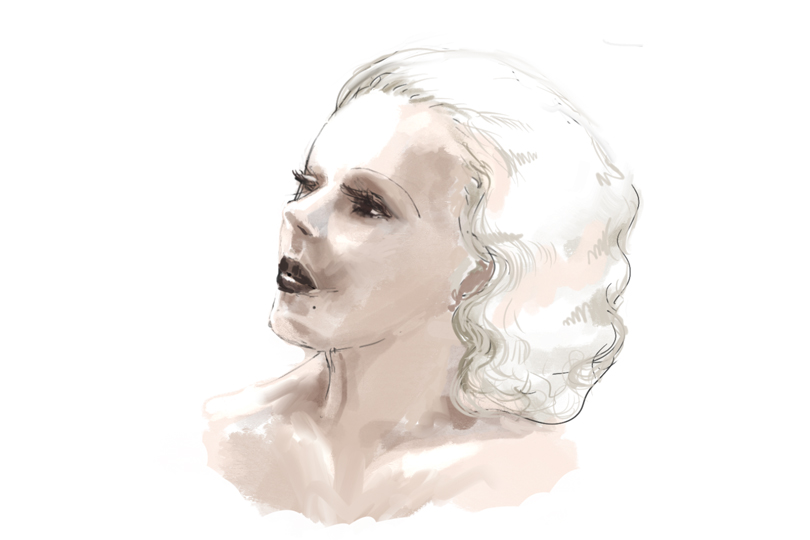
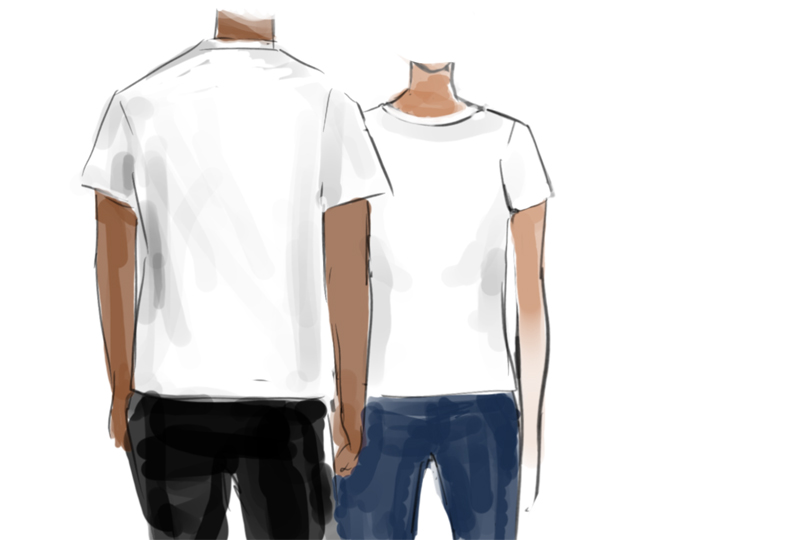
Illustration by Michael Hak
Few garments have travelled as far—both culturally and literally—as the T-shirt. From its origins as underwear in the 19th century, to its official adoption by the U.S. Navy, to being immortalized by Hollywood icons like James Dean and Marlon Brando, the functional undergarment has evolved into one of the simplest and sometimes most powerful forms of self-expression in modern fashion. Today, the T-shirt is everything: a practical base layer, a luxury staple, a political billboard, a nostalgic artifact, and a blank canvas. Of course, the history of the T-shirt is less about fabric and more about identity—who we are, what we believe, and how we choose to show it.
You can find T-shirts in stores on every corner of the planet at every price point, with an estimated 95 per cent of people in North American owning at least one. As for sales? According to global apparel industry reports, more than two billion T-shirts are sold every year worldwide, generating over $48 billion USD in 2025.
How did this straightforward article of clothing become such a defining staple in both fashion and culture? Read on for the history of the everyday T-shirt, the most ubiquitous item in the apparel industry.
The beginning
Simple, T-shaped top garments have been worn by humans since ancient times, while tunics (garments similar to T-shirts) are among the oldest known garments in history. Tunics, often made of linen, can be traced back to ancient civilizations in the Mediterranean and Near East, including Egypt, Greece, and Rome, where they were established as basic, everyday garments.
In the Middle Ages (roughly spanning from the fifth to the late 15th century), long T-shaped tops made of linen or woven cotton, worn mostly by men, provided a layer between the body and any garments worn over top. These shirts, often referred to as “union suits”—large, rectangular pieces of fabric sewn into a “T” shape with long shirttails that tucked between the legs—were easy to wash and provided a hygienic barrier for the skin. Unsurprisingly, wearing a clean, laundered shirt showed off a gentleman’s status and wealth. But the garments weren’t just for the wealthy. By the late 19th century, labourers and soldiers began wearing the garments, as they needed lightweight, breathable garments to wear underneath their uniforms. But while the one-piece union suit was practical, it was cumbersome for workers, which ultimately led to design changes towards the end of the 19th century.
The union suit became two separate pieces: long johns for the bottom and a simple top for the upper body that was cut in a T-shape when laid flat. That simple garment would quietly lay the foundation for one of fashion’s most enduring silhouettes.
In the navy…
After the one-piece union suit became two separate top and bottom garments, more changes came. New knitting technology meant that the T-shirt, with or without buttons and now with a more form-fitting shape, could be mass-produced, with added refinements and in a wider range of textiles such as calico, jersey, and wool.
By the late 19th century, British sailors had begun wearing white flannel T-shirts under their woollen uniforms. Within a few years, the British Royal Navy began allowing their sailors to officially wear these undershirts when working on deck. It didn’t take long for the trend to cross the ocean.
In the early 20th century, T-shirts slowly started taking off in North America, and businesses took notice. The P.H. Hanes Knitting Company was founded in 1901–1902 by Pleasant Henderson Hanes in Winston-Salem, North Carolina. Following the sale of his family’s tobacco business, P.H. Hanes established the company to manufacture men’s and boys’ underwear, and it grew into a major textile force in the region. Earlier than that, in 1851, Fruit of the Loom was founded by brothers Robert and Benjamin Knight in Warwick, Rhode Island; originally the company produced cotton cloth and textiles, but it began marketing T-shirts on a large scale in the 1910s.
But back to the Navy. In 1913, the U.S. Navy finally followed the lead of the British Royal Navy and standardized the short-sleeve, crewneck cotton undershirt as an official part of its uniform. Unlike the British Royal Navy, whose soldiers wore white flannel T-shirts, the U.S. Navy opted for cotton T-shirts, which was a wise choice considering cotton dried faster than flannel and was more comfortable. North American sailors appreciated its comfort in hot conditions, often removing their outer layers while working on deck, inadvertently transforming their T-shirt into something visible rather than hidden. Still, it remained firmly within the realm of underwear—functional, modest, and devoid of cultural meaning.
That changed by the 1920s, when the word “T-shirt” became part of North American English after it appeared in the Merriam-Webster Dictionary.
By the 1930s, T-shirts were standard issue for college sportsmen and in 1938, the American retailer Sears, Roebuck and Company began offering white cotton “gob” (slang for sailor) shirts for sale.
Following the end of World War II in 1945, returning veterans continued wearing their military-issued T-shirts in civilian life, drawn to their comfort and ease. In the years that followed, the practice of wearing T-shirts as outerwear was quickly adopted by most working-class men on weekends. What had once been strictly utilitarian began to signal something else entirely: a casual, effortless masculinity. The shift was subtle at first, but it didn’t take long for Hollywood to amplify it into something iconic.
Hollywood gets involved
Tennessee Williams’ play A Streetcar Named Desire was first performed on Broadway on December 3, 1947, and it was so successful that Warner Bros. released a film adaptation of the play, directed by Elia Kazan, on September 19, 1951. The film starred Vivien Leigh as Mississippi Southern belle Blanche DuBois, and a virtually unknown actor named Marlon Brando as her brutish brother-in-law, Stanley Kowalski.
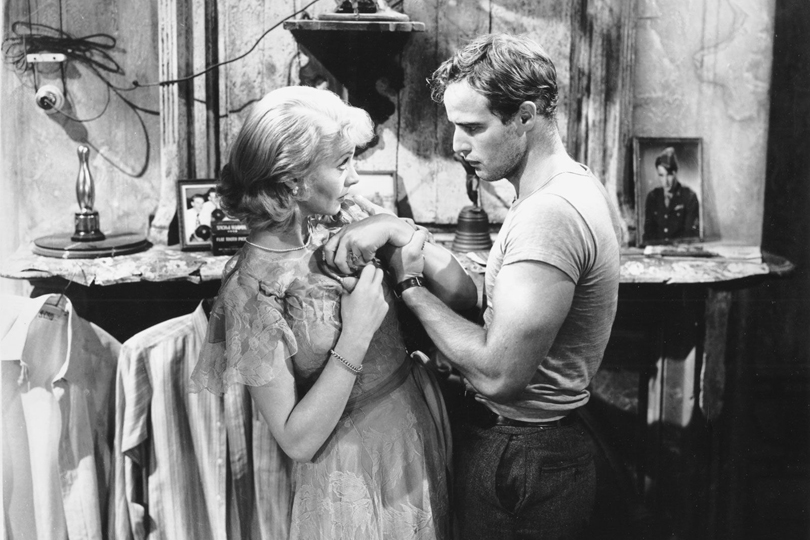
The movie was a hit. A Streetcar Named Desire received 12 Academy Award nominations at the 24th Academy Awards, winning four—and setting an Oscar record when it became the first film to win in three of the acting categories (Best Actress for Vivien Leigh, Best Supporting Actor for Karl Malden, and Best Supporting Actress for Kim Hunter).
A Streetcar Named Desire was widely regarded as a smash success and an instant classic, making it one of the most successful adaptations of a play in cinema history…but the film also notably delivered one of the most transformative fashion moments of the 20th century. In his role as Stanley, Brando famously wore fitted white T-shirts that clung to his body with a kind of raw, unpolished sensuality. This onscreen wardrobe choice is universally credited with transforming the T-shirt from a utilitarian undergarment into a standalone fashion statement for the masses and a symbol of rugged masculinity. The T-shirt was no longer just underwear—it now had sex appeal.
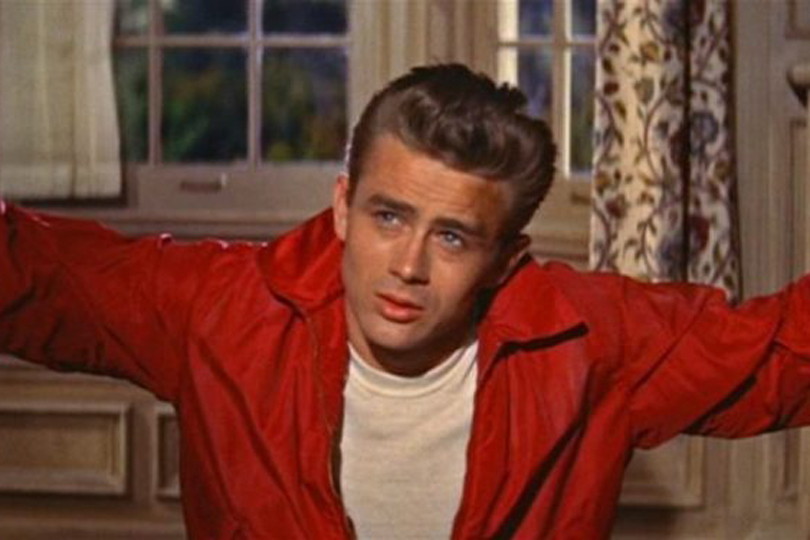
Hollywood’s fashionable influence didn’t end there. A few years after A Streetcar Named Desire, James Dean’s portrayal of Jim Stark in the 1955 coming-of-age melodrama film Rebel Without a Cause cemented the plain white T-shirt, worn with denim jeans and a red jacket, as a symbol of cool, rebellious youth.
Along with Brando, Dean established the white T-shirt and jeans combination as the uniform of disaffected youth, rejecting the buttoned-up, conservative fashion of the 1950s. From there, the T-shirt took over as a fashion statement.
By the 1960s, the T-shirt had fully stepped into the spotlight, quite literally becoming a medium for messaging. Advances in screen printing allowed for text and graphics to be applied directly onto fabric, transforming the garment into a wearable form of communication. Tourists began buying souvenir tees emblazoned with destination names, while political activists adopted them as tools for protest. Slogans, band logos, and countercultural imagery found a home on cotton chests, turning bodies into moving billboards.
The rise of band T-shirts, in particular, marked a turning point during the 1960s and 1970s, evolving from concert souvenirs into mainstream fashion staples. Wearing a tee featuring your favourite group wasn’t just about fandom—it was about belonging. From The Rolling Stones’ tongue logo to psychedelic prints tied to the era’s music festivals, these shirts carried emotional and cultural weight. They were keepsakes, declarations, and badges of identity all at once.
By the end of the 1970s, the T-shirt—more specifically the wet T-shirt—became a cultural phenomenon. In 1977, Jacqueline Bisset scandalized moviegoers in the opening diving scene of the movie The Deep, when she appeared in a wet, see-through T-shirt.

Prior to the film’s release, the marketing campaign, which was specifically designed to turn the film into a global cultural phenomenon, relied heavily on a photo of Bisset scuba diving in a white, translucent T-shirt. That image (which reportedly had been taken without Bisset’s consent and which she felt was exploitative), along with Bisset’s opening diving scene in the film, ignited a media frenzy and quickly established the actress as a global sex symbol. It also launched the “wet T-shirt” craze of the late 1970s.
Bisset and her wet T-shirt also revolutionized film marketing, for better or worse. This approach to a film’s promotion—focusing on a single, evocative image rather than just the plot—showcased a shift towards Hollywood using scandal and sex appeal as the primary marketing tool.
The evolution continues
As the decades progressed, the T-shirt continued to absorb and reflect cultural shifts. The 1970s and 1980s saw an explosion of graphic experimentation, with bold colours, provocative slogans, and designer interventions. What had once been a boring, blank basic became something more, and in the hands of designers and artists, the T-shirt blurred the line between fashion and art.
Famed British fashion designer Vivienne Westwood weaponized the T-shirt when she introduced T-shirts with safety pins during the height of the punk movement in the mid-1970s. Ripped, safety-pinned, and emblazoned with controversial imagery, her tees rejected polish in favour of raw expression. Around the same time, Katharine Hamnett elevated the slogan tee into high-fashion activism. Her oversized shirts, printed with bold political messages, were impossible to ignore—most famously when she decided to protest the deployment of Pershing nuclear missiles in Europe and wore a T-shirt reading “58% DON’T WANT PERSHING” to meet British Prime Minister Margaret Thatcher.
By the 1990s, the T-shirt had entered a new phase: ironic minimalism. Logos became both status symbols and punchlines. American fashion houses like Calvin Klein and Tommy Hilfiger turned branded tees into must-have items, while streetwear brands began to understand the power of scarcity and hype. The T-shirt, once inexpensive and accessible, could now command significant cultural and monetary value.
The early 2000s continued this trend, with graphic tees becoming central to youth culture. From cheeky slogans to pop culture references, they dominated malls and music videos alike. But it was also during this period that the T-shirt became deeply intertwined with the rise of streetwear as a global force. Brands like Supreme built entire empires on the backs of limited-edition T-shirts, transforming them into collectible objects. A simple cotton tee, when stamped with the right logo, could sell out in seconds and resurface on resale markets for multiples of its original price.
At the same time, luxury fashion began to embrace—and reinterpret—the T-shirt. No longer confined to casualwear, it appeared on runways, styled with tailored trousers and evening pieces. Designers elevated the silhouette through fabric, cut, and concept, proving that even the most basic garment could be reimagined endlessly.
Today, the T-shirt exists in a kind of paradox. It is both ubiquitous and deeply personal, mass-produced yet capable of carrying intimate meaning. It can be political, nostalgic, ironic, or purely aesthetic. It can signal allegiance or individuality. It can also just be…a T-shirt.
Sustainability has also entered the conversation, challenging the fashion industry to rethink how T-shirts are made and consumed. As one of the most produced garments in the world, the T-shirt sits at the centre of discussions about fast fashion, waste, and ethical production. Brands and consumers alike are beginning to reconsider not just what their T-shirts say, but how they are made.
In the end, what makes the T-shirt remarkable is not its design—it is, at its core, profoundly simple—but its adaptability. It has survived not by resisting change, but by embracing it. Every era has found a way to imprint itself onto the T-shirt, whether through silhouette, styling, or slogan. A blank canvas, yes, but one that never stays blank for long.
Want more? You can read other stories from our The Story Of series right here.
Trending
 10 Memorable Images Of Supermodel Gia Carangi (1960–1986)
  20 Celebrities Who Posed For Abercrombie & Fitch Before They Were Famous
  ‘Project Runway Canada’ Seamlessly Struts Back With New Season
  20 Actors You Probably Forgot Appeared On ‘Gilmore Girls’
  Fragrance Of The Month: The 7 Virtues Blackberry Lily