
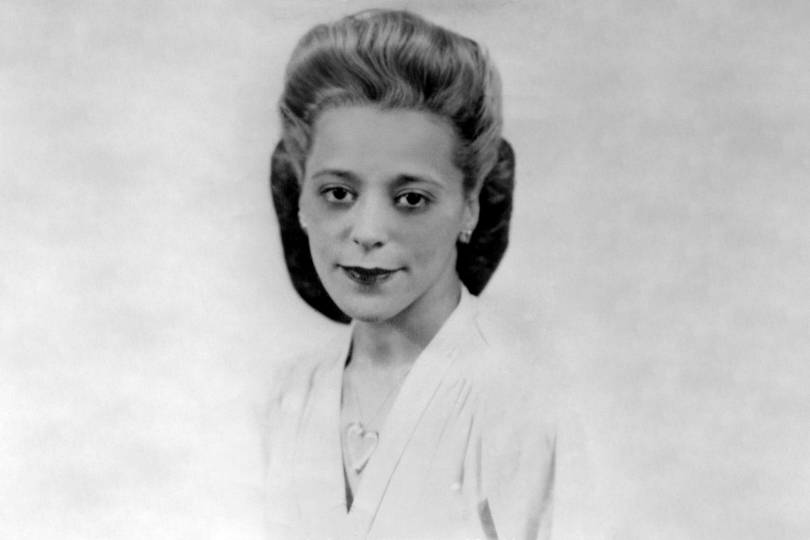
Before she was an icon, Viola Desmond was an entrepreneur. And in building a beauty empire for Black women, she was already rewriting Canada’s story.
On any given day in the 1940s, you might have found Viola Desmond behind the chair in her Halifax beauty salon, comb in hand, a sweep of marcel waves gleaming beneath her steady touch. Customers streamed in from across the Maritimes — women who wanted not only to look beautiful, but to feel seen. Desmond was more than a stylist; she was a visionary, building a business empire in a world that often denied Black women access to both beauty and power.
Today, Desmond is best known as the woman who challenged segregation in Nova Scotia, refusing to leave a “whites-only” section of a New Glasgow movie theatre in 1946 — an act of defiance that predated Rosa Parks by nearly a decade. That act eventually led to Desmond becoming the first Canadian-born woman to appear alone on a Canadian bank note, the $10 bill. But long before she became a national civil rights icon, Desmond was shaping another kind of revolution as a cosmetics pioneer for Black women in Atlantic Canada. Unbeknownst to many, she was Canada’s first Black female beauty magnate, and her salon and school transformed not just how Black women saw themselves, but how Canada would one day see her.
Here’s the story of the beauty entrepreneur before she became a civil rights icon.
A beauty empire in a segregated world
Viola Irene Desmond was born on July 6, 1914, in Halifax, into a large, supportive family that valued education, dignity and ambition. Her parents, James Albert and Gwendolin Irene Davis, raised 10 children in Halifax’s close-knit Black community. Unlike many Black Nova Scotians of the time, her family was relatively middle-class; her father worked as a stevedore before finding success as a barber, while her mother came from a white, New England background. This mixed heritage exposed young Viola to both the constraints of segregation and the possibilities of defying it.
From a young age, Desmond was drawn to entrepreneurship and the world of beauty. Yet opportunities for Black women in early 20th-century Canada were painfully limited: mainstream beauty schools often barred Black students, and the few salons that did exist rarely catered to Black clientele. Black Canadians faced discriminatory housing laws, segregated schools and limited job opportunities. Beauty culture, particularly, was deeply Eurocentric.
“There were almost no products available for Black women in Canada at the time,” explains historian Constance Backhouse. “If you wanted face powder or hair treatments, you had to order from the United States, and even then, shades often didn’t match darker complexions.”
Refusing to accept the barriers in Halifax, Desmond left. She received beautician training in Montreal, then in Atlantic City, and then at one of Madam C.J. Walker’s famed Schools of Beauty Culture in New York — the same institution that trained generations of Black beauty entrepreneurs across North America. By the time Desmond returned to Halifax, she was determined not only to build a career for herself, but also to open doors for other Black women who, like her, had been told there was no place for them in Canada’s beauty industry.
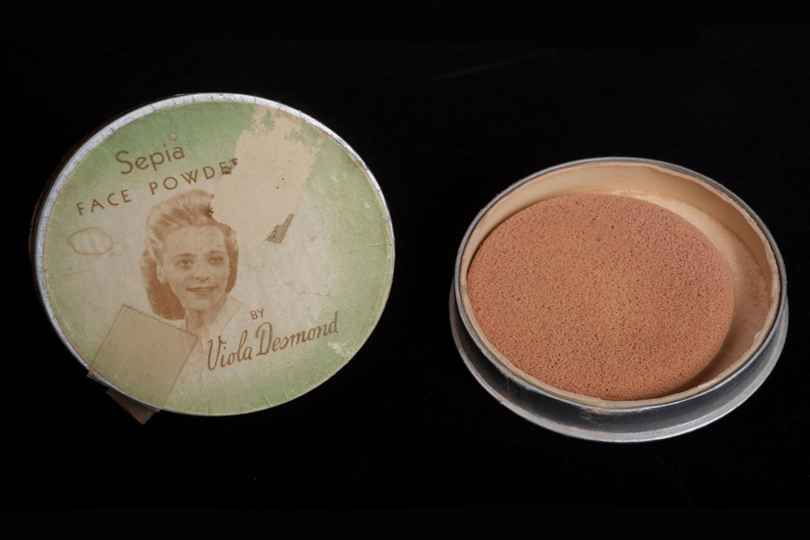
Desmond opened her salon, Vi’s Studio of Beauty Culture, in 1937 on Gottingen Street in Halifax’s historic North End. The salon offered more than hairstyling — Desmond developed, marketed and sold her own line of hair and skincare products tailored specifically for Black women, from pressing oils to creams that matched deeper skin tones. It was radical in its simplicity: beauty made for women who had long been ignored by the industry.
Training a generation
Vi’s Studio of Beauty Culture and Desmond’s own line of hair and skincare products, which were tailored specifically for Black women, were unprecedented at the time. But Desmond didn’t stop there. Recognizing that many young Black women were excluded from professional schools, she opened the Desmond School of Beauty Culture in Halifax. Here, she trained students in hairstyling, cosmetics and business management, equipping them with skills that could lead to financial independence in a society that often tried to deny them just that.
The Desmond School of Beauty Culture quickly became a hub, attracting students from across the Maritimes and beyond. Graduates went on to open salons in their own communities, spreading Desmond’s influence far beyond Halifax and across Canada. In many ways, she created a network of Black female entrepreneurs — a sisterhood of beauty workers who found not only income, but dignity, in their craft.
“Her work wasn’t just about appearances,” notes Nova Scotia writer and activist El Jones. “It was about giving Black women the tools to own businesses, to be visible, and to command respect in a world that tried to erase them.”
Desmond’s approach to beauty was political, even if she never described it that way. At a time when mainstream Canadian magazines featured exclusively white models, her products and training centres declared that Black women mattered. Of course, this empowerment through beauty echoed movements happening elsewhere. In the United States, Madam C.J. Walker had become the first self-made Black female millionaire through her haircare empire. In Jamaica, the Garvey movement encouraged pride in African heritage. Desmond’s Canadian chapter was quieter, but no less significant.
“Looking good was more than vanity,” says historian Afua Cooper. “It was survival, confidence, and a way to challenge the racist assumption that Black women didn’t belong in public life.”
The night at the Roseland Theatre
Of course, Desmond’s life cannot be told without the moment that defined her place in history. On November 8, 1946, while travelling to Sydney, Nova Scotia, to sell her beauty products, she stopped in New Glasgow after her car broke down. With hours to spare before repairs could be completed, she went to see The Dark Mirror, starring Olivia de Havilland, at the Roseland Film Theatre.
Unaware of the theatre’s segregated seating policy, she asked for a ticket close to the screen. Instead, she was sold a balcony seat — the section reserved for Black patrons. The theatre didn’t have a sign telling its patrons about their segregated seating policy and, unaware of the policy and being nearsighted, she went to sit in the floor section to be close to the screen. When she was asked to move, she realized what was happening, and refused to move because she had a better view from the main floor. Instead, she requested to exchange her balcony ticket for a seat on the main floor for an additional cost; she was refused and forcefully removed from the theatre, arrested and fined. Desmond spent 12 hours in jail, and had to pay a $26 fine for tax evasion. The tax on the balcony price of 30 cents was two cents; the tax on the floor price of 40 cents was three cents, meaning Desmond was ultimately convicted of depriving the government of one cent in tax.
Upon returning to Halifax, Desmond discussed the matter with her husband, Jack Desmond, who advised her to let it go. However, with the support of her church, the Cornwallis Street Baptist Church, Desmond decided to fight the charge in court. Her refusal to accept this injustice became one of the first widely publicized challenges to racial segregation in Canada.
What is often overlooked is why she was there in the first place: business. Desmond was en route to sell her line of beauty products to clients. Her fight for dignity was not only about her rights as a citizen, but also about her role as a professional woman travelling to grow her company. The two legacies — beauty and justice — were inseparably woven.
Legacy on two fronts
Sadly, Desmond never lived to see the full recognition of her bravery. After the trial and unsuccessful encounter with the legal system of Nova Scotia, her marriage ended. Desmond closed both of her businesses and moved to Montreal, where she enrolled in a business college before eventually settling in New York City. She died from gastrointestinal bleeding on February 7, 1965, at the age of 50, long before Canada’s official apologies and posthumous pardon. But her impact reverberates.
In 2010, the Government of Nova Scotia issued an official apology to Desmond and a pardon for her November 8, 1946, conviction. Two years later, Canada Post issued a commemorative stamp featuring Desmond as part of its series celebrating significant figures in Canadian history. On December 8, 2016, Desmond was selected to appear on the Canadian $10 bill, becoming the first Canadian-born woman and the first Black Canadian to appear on a regularly circulating Canadian banknote. The $10 bill, which was finally unveiled on November 26, 2018, features Desmond’s portrait on the obverse, with a map of Halifax’s historic North End and the Canadian Museum for Human Rights on the reverse. Desmond’s portrait can now be spotted in wallets across the country.
Today, walking through Halifax, one can find echoes of Desmond’s presence: heritage plaques at the site of her former school and outside of the former Roseland Theatre in New Glasgow where she was arrested in 1946, a scholarship in her name, the ongoing storytelling by her surviving family members and community. But perhaps her truest legacy is less tangible — the countless Black women who walk into salons, drugstores and beauty schools and see themselves reflected.
In that sense, Desmond’s legacy is not frozen in 1946 nor captured solely in purple ink on a Canadian banknote. It lives in the confidence of every single Canadian woman who chooses to define her beauty on her own terms.
Beyond currency and courtrooms, her legacy lives in beauty culture itself thanks, in part, to Desmond’s insistence that Black women deserved beauty products, training and respect.

Trending
 Who Is Madonna Singing About On “Danceteria”? Every Reference Explained
  10 Memorable Images Of Supermodel Gia Carangi (1960–1986)
  20 Celebrities Who Posed For Abercrombie & Fitch Before They Were Famous
  8 ‘One Tree Hill’ Quotes That Defined Our Teens
  THE STORY OF: Madonna’s Iconic Jean Paul Gaultier Cone Bra