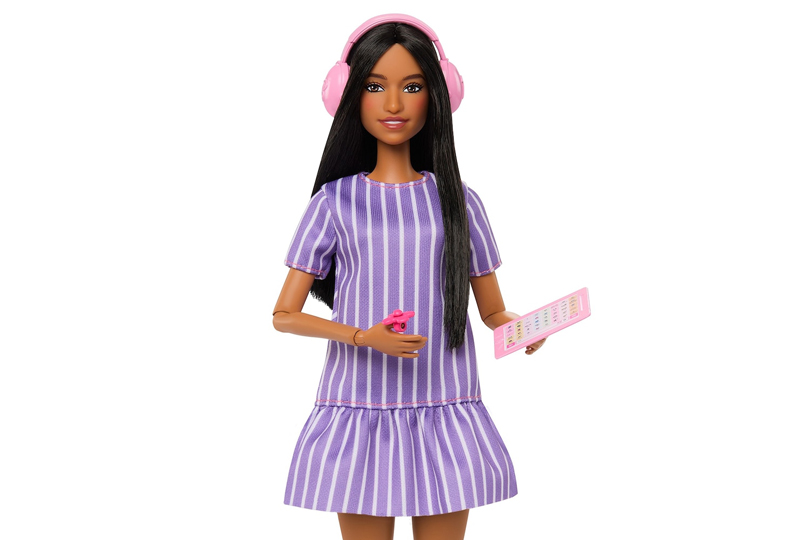
Mattel is introducing its first Barbie designed to represent someone on the autism spectrum, marking the latest addition to the company’s long-running effort to broaden how its iconic dolls reflect real people.
While the first Barbies date to 1959, until 2019 there were no dolls with disabilities. The new Barbie joins the Fashionistas lineup, which already includes dolls with Down syndrome, Type 1 diabetes, hearing aids, prosthetic limbs, vitiligo, and a wide range of body shapes and skin tones. There are also Barbies in wheelchairs and a Ken doll with a prosthetic leg.
Announcing the autistic Barbie, Jamie Cygielman, the global head of dolls at Mattel, said it was the latest expansion of the company’s commitment to representation and inclusion.
“Barbie has always strived to reflect the world kids see and the possibilities they imagine, and we’re proud to introduce our first autistic Barbie as part of that ongoing work,” Cygielman said. The doll “helps to expand what inclusion looks like in the toy aisle and beyond because every child deserves to see themselves in Barbie,” she added.
“We engaged with the autistic community throughout the design process, always mindful that autism is experienced differently by every individual and is not always visible. The elements of this doll reflect how some people on the spectrum may experience and express the world, and we hope that by partnering with influential voices within the community, Barbie can continue to showcase a broader range of authentic experiences.”
Autism spectrum disorder, or ASD, is a spectrum, which means symptoms vary by person. Some need little support in their daily lives, and some may need a great deal of support in performing day-to-day activities. Some may have advanced conversation skills and others may be minimally verbal.
Mattel spent more than a year and a half developing the doll in partnership with the Autistic Self Advocacy Network (ASAN), a nonprofit focused on disability rights and authentic representation. The challenge, according to those involved, was avoiding a one-size-fits-all portrayal.
“Autism doesn’t look any one way,” said Noor Pervez, ASAN’s community engagement manager. “But we can try and show some of the ways that autism expresses itself.”
The doll’s gaze is slightly averted, reflecting the fact that some autistic people may find direct eye contact uncomfortable. The Barbie also features articulated elbows and wrists, acknowledging stimming behaviors such as hand movements that can support sensory regulation or reduce excitement.
Clothing was another area of careful consideration. Sensory sensitivity varies widely among autistic people, including how fabric feels against the skin. Some prefer loose clothing, while others feel more grounded in fitted garments. The final design features a short-sleeved A-line dress with a flowing skirt, chosen to minimize contact with excess fabric. Flat shoes were selected for comfort and ease of movement.
Accessories also play a role in representation. Each doll includes a pink finger-clip fidget spinner, noise-canceling headphones, and a pink tablet inspired by assistive communication devices often used by autistic people who struggle with verbal speech.
“Autistic kids often feel excluded because they are different. Having a doll that represents their personal experiences sends a message that they are valued and included,” Geraldine Dawson, founding director of the Duke Center for Autism and Brain Development and William Cleland Distinguished Professor of Psychiatry and Behavioral Sciences at Duke University School of Medicine said in a statement. “This can play an important role in developing a positive sense of identity and self-esteem. For kids on the spectrum, this is especially important because it can buffer them from developing mental health problems, such as depression, which are common among autistic kids.”
The advocacy group and nonprofit Autism Speaks also said the new doll “helps reinforce a positive self-image for autistic children.”
“When toy brands like Toys ‘R’ Us or Mattel support autism, they send a powerful message about inclusion that can shape kids’ identities early on,” Eileen Lamb, a senior director of marketing and social media strategy at Autism Speaks, told ABC News in a statement.
RELATED:





 Pop Culture






![Here’s Every Song From ‘Love Story: John F. Kennedy Jr. & Carolyn Bessette’ [UPDATED]](https://29secrets.com/wp-content/uploads/2026/02/Heres-Every-Song-From-Love-Story-John-F-Kennedy-Jr-Carolyn-Bessette-HEADER.jpg)