
Part of an ongoing series of 29Secrets stories, taking a deep dive into the history of legendary beauty products and iconic fashion moments…
By Christopher Turner
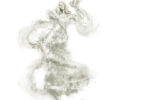
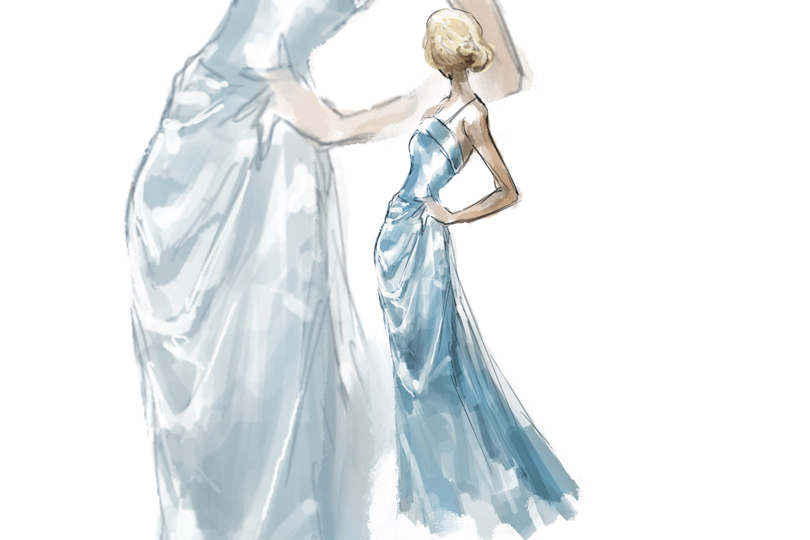
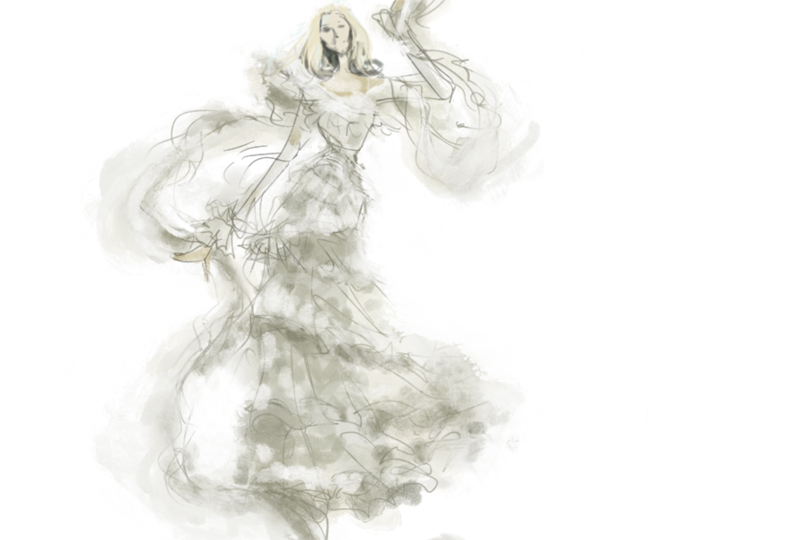
Illustration by Michael Hak
To say that 2005 was a tumultuous year for Kate Moss would be an understatement. That year, the British supermodel found herself faced with a career-threatening scandal that threatened to destroy her professional and personal reputation, only to stage a remarkable, high-fashion comeback the following year thanks to a friend, fashion designer Alexander McQueen.
In September 2005, the British tabloid The Daily Mirror published front-page photos of Moss allegedly using cocaine in a London recording studio with her then-boyfriend, Pete Doherty. The media instantly nicknamed her “Cocaine Kate,” and major brands, including H&M, Burberry and Chanel, severed ties with her within 72 hours of the initial news story. Amidst rumours that social-services officials might consider taking away her daughter, Moss issued a public apology and entered a rehab clinic in Arizona.
The controversy didn’t end, however, until McQueen stepped in months later. At the end of the fashion designer’s fall/winter 2006 show in March that year, a ghostly illusion of Moss appeared wearing a ruffled, white silk organza gown. The moment was both shocking and poetic, and is remembered today as one of the most iconic fashion show moments in history.
Here’s the full story of the fall of Kate Moss and her eventual return to stardom, thanks to one of Alexander McQueen’s most memorable runway creations.
“Cocaine Kate”
Kate Moss has withstood numerous good, bad and ugly personal scandals (all of which were well documented by the tabloids) ever since she burst onto the scene in 1990 as the “anti-supermodel,” ultimately launching a new era in fashion. But her most infamous scandal occurred in 2005, when tabloid interest in her intensified because of her rocky relationship with pop star Pete Doherty, the front man of the rock group Babyshambles, who had openly admitted to an addiction to cocaine and heroin.
On September 15, 2005, London’s The Daily Mirror newspaper hit the streets featuring a grainy front-page photograph of Moss, wearing knee-high black boots and shorts, accompanied by the headline “Cocaine Kate.” The inside story, headlined “High As A Kate,” claimed that the 31-year-old model had spent an evening cutting lines of cocaine and passing them around to everyone at a West London recording studio. The story was accompanied by a number of grainy photographs of Moss gorging on cocaine with Doherty.
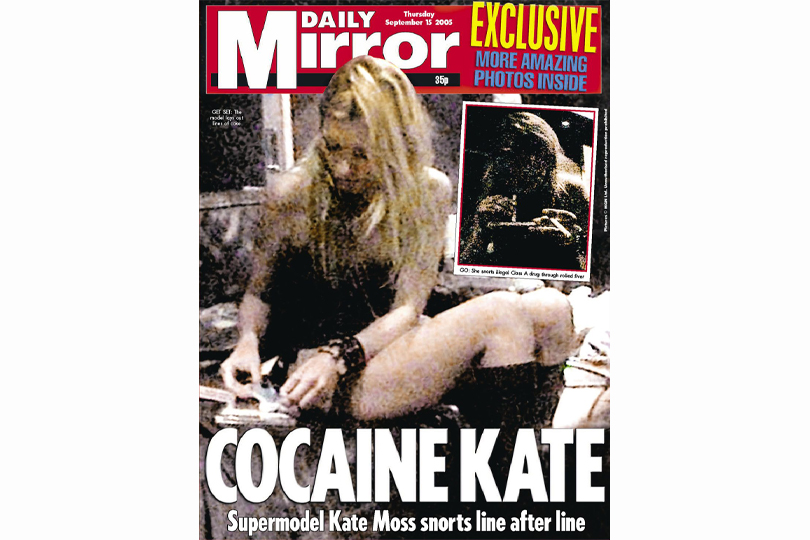
The Daily Mirror had 40 minutes of grainy video taken from a hidden camera in the studio, which showed Moss smoking cigarettes, drinking shots of vodka and whiskey, cutting lines of cocaine and passing them around the room. Throughout the video she is seen snorting lines of coke five separate times. According to The Daily Mirror, in one section of the video—circulated on television and on the internet since then—Moss teasingly withholds drugs from Doherty, saying, “It’s just gone now. You’ve missed it.”
As expected, screenshots from the footage obtained by The Daily Mirror subsequently made their way onto the front pages of nearly every tabloid around the world. The story’s allegations were shocking, and the aftermath was catastrophic.
H&M reacted instantly to The Daily Mirror’s cover story: on September 20, 2005, the company announced that it would be dropping Moss from its upcoming fall ad campaign, claiming that the brand had a long history of fighting drug abuse. That decision, reached during crisis meetings of executives summoned to H&M’s headquarters in Stockholm after The Daily Mirror images were released, provoked an instant domino effect in an industry known for its herd mentality. Burberry and Chanel quickly followed suit, stripping Moss of her respected contracts on September 21 and 22. In the days that followed, additional public withdrawals included Gloria Vanderbilt and the jeweller H. Stern.
Moss tried to do damage control, issuing a statement on September 20, 2005: “I want to apologise to all of the people I have let down because of my behaviour which has reflected badly on my family, friends, co-workers, business associates and others. I am trying to be positive, and the love and support I have received are invaluable.”
But the damage was done; the scandal resulted in a storm of endless negative press for Moss. In late September 2005, she checked into The Meadows, a rehabilitation clinic in Arizona, where she received “medical treatment and therapy” before checking out about a month later, on October 27.
As for legal charges? After the images hit newsstands, the London Metropolitan Police announced an investigation into the allegations, and in January 2006 requested her return to the UK for questioning, but ultimately no charges were filed against Moss, and she kept custody of her daughter, Lila.
A case of revenge?
There is an unfashionable conspiracy theory surrounding Moss’s cocaine scandal. The rumour is that The Daily Mirror was determined to get revenge on Moss after she won a libel case against its sister paper earlier that year. In January 2005, The Sunday Mirror alleged that during a visit to a charity fashion event in Barcelona in June 2001, Moss had taken “vast quantities” of cocaine and collapsed into a drug-induced “cocaine coma” in her hotel room. The story, which the tabloid published in print and on the newspaper’s website under the headline “Kate in Cocaine Coma,” was partly based on claims by Rebecca White, a former personal assistant to Naomi Campbell, who claimed that she had actually revived Moss in a hotel bathroom.
Moss and her lawyer, Gerard Tyrrell, fought back against the allegations and eventually, at a settlement hearing at the High Court in London, The Sunday Mirror’s lawyer Philip Conway admitted that the claims made by the newspaper were false, and apologized. The Mirror Group Newspapers accepted that the allegations were false and agreed to pay Moss damages, though the exact figure is unknown.
Then, say rivals and conspiracy theorists, The Daily Mirror editor, Richard Wallace, demanded that the newspaper’s reporters dig up proof that Moss used drugs, which resulted in the September scandal.
“Widows Of Culloden”
After her stint in rehab, Moss kept a low profile for six months until her friend and long-time collaborator Alexander McQueen reached out, determined to revive her career. It wasn’t the first time McQueen had publicly shown his support since the cocaine scandal broke.… The preceding season, despite the commercial backlash against the model, he wore a “We Love You Kate” T-shirt when he took his bow at the end of his “Horn of Plenty” spring/summer 2006 presentation.
McQueen’s “Widows of Culloden” fall/winter 2006 collection, the 28th womenswear collection designed by McQueen for his eponymous fashion house, was presented on March 3, 2006, at the Palais Omnisports de Paris-Bercy in Paris, about two miles from the centre of the city. The collection revisited the themes of the designer’s fall/winter 1995-96 “Highland Rape” collection, his first show to officially be shown on the fashion calendar. It was also dedicated to his famously eccentric friend and early patron, Isabella Blow. (Just over a year later, after seven suicide attempts in 14 months, Blow drank paraquat weed killer and was rushed to hospital. She died in hospital the following day on May 7, 2007, at the age of 48.)
Today “Widows of Culloden” is regarded as one of McQueen’s most autobiographical collections, inspired by his Scottish ancestry and his mother, a nature lover who had slowly opened his eyes to observe and appreciate the world around him. The runway show also marked a return to theatricality for McQueen, whose shows in the preceding two seasons had been comparatively conventional. Conventions were thrown out the window this time around; the stage was built of rough wood with a massive glass pyramid in its centre, leaving a runway around the outside for the models to walk.
McQueen wanted to ignore commercial pressure for the collection and the presentation to appeal to a mass market. “I wanted to show a more poetic side to my work. It was all about a feeling of sadness, but in a cinematic kind of way—I find beauty in melancholy,” he explained at the time. The result was a collection that was nothing short of spectacular: romantic looks, many featuring layers of torn chiffon with smart tailoring, nipped-in waists and padded hips. Critics praised the collection as a beautiful visual spectacle. Sarah Mower’s review in Vogue at the time hailed the show as a “timely reconfirmation of McQueen’s unique powers as a showman-designer.”
But the moment that really made this runway presentation memorable came in the final moments, when the haunting violin score (by John Williams, performed by Itzhak Perlman) from the 1993 film Schindler’s List began to play and a puff of smoke shot through the inside of the glass pyramid. The smoke mysteriously took the form of a ghostly hologram of Moss, who was floating inside the pyramid, defying gravity, and wearing a long, flowing, white chiffon gown with ruffled organza layers. The dramatic gown featured intricate, soft, billowing fabric that seemed to dance in slow motion, designed to appear weightless and romantic. The scene, highlighted by Mower in her review as a “techno-magic” moment, reportedly left the audience breathless.
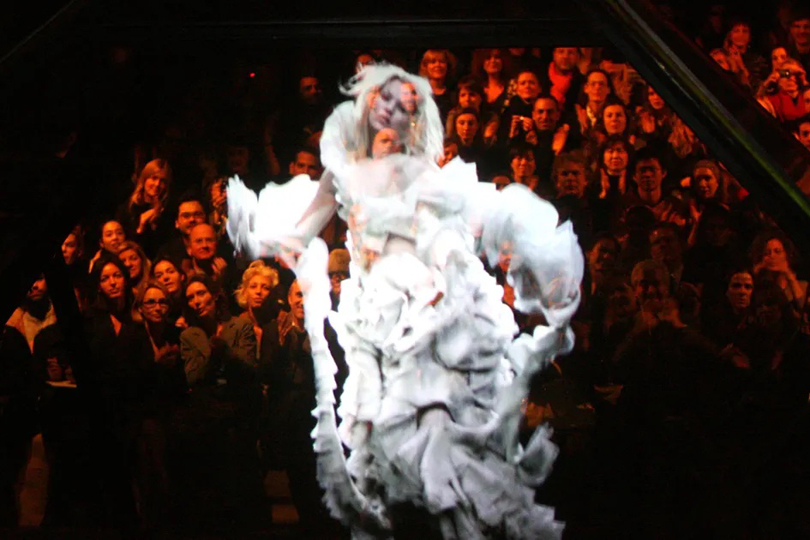
The ethereal white chiffon gown was ovation-worthy—but, interestingly, it had been at least partially inspired by a vintage John Galliano shellfish dress.
“Lee [Alexander] McQueen got so obsessive about that dress that he actually made it better than John,” Sebastian Pons, a close friend and assistant to McQueen, revealed in Dana Thomas’s 2015 book Gods and Kings: The Rise and Fall of Alexander McQueen and John Galliano. “John’s [shellfish] dress is not that famous—fashion people know it—but the Kate hologram dress is a masterpiece. No one will ever forget it.”
After the show, the designer explained that the haunting finale of Moss was meant as a gesture of support to his close friend, and said he was seeking “to show that she was more ethereal, bigger than the situation she was in.”
Conceptualizing an iconic fashion moment
The life-size vision of Moss is routinely described as a hologram, but it was actually an optical illusion that employed the 19th‑century theatre technique “Pepper’s Ghost”—the first time a fashion show had ever used this kind of illusory effect. In the Pepper’s Ghost technique, a brightly lit figure out of the audience’s sight is partially reflected on an angled pane of glass, which makes it appear to the audience as if a semi-transparent figure, or a ghost, is on stage.
The idea to end the “Widows of Culloden” show this way began to take form in early 2006, with McQueen envisioning some form of holographic projection to evoke an “ethereal apparition” floating within a glass pyramid, something completely distinct from traditional modelling appearances. From there, the idea was developed in collaboration with artist and filmmaker Baillie Walsh, production designer Joseph Bennett, production duo Gainsbury & Whiting and U.K. visual effects studio Glassworks, who all worked to bring the idea, the glass pyramid and the Victorian parlour trick to life.
“Our special projects division had previous experience in creating Pepper’s Ghost, and this project was a case of updating it, using keystoning [distortion of an image by projection] and distortion to trick the eye,” said Hector Macleod, the founder of Glassworks. “The idea was invented by the brilliant Joseph Bennett. It was ambitious and exciting and totally creative.”
Prior to the runway show, Moss was filmed in a studio setting. During that two-hour session, Walsh and McQueen directed Moss, who was suspended in a harness wearing the custom gown, as she was slowly spun around with wind machines blasting and dry ice filling the room to create a misty, ethereal backdrop for the footage.
“For Lee, his shows were pure theatre and that was exhilarating,” Macleod continued. “The atmosphere and buzz when the show happened was amazing. The stakes are higher in fashion. Working amongst and being surrounded by such creativity, it becomes harder to impress. But that night, with all the great and good of the fashion world there, everyone was blown away.”
The aftermath
After McQueen’s “Widows of Culloden” runway presentation with its state-of-the-art illusion of Moss, all was forgiven by the fickle fashion world, and Moss made an almost-immediate comeback, scoring more than 18 major modelling contracts in one season. It was a record, and after a year of scandal Moss was once again one of the industry’s top-earning models.
The custom ruffled organza dress returned to the spotlight as well. For the May 2011 issue of Harper’s Bazaar UK, photographer Sølve Sundsbø captured Moss wearing the original dress for the cover. The inside spread, titled “The Real McQueen,” included personal recollections of the designer, who had taken his own life on a year before, on February 11, 2010. He was 40 years old.
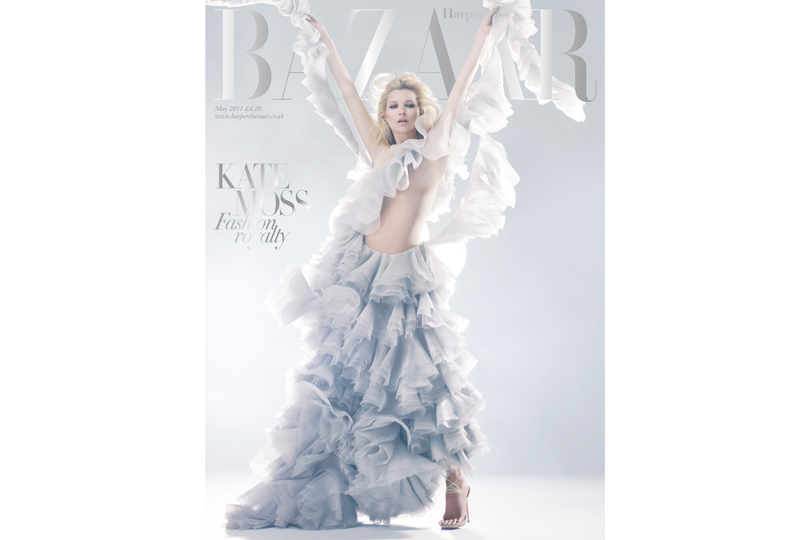
Said the rarely quoted Moss, “He gave women power, while letting them be fragile and vulnerable at the same time. People always used to say he was a misogynist, but it took me a while to realize that he was actually empowering women and not the other way around.”
She continued, “There’s never ever going to be anybody like him. His was the most exciting show to see ever, even if you weren’t there. I would hear about it on the phone and hear Lee and hear everyone. There was so much tension, but we had the best laughs. He was a dear friend of mine. I miss him terribly.”
Moss’s career has continued to thrive over the years, but she avoided acknowledging her cocaine scandal in depth until 2022, when she publicly spoke about her anger at the condemnation she received after publication of the 2005 photographs. She took the blame, she believes, for the widespread acceptability of drug-taking in her circle.
“I felt sick and was quite angry,” Moss told Lauren Laverne, host of BBC Radio 4’s Desert Island Discs program, “because everybody I knew took drugs. So for them to focus on me, and to try to take my daughter away, I thought was really hypocritical.
“I had to apologize really, if people were looking up to me,” she said in the wide-ranging interview, which also saw her speaking out about her anxiety and about the abuse and mistreatment she suffered throughout her years in the fashion industry.
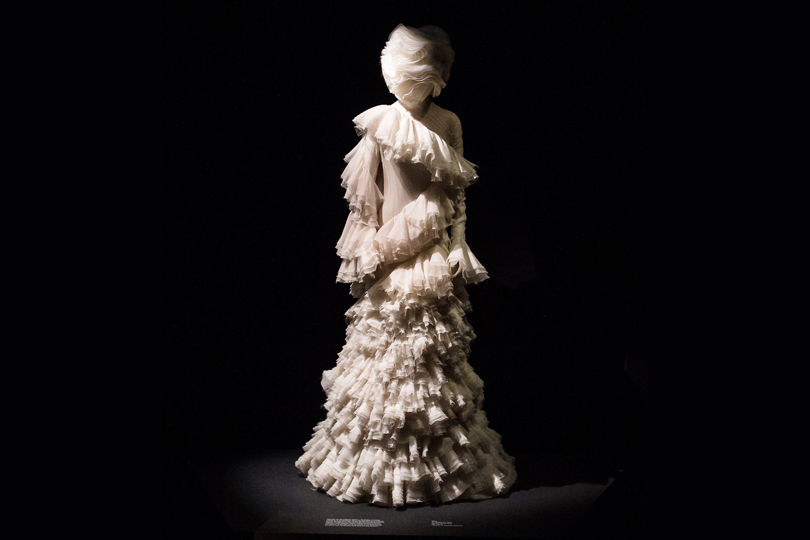
As for McQueen’s Hologram dress, as it’s now commonly referred to, it remains one of the most iconic pieces created by the designer in his lifetime. The dress, and the Kate Moss apparition, appeared in Alexander McQueen: Savage Beauty, a retrospective exhibition of McQueen’s designs shown at the Metropolitan Museum of Art in New York City in 2011 and then again at The Victoria and Albert Museum in London in 2015. In the original presentation at the Met, the illusion was recreated in miniature, but in the V&A re-staging, it was presented in full size in its own room. Fitting, considering that, according to Sam Gainsbury, who worked on production for the illusion, McQueen had “always wanted to show [the illusion] independently as a work of art.”
A decade after that restaging, the illusion, and the dress, haven’t faded into folklore. McQueen’s organza dress—now inseparable from the ghostly image of Moss suspended and swirling—remains one of the most unforgettable moments ever staged on a runway.
What appeared inside that glowing glass pyramid in Paris was more than a technical illusion. It was fashion theatre at its most powerful: a designer rescuing a friend, a scandal transformed into spectacle, and a supermodel reborn not as a tabloid villain but as something far more enduring—a ghost in chiffon, floating forever in fashion history.

Want more? You can read other stories from our The Story Of series right here.
Trending
 Here’s Every Song From ‘Love Story: John F. Kennedy Jr. & Carolyn Bessette’ [UPDATED]
  A Look Back At Gia Carangi’s 5 Cosmopolitan Covers
  10 Memorable Images Of Supermodel Gia Carangi (1960–1986)
  A Short History Of ‘George’: John F. Kennedy Jr.’s Magazine That Was Ahead Of Its Time
  A Look Back At Benetton’s Most Controversial Advertising Campaigns